
Conifer aphid
Cinara
Description
How to identify
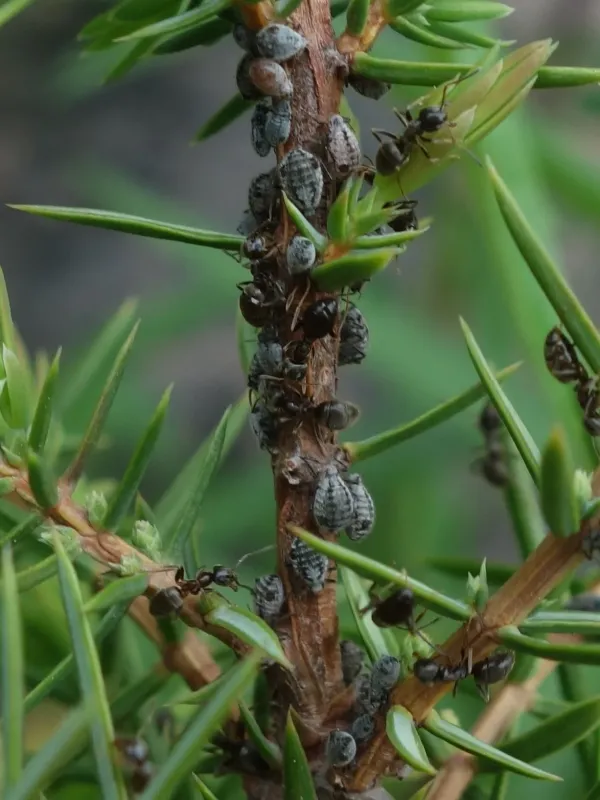
The conifer aphid, belonging to the genus Cinara within the Aphididae family, is a specialized pest that thrives on various coniferous trees. Unlike many other aphid species, these are relatively large and often exhibit dark coloration.
Their bodies are designed to blend in with the bark of twigs and branches. They often remain motionless for extended periods, positioning themselves in dense colonies along the sap-rich areas of their host tree.
These aphids are highly efficient at exploiting the vascular systems of conifers. A key biological feature is their complex lifecycle, which often involves moving between different parts of the tree throughout the growing season.
The relationship between these aphids and ants is a classic example of mutualism. Ants protect the aphid colonies from predators like ladybugs and lacewings in exchange for the sugary honeydew produced by the aphids.
Populations consist of both winged and wingless forms. The winged individuals are crucial for the spread of the colony to nearby trees, allowing for rapid infestations during favorable weather conditions.
What it damages
They primarily infest trees such as spruce, pine, fir, and larch. Both ornamental and forest-grown trees are susceptible to significant damage, especially young specimens with less robust defensive mechanisms.
By constantly extracting sap from the phloem, these aphids deprive the tree of essential nutrients. This results in physiological stress, which manifests as stunted growth, branch dieback, and overall tree weakening.
In addition to direct damage, the excretion of honeydew serves as a substrate for sooty mold. This dark, fungal growth covers the needles, significantly reducing the tree's ability to perform photosynthesis.
Severe infestations can lead to the yellowing and premature shedding of needles. If left unmanaged, the cumulative damage can result in the loss of aesthetic value or even the death of the tree.
Weakened trees become susceptible to opportunistic pathogens and wood-boring insects. Once the tree is compromised by the aphid colony, these secondary invaders often accelerate the decline of the host plant.
When it appears
The activity begins in early spring as temperatures rise, triggering the emergence of the first generation of nymphs from overwintered eggs. This period is critical for early intervention.
As spring progresses into summer, the population grows exponentially due to rapid parthenogenic reproduction. Dense colonies can form on twigs, stems, and sometimes even near the base of the tree.
Mid-summer is typically marked by the production of winged forms, which migrate to colonize other susceptible trees. This phase can lead to a garden-wide infestation if the initial source is not addressed.
Autumn marks the transition to the sexual phase of the lifecycle. During this time, the aphids lay small, hardy, dark-colored eggs on the needles and bark, which are designed to survive winter conditions.
Monitoring should be most intense during the late spring and early summer. Weather patterns, particularly mild winters followed by warm, dry springs, significantly increase the risk of massive outbreaks.
Signs of infestation
The most noticeable early sign is the yellowing or browning of needles. When observing the canopy, an uneven or sickly appearance in specific branches often indicates an aphid cluster nearby.
An increased presence of ants crawling up and down the trunk is a reliable indicator. If you see ants trailing on a conifer, it is highly likely that they are tending to a colony of Cinara aphids.
Sticky residue, known as honeydew, on the needles and surrounding branches is another clear symptom. This substance is often followed by the development of black, powdery sooty mold on the infested foliage.
Upon closer inspection, one can find the aphids themselves tucked into the crevices of the bark or on the undersides of the needles. Using a magnifying glass helps distinguish them from bark textures.
A decline in annual terminal growth is a diagnostic sign of long-term infestation. If the current season's shoots appear stunted or twisted, it suggests that the tree has been under aphid pressure for some time.
Control measures
A proactive approach is essential for effective management. Start by keeping trees well-watered and properly fertilized, as a healthy tree has a much better natural resistance against aphid colonization.
For smaller trees, physically removing colonies or washing them off with a strong stream of water can significantly reduce the population. Adding a mild insecticidal soap can improve the efficacy of this method.
Chemical control involving systemic insecticides is the most effective solution for larger or heavily infested trees. These treatments enter the tree's vascular system, providing lasting protection against sap-feeding insects.
Encourage natural predators in your garden, such as ladybugs, lacewing larvae, and parasitic wasps. Avoid broad-spectrum pesticides that kill these beneficial insects, as they are crucial for long-term balance.
- Check bark crevices during spring months.
- Apply sticky bands to tree trunks to disrupt ant traffic.
- Use specific systemic insecticides during the peak activity season.
Taxonomy
- Latin name
- Cinara
- Order
- Hemiptera (bugs, aphids, leafhoppers)
- Family
- Aphididae
- EPPO code
- CINASP
Discussion
No discussions yet — be the first.