
Pest · Coleoptera (beetles) · affects Common sunflower, Winter rapeseed, Maize
Leaf beetle
Chrysomela
Description
How to identify
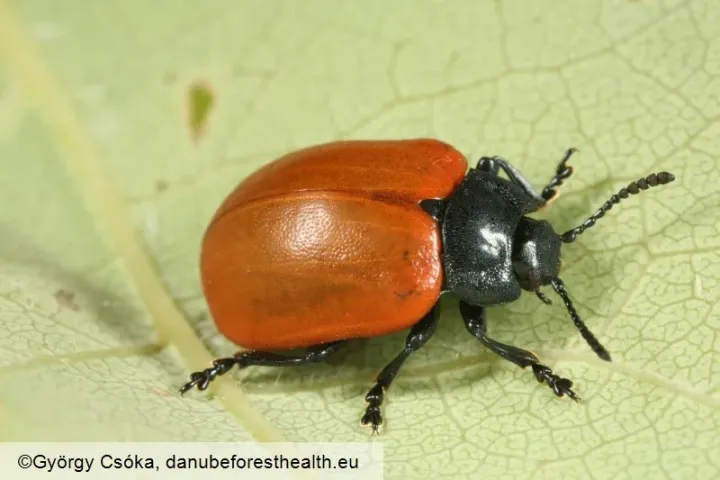
Leaf beetles, belonging to the family Chrysomelidae, are a diverse group of beetles within the order Coleoptera. These insects are known for their varied body shapes and often brilliant metallic colors, which can range from green and gold to red and black.
Adult leaf beetles generally possess a compact, oval body shape. Their antennae are typically of moderate length and are often used as a key identifying feature when distinguishing between different species.
The larvae of leaf beetles are equally diverse; some are slug-like with slimy coatings to deter predators, while others are spiny or brightly colored, signaling toxicity to potential threats.
These insects undergo complete metamorphosis, passing through four distinct life stages: egg, larva, pupa, and adult. The duration of each stage is highly dependent on environmental temperature and host plant availability.
Many species have evolved specialized feeding habits, meaning they are often strictly associated with particular plant families, such as the Solanaceae or Brassicaceae families.
What it damages
Leaf beetles are notorious for their significant agricultural and horticultural impact. They feed on leaves, stems, flowers, and sometimes roots, causing varying degrees of damage depending on the population density.
Defoliation is the most common form of damage. By consuming large portions of the leaf tissue, they reduce the plant's photosynthetic capacity, which directly results in stunted growth and lower fruit or grain yields.
Some species are vectors for plant diseases. As they move from plant to plant, they can transmit various viruses and bacteria through their feeding wounds, leading to secondary infections that are often more lethal than the beetles themselves.
Economic damage is often severe in monoculture farming, where the abundance of a single host plant allows for rapid reproduction and wide-scale colonization by the beetles.
Ornamental gardens are also frequently targeted, with beetles marring the aesthetic quality of foliage and flowers, rendering plants unsuitable for decorative use.
When it appears
Adult leaf beetles typically overwinter in sheltered locations. This includes soil crevices, under leaf litter, in bark fissures, or even within structural garden debris to survive cold temperatures.
Emergence usually coincides with the arrival of spring warmth. As temperatures rise, adults emerge to feed on the emerging succulent growth of their preferred host plants before mating.
The peak feeding and reproduction season for most species occurs during the late spring and summer months, which offer the optimal conditions for larval development and maturation.
Depending on the latitude and climate, leaf beetles may complete one or several generations per year, with warmer regions seeing a much longer period of active pest pressure.
As autumn approaches and day lengths shorten, the final generation of the season enters a state of diapause, moving into protected areas to successfully overwinter until the following year.
Signs of infestation
The most prominent sign of a leaf beetle infestation is the appearance of holes within the leaf blades. These can range from tiny pinpricks to large, irregular gaps that leave only the veins behind.
Eggs are frequently found in clusters on the underside of leaves. They may be bright yellow, orange, or white, and are often laid in organized groups that are easily visible upon close inspection.
Wilting, yellowing, or browning of foliage often follows severe feeding activity. If the infestation is concentrated on the stems, plants may show signs of girdling or localized tissue death.
The presence of beetle larvae on the foliage is a definitive sign of an active infestation. Their movement and feeding behavior are often visible during the early morning or evening hours.
Accumulated frass, which appears as small dark pellets on the leaves or the soil surface underneath the plant, serves as another clear indicator of beetle presence.
Control measures
Cultural control practices, such as crop rotation, are essential for breaking the life cycle of specialized leaf beetles by depriving them of their specific host plant in subsequent seasons.
Physical removal is a practical approach for small-scale gardening. Hand-picking beetles and destroying egg masses can significantly reduce the local population without the need for toxic chemicals.
Biological control, including the use of beneficial insects like lady beetles or parasitic wasps, can help keep leaf beetle populations below the economic threshold in sustainable systems.
Chemical intervention should be reserved for periods of high infestation. Systemic or contact insecticides should be applied selectively to minimize the impact on non-target pollinators and beneficial fauna.
- Use floating row covers to physically exclude beetles from sensitive crops.
- Apply neem oil or spinosad-based sprays for organic suppression.
- Remove crop debris post-harvest to eliminate overwintering sites.
Content graph
Connections · Leaf beetle
Most often together:
Marketplace
Products · 1
Biology
Taxonomy
- Latin name
- Chrysomela
- Order
- Coleoptera (beetles)
- Family
- Chrysomelidae
- EPPO code
- CHRSSP
Community
Discussion
No discussions yet — be the first.