
Honeysuckle leaf miner
Chromatomyia lonicerae
Description
How to identify
The honeysuckle leaf miner (Chromatomyia lonicerae) is a small dipteran insect belonging to the family Agromyzidae. The adults are tiny, dark-colored flies, typically measuring 2–3 mm in length.
The larvae live internally within the leaf tissue, creating specific galleries or mines as they feed. This cryptic habitat protects them from many external environmental factors and predators.
The life cycle consists of egg, larva, pupa, and adult stages. Depending on the climate, the species can complete several generations throughout the growing season.
Overwintering usually occurs in the pupal stage, with puparia located in the soil or within fallen leaf litter beneath the host plants, ensuring their survival through winter.
Morphological identification focuses on the pattern of the mines and the characteristics of the larval mouthparts, which are diagnostic features used by entomologists for precise classification.
What it damages
The primary host plant is honeysuckle (Lonicera spp.). The damage is caused by larvae consuming the mesophyll layer of the leaves, resulting in visible trails on the foliage surface.
Besides honeysuckle, the pest can occasionally infest other plants within the Caprifoliaceae family if they are present in the same ecosystem or garden environment.
Extensive mining activity leads to a significant reduction in the photosynthetic capacity of the plant, weakening the overall health of the shrub.
Severe infestations cause premature leaf drop, which can negatively affect the plant's growth, flowering, and its ability to store energy for the next growing season.
Young shrubs and newly planted specimens are particularly vulnerable, as significant defoliation can stunt their establishment and development in the landscape.
When it appears
Adult flies typically emerge in the spring, coinciding with the opening of honeysuckle leaves when temperatures are consistently warm enough to support activity.
Females insert eggs into the leaf tissue, and the subsequent larvae immediately begin mining. The egg-laying phase continues throughout the period of rapid leaf growth.
Successive generations develop during the summer months. The frequency of these cycles depends heavily on ambient temperatures and the local microclimate of the garden.
Activity remains high throughout the summer until the environmental cues, such as shortening days and dropping temperatures, signal the transition to diapause.
By late summer and early autumn, the population growth slows as the insect prepares for the wintering stage in the soil or ground debris.
Signs of infestation
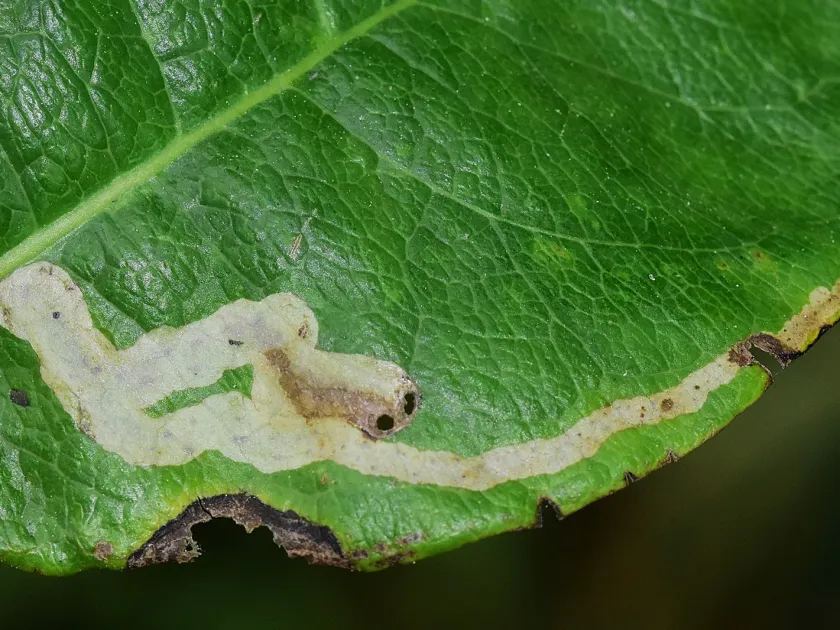
The most prominent sign is the appearance of winding, pale-colored tracks on the leaves. These galleries reflect the movement and feeding path of the larva.
Dark deposits, which are the larval frass (excrement), can usually be observed as small dots along the length of the mine inside the leaf tissue.
- Winding white or yellowish lines across the leaf blade.
- Browning or necrosis of infested leaf sections as tissues die.
- Premature yellowing and leaf shedding during the summer months.
- Curling or deformation of the leaves when the infestation is heavy.
- Visual presence of the larva when holding the leaf against a light source.
Early identification of these patterns is essential for preventing widespread damage and maintaining the aesthetic value of the ornamental honeysuckle shrubs.
Control measures
Cultural practices are the first line of defense. Thoroughly raking and destroying fallen leaves in the autumn is critical to removing the primary overwintering sites.
Cultivating or turning the soil around the base of the shrubs in late autumn helps bury or expose puparia to natural enemies and harsh weather conditions.
Systemic insecticides are the most effective chemical control method, as they are absorbed by the plant and kill the larvae feeding inside the leaf mines.
Monitoring the foliage for the first signs of mines is important, as targeted treatments are much more effective when applied at the onset of the infestation.
Encouraging beneficial insects, such as parasitic wasps, can help keep the leaf miner population at lower, more manageable levels in the garden.
Taxonomy
- Latin name
- Chromatomyia lonicerae
- Order
- Diptera (flies)
- Family
- Agromyzidae
- EPPO code
- CHMTLO
Discussion
No discussions yet — be the first.