
Walnut aphid
Chromaphis
Description
How to identify
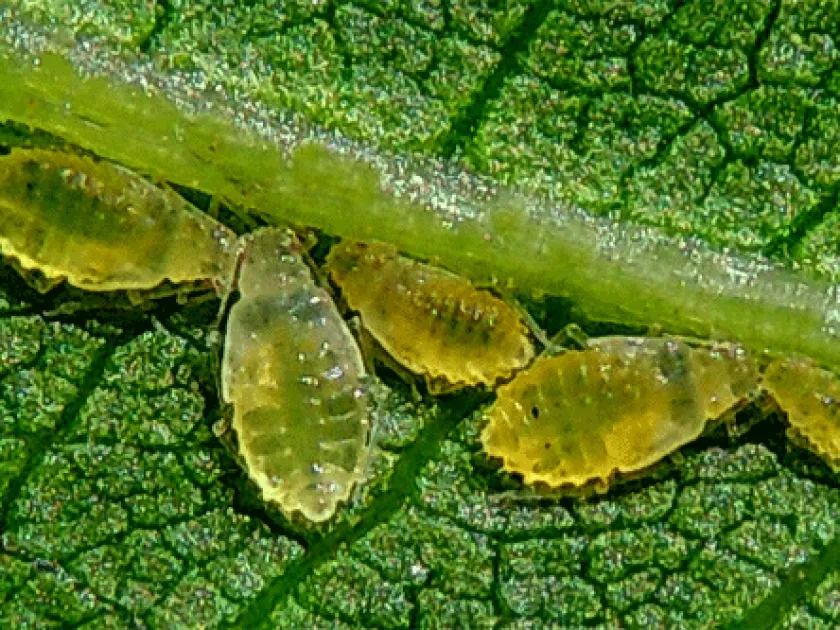
The walnut aphid (Chromaphis juglandicola) is a small sap-sucking insect belonging to the family Aphididae. It is a specialized pest that exclusively targets walnut trees, causing significant stress to foliage.
Adults are pale yellow, often with dark markings on their wings. They tend to congregate on the undersides of leaves, making them difficult to detect without careful inspection of the tree canopy during the active growth period.
The aphid overwinters in the egg stage, attached to the bark or in the crevices of walnut twigs. As spring temperatures rise, the eggs hatch, releasing the initial generation of fundatrices that begin to reproduce.
Throughout the summer, the population grows through multiple generations, often rapidly expanding during warm and stable weather conditions. This high reproductive rate allows them to colonize large trees in a short time.
Their life cycle is synchronized with the phenology of the walnut tree, ensuring that food resources are available from the moment the buds burst until late in the autumn season.
What it damages
The primary damage is caused by the aphid sucking plant juices from the leaves. This feeding process depletes the nutrients that the tree would otherwise use for fruit development and shoot growth.
Heavy infestations lead to leaf chlorosis, curling, and premature leaf drop. The loss of foliage significantly reduces the photosynthetic capacity of the tree, which directly correlates to lower yield and reduced nut quality.
Walnut aphids secrete honeydew, a sugary substance that coats the leaves. This honeydew serves as a growth medium for sooty mold, a dark fungus that blocks sunlight and interferes with gas exchange through the stomata.
Stressed trees are less capable of accumulating reserves for the following season. Repeated annual infestations can lead to canopy thinning, branch dieback, and increased susceptibility to other biotic and abiotic stressors.
In commercial orchards, the presence of these aphids necessitates additional management costs, as their impact on both quantity and quality of the walnut crop can be economically significant.
Signs of infestation
One of the first signs of infestation is the yellowing and curling of the leaves. Closer inspection of the underside of these leaves will reveal small yellow aphids huddled together or scattered along the veins.
The presence of honeydew creates a sticky film on the foliage and branches. This substance is a tell-tale sign that a colony is active and feeding, often accompanied by an increase in ant activity around the tree.
Sooty mold growth, appearing as black, soot-like patches on leaves and fruit, is a secondary sign of heavy aphid presence. This indicates that the honeydew has been present for a while, allowing fungi to colonize the surface.
Premature leaf fall in mid-summer is a major indicator of severe aphid pressure. If the tree loses its canopy prematurely, the nuts may be exposed to direct sunlight, leading to heat damage and sunburn.
A reduction in nut size and kernel fill, coupled with visible damage to the leaf tissue, confirms that the aphid population has likely affected the overall metabolic health of the walnut tree.
Control measures
Cultural management starts with maintaining tree vigor. Proper pruning helps open the canopy, which can reduce the humidity levels that favor aphid development and improve spray coverage if chemical control is needed.
Biological control is highly effective for walnut aphids. Encouraging natural enemies like lady beetles, lacewings, and parasitic wasps is essential for keeping aphid numbers below the economic injury level without synthetic pesticides.
Chemical intervention should be considered only when monitoring shows that predator populations are insufficient to keep the aphids in check. Targeted, systemic insecticides are often the most effective tool in such cases.
Always time treatments based on monitoring data rather than a calendar. Applying insecticides at the first sign of population growth helps prevent the development of a large-scale outbreak that is harder to control.
Integrated Pest Management (IPM) strategies, which combine biological, cultural, and chemical methods, provide the most sustainable long-term protection for walnut orchards against this persistent pest.
Taxonomy
- Latin name
- Chromaphis
- Order
- Hemiptera (bugs, aphids, leafhoppers)
- Family
- Aphididae
- EPPO code
- CHRASP
Discussion
No discussions yet — be the first.