
Cholodkovskya viridana
Cholodkovskya viridana
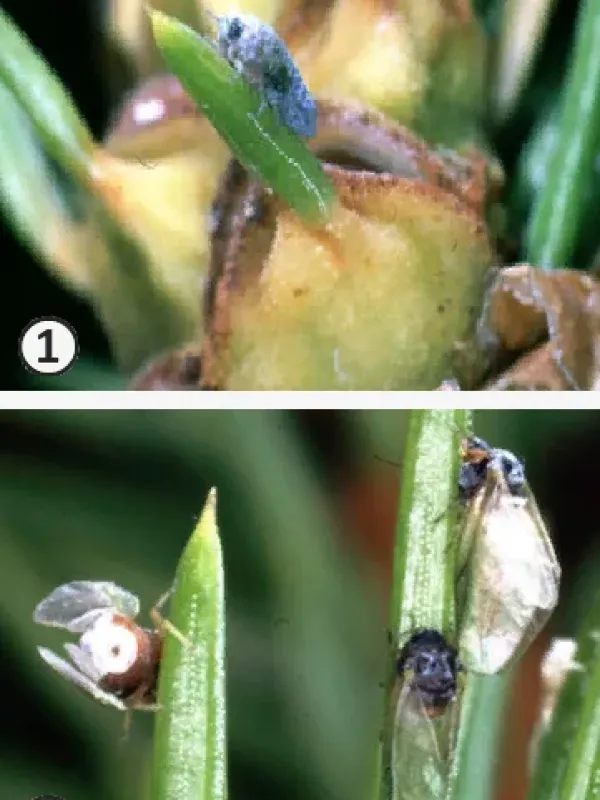
Description
How to identify
Cholodkovskya viridana is a specialized pest belonging to the aphid family (Aphididae) within the order Hemiptera. This insect is characterized by its green coloration, which provides excellent camouflage on young shoots and needles of host plants.
The species exhibits a complex life cycle, involving alternating generations and a transition from asexual reproduction during the summer to a sexual phase in the autumn. Nymphs resemble adults but are smaller and lack developed reproductive systems.
Adults can be either wingless or winged, which allows the species to effectively disperse throughout an area in search of new food sources. Winged individuals play a crucial role in the expansion of colonies during the mid-season.
This insect prefers a moderately humid climate, with peak activity levels occurring during periods of stable temperatures without extreme heat. Optimal conditions for rapid multiplication are often found in greenhouses or dense plant stands.
Morphological identification is based on the structure of the cornicles on the abdomen and the shape of the antennae, which are key taxonomic features. Field identification typically requires the use of a magnifying glass to inspect the colonies closely.
What it damages
The primary damage is caused to conifers, particularly spruce trees, where this pest forms specific colonies. The aphid feeds on plant sap, extracting vital nutrients from the young, succulent tissues of the host.
During feeding, the insects excrete honeydew, which serves as an ideal medium for the development of sooty mold. This significantly impairs the photosynthesis process, as the surface of the needles becomes covered with a dark, suffocating layer.
Damaged plant parts lose turgor, causing the needles to turn yellow, curl, and drop prematurely. In cases of massive infestation, the overall growth of the tree is stunted, which is particularly critical for young seedlings in nurseries.
Prolonged infestation weakens the tree's immune system, making it susceptible to secondary pathogens and other insect pests. The loss of ornamental value and biological resilience is the main consequence of established colonies.
The most serious threat is damage to buds and terminal shoots, as this leads to the deformation of the crown. Gradual dieback of branches can ultimately result in the loss of the commercial or aesthetic quality of the conifer trees.
When it appears
The life cycle begins in early spring when overwintering eggs hatch into nymphs upon the onset of stable, warmer temperatures. The first generations develop on young shoots, utilizing the stored nutrients of the tree.
Peak population numbers are observed in late spring and early summer when conditions for reproduction are most favorable. During this time, there is a mass emergence of winged dispersal forms.
In the summer, under hot and dry conditions, the rate of development may slow down, but colonies continue to persist in shaded areas of the crown. A second wave of population growth is often recorded towards the end of summer.
In the autumn, a change of generations occurs, leading to the emergence of males and females for mating. After fertilization, females lay eggs that remain dormant throughout the winter in bark crevices or at the base of the needles.
Overwintering in the egg stage is a vital adaptation, allowing the species to survive low temperatures. Egg viability is maintained even during harsh winters, ensuring the renewal of the population in the following spring.
Signs of infestation
The first visual sign of infestation is the presence of a sticky substance (honeydew) on the needles, which attracts ants. Intense ant activity on branches often serves as a primary indicator of hidden aphid colonies.
Deformation and curling of young shoots serve as evidence of the toxic effects of the pest's saliva on plant tissues. Needles in affected areas typically acquire an unhealthy chlorotic hue.
The appearance of a sooty mold layer, resembling black dust on the needles, indicates an advanced stage of infestation. This fungus blocks the plant's ability to respire and significantly slows down metabolic processes.
Upon close inspection of the underside of the needles, one can spot the insects arranged in rows along the central vein. Their color may vary slightly depending on their age and stage of development.
Premature needle drop, which is not associated with the tree's natural seasonal cycle, is a direct signal of critical damage. In such cases, an urgent crown inspection is necessary to assess the density of the infestation.
Control measures
Biological control methods involve attracting natural enemies, such as ladybugs, lacewings, and predatory bugs. Their presence helps keep pest populations in check without the use of chemical pesticides.
Chemical control using systemic insecticides is most effective when population density is high. These preparations are absorbed by the plant's sap, providing long-lasting protection against subsequent attacks.
Agrotechnical measures include the timely pruning of infested branches and the destruction of plant debris where eggs may overwinter. It is essential to ensure proper watering and fertilization to boost the trees' natural immunity.
The use of soap or horticultural oil solutions in the early stages of infestation allows for the physical removal of colonies. Such methods are environmentally friendly and pose minimal risks to the ecosystem.
Regular monitoring of plant health, especially during the bud-burst period, allows for the early detection of the pest. Preventive treatments in early spring can help avoid major population outbreaks and preserve plant health.
Taxonomy
- Latin name
- Cholodkovskya viridana
- Order
- Hemiptera (bugs, aphids, leafhoppers)
- Family
- Aphididae
- EPPO code
- CHOOVI
Discussion
No discussions yet — be the first.