
Cholodkovskya
Cholodkovskya
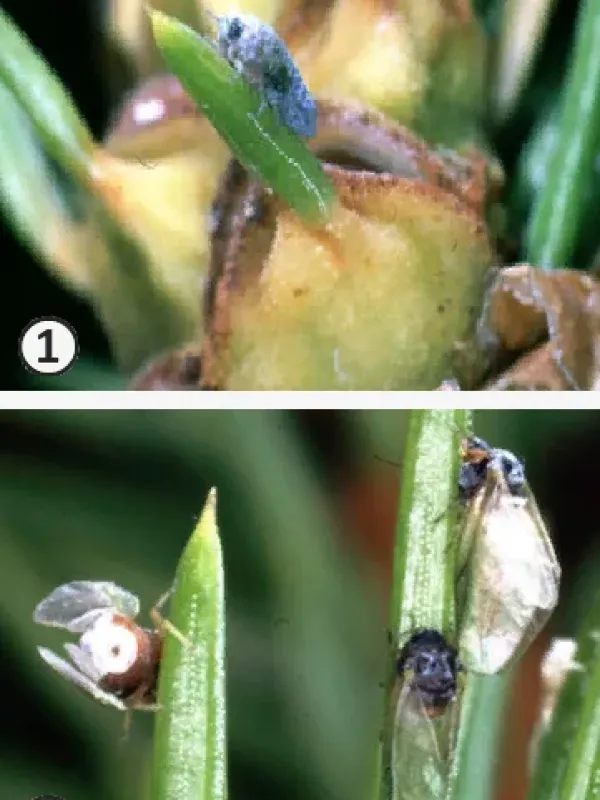
Description
How to identify
Cholodkovskya is a genus of insects belonging to the family Adelgidae, order Hemiptera. These specialized pests are widely recognized in forestry and horticultural science as significant threats to various conifer species, particularly spruce.
The morphology of these insects is characterized by their adaptation to sedentary life. They are often covered with waxy filaments or secretions, which provide excellent protection against environmental stressors and predators.
The biological cycle of this pest is remarkably complex and often involves alternation between primary and secondary host plants, a common trait within the Adelgidae family. This adaptability allows them to exploit different environmental niches.
They possess specialized mouthparts designed to tap into the vascular tissue of plants, allowing them to feed efficiently on sap. This feeding behavior is the root cause of the pathological changes observed in infested trees.
Due to their minute size and their habit of living under protective covers or inside galls, these insects are often overlooked until significant damage to the host plant has already occurred.
What it damages
The primary damage caused by Cholodkovskya involves the formation of galls, which are abnormal growths on young spruce shoots. These galls serve as protected chambers for the developing larvae.
As the insects feed, they inject saliva containing enzymes that interfere with the plant's normal growth processes. This leads to the characteristic deformation of branches and stunting of new growth.
Heavily infested trees show signs of decline, including needle discoloration, premature needle drop, and a general loss of vigor. In severe cases, the tree may suffer from top-kill or significant architectural deformation.
In nursery settings, the damage is particularly devastating, as the presence of this pest can render young saplings completely unsuitable for sale or reforestation projects.
For mature trees in urban landscapes, the aesthetic impact of branch deformation and thinning crowns is a major concern, often requiring expensive intervention to preserve the plant's appearance.
When it appears
The phenology of Cholodkovskya is tightly linked to the growing season of its host plants. Activity typically resumes in early spring, triggered by rising temperatures and the swelling of host buds.
The summer months constitute the peak period for migration and colonization, as winged forms of the insect disperse to seek out new areas for egg-laying and development.
Autumn marks the transition to the overwintering phase. Eggs are laid in protected crevices or near buds, where they remain dormant throughout the winter until the next spring cycle begins.
Climatic factors play a crucial role in population dynamics. Mild winters and warm springs can lead to increased pest survival and faster development cycles, significantly impacting tree health.
Monitoring throughout the growing season is essential, as the timing of life-stage transitions dictates the effectiveness of any applied control measures.
Signs of infestation
The presence of distinct gall formations on the ends of shoots is the most definitive sign of an infestation. These galls appear as woody, cone-like structures that interrupt the natural branch shape.
A secondary sign is the appearance of white, woolly, or waxy patches on the needles or twigs. These secretions are produced by the nymphs to protect themselves from desiccation and predators.
Yellowing of the needles starting from the tips is a common symptom of sap-draining. This chlorosis eventually leads to needle drop, which contributes to the thinning appearance of the canopy.
Deformation of the main leader or side branches is common in younger trees, often resulting in a curved or stunted growth pattern that affects the overall health of the specimen.
Microscopic examination of the needles or buds can reveal clusters of eggs or small nymphs, which are usually light-colored or brownish, nestled in the needle axils.
Control measures
Effective management requires an integrated approach that begins with cultural practices. Removing and destroying heavily infested branches helps to significantly reduce the pest population density.
Chemical control via systemic insecticides is highly effective when applied during the critical stages of the insect's life cycle, particularly when nymphs are emerging from eggs.
- Application of horticultural oils in early spring to suppress overwintering stages.
- Use of systemic insecticides to target pests protected within galls.
- Enhancing tree vigor through proper irrigation and balanced fertilization.
- Promoting natural biological control through the conservation of beneficial insect predators.
- Regular monitoring and scouting to detect infestations at the earliest possible stage.
The use of pheromone traps can provide precise data on population flights, allowing for the strategic timing of pesticide applications to minimize environmental impact.
Consistency in implementing these measures, combined with good orchard or forest hygiene, is vital for long-term successful suppression of Cholodkovskya infestations.
Taxonomy
- Latin name
- Cholodkovskya
- Order
- Hemiptera (bugs, aphids, leafhoppers)
- Family
- Aphididae
- EPPO code
- CHOOSP
Discussion
No discussions yet — be the first.