
Chironomid midge
Chironomus tentans
Description
How to identify
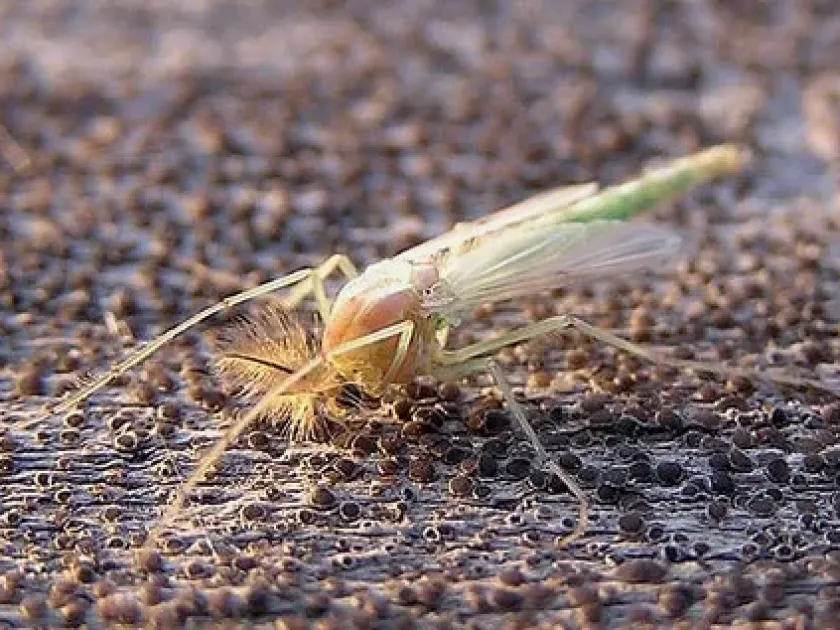
The chironomid midge (Chironomus tentans) belongs to the order Diptera, family Chironomidae. Adult midges resemble common mosquitoes but lack a biting mouthpart, making them harmless to humans.
Their larvae, commonly known as bloodworms, are distinct due to their bright red color, caused by hemoglobin that helps them thrive in low-oxygen environments such as stagnant water and wet soil.
Adults are short-lived and focus solely on reproduction, often forming large mating swarms near water bodies or damp greenhouse areas during the evening hours.
The life cycle includes four stages: egg, larva, pupa, and adult. The larval stage is the one responsible for causing damage in agricultural settings, particularly in greenhouse operations.
Distinguishing Chironomus species from other midges usually requires microscopic examination, but their presence in moist, organic-rich substrates is a strong indicator of this group.
What it damages
Damage primarily occurs in greenhouse environments where seedlings are grown in moist substrates or hydroponic systems. Larvae feed on organic matter but may attack plant roots if their primary food source is limited.
Feeding on root hairs weakens the plant's structural integrity, causing stunted growth and increased susceptibility to secondary infections by soil-borne pathogens.
Root wounds created by larval feeding provide entry points for bacteria and fungi, leading to root rot, which is often the most significant economic consequence of an infestation.
In hydroponic setups, large populations of larvae can clog irrigation nozzles, filters, and pumps, disrupting the uniform delivery of water and nutrients to the crops.
Accumulation of larval excrement in nutrient solutions alters the chemical balance, potentially lowering the pH and increasing the risk of diseases spreading through the water system.
##season##Adult flight activity typically begins in spring as temperatures rise above 10–12 degrees Celsius, with peak swarming observed during twilight hours.
The development time of the larvae is highly temperature-dependent. In climate-controlled greenhouses, multiple generations can occur continuously throughout the year.
Larvae are capable of overwintering in silt or deep, damp substrate layers, ensuring that infestations can recur whenever environmental conditions become favorable.
Increased damage is most commonly observed during periods of overwatering or poor drainage, which create ideal conditions for larvae to thrive near the root zone.
Monitoring for adult midge swarms is essential for predicting potential larval outbreaks and implementing preventative measures before significant crop damage occurs.
Signs of infestation
The primary sign of infestation is the presence of bright red, segmented, worm-like larvae in irrigation trays, reservoirs, or the upper layers of wet soil.
A decline in plant vigor, yellowing leaves, and general lack of growth despite adequate fertilization are strong indications of root system disturbance by larvae.
Inspecting the root system often reveals chewed root tips or visible wounds that are frequently accompanied by signs of tissue decay or rotting.
The presence of adult midges resting on greenhouse structures or swarming near light sources at night provides early warning of an established local population.
Clogging of micro-irrigation systems and the presence of organic debris in filtration units are common operational indicators that midge larvae are developing within the plumbing.
Control measures
The most effective management strategy is to optimize irrigation practices, ensuring proper drainage and avoiding water stagnation in pots or trays.
Regular sanitation of water reservoirs, piping, and irrigation equipment is critical to remove organic films and sludge where larvae feed and develop.
- Installing fine mesh screening on greenhouse vents to prevent adults from entering.
- Increasing aeration in hydroponic water tanks to reduce oxygen deficiency.
- Applying biological control agents, such as specific entomopathogenic bacteria.
- Removing and cleaning affected drainage trays to eliminate larval habitats.
Chemical control should be used sparingly and only when necessary, selecting products that are safe for both the crop and the aquatic environment.
Incorporating UV sterilization or fine-filtration systems in recirculating irrigation setups provides a physical barrier that prevents larvae from colonizing the root zone.
Taxonomy
- Latin name
- Chironomus tentans
- Order
- Diptera (flies)
- Family
- Chironomidae
- EPPO code
- CHIRTN
Discussion
No discussions yet — be the first.