
Cheiracanthium mordax
Cheiracanthium mordax
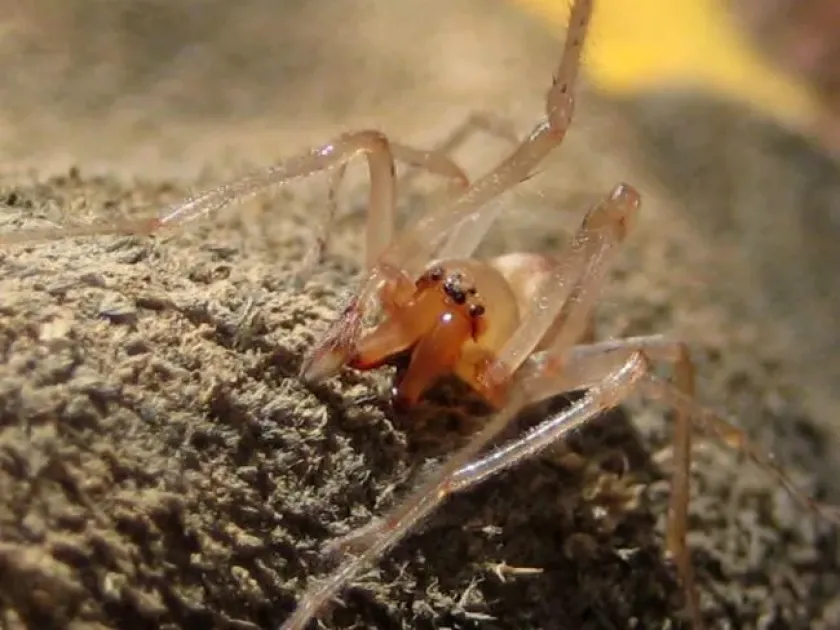
Description
How to identify
Cheiracanthium mordax is a species of spider belonging to the Eutichuridae family, recognized not only as an active predator but also as an agricultural pest due to its interaction with crops and farm workers.
The spider typically exhibits a pale yellow to greenish-yellow coloration, often with distinct brownish chelicerae. Mature specimens usually reach a size of 10-15 millimeters.
A notable feature of this species is its powerful chelicerae, capable of piercing human skin, which can cause significant local pain and allergic reactions during field operations.
This spider is primarily nocturnal, spending daylight hours hiding in retreats made of rolled leaves or silk cocoons constructed near the tips of plant stems.
Reproduction occurs during the warmer months, where females create protective egg sacs often attached to the foliage of cultivated plants, which creates an obstacle for manual harvesting.
What it damages
The primary agricultural damage caused by Cheiracanthium mordax is mechanical, resulting from the construction of dense silk retreats that deform plant leaves and shoots.
The spider affects various crops, including grapevines, cotton, and fruit trees, by pulling leaves together, which can induce necrosis in the affected leaf tissue.
The disruption of the leaf surface due to the webbing negatively impacts photosynthesis and can weaken the overall physiological state of the host plant.
Additionally, the presence of these spiders on plantations poses a safety risk to laborers involved in manual pruning, maintenance, or harvesting activities.
In intensive farming systems, the heavy accumulation of spider nests can interfere with machinery, potentially clogging moving parts during field operations.
When it appears
The activity level of Cheiracanthium mordax is heavily dependent on ambient temperature, typically beginning with the onset of stable warmth in the spring and summer.
Population density often peaks in mid-summer, providing optimal environmental conditions for the development of multiple generations of spiders throughout the season.
During the flowering and fruit-setting stages of crops, the spiders are highly active, occupying the upper sections of plants to construct their protective nests.
As autumn approaches and temperatures drop, the pest's activity wanes, and individuals search for overwintering sites within plant debris or organic mulch.
Agronomists are advised to perform crop monitoring during the period of peak vegetative growth when the characteristic silken cocoons become most evident.
Signs of infestation
The main indicator of infestation is the presence of visibly curled or webbed leaves at the terminal ends of plant shoots.
Morning field inspections often reveal white, silky tubular retreats, inside which the spiders reside during the day.
Small, necrotic spots on the leaf surface underneath the webbing serve as a clear sign of localized damage caused by the spider's activity over several days.
- Presence of silken retreats on leaves
- Curled and deformed terminal shoots
- Development of small necrotic spots where silk is attached
- Direct observation of spiders during field scouting
In severe infestations, plants may appear stunted as the damage to apical growth points disrupts normal development.
Control measures
Managing Cheiracanthium mordax requires an integrated strategy that combines cultural practices with the careful use of selective chemical or biological agents.
Regular pruning and the systematic removal of infested plant material are essential to eliminate egg sacs and reduce the local population.
If population levels exceed economic thresholds, selective insecticides may be employed, though biological control measures are generally preferred to preserve beneficial insects.
Workers must follow strict safety protocols when entering fields where the presence of these spiders is confirmed to avoid painful bites.
Crop rotation and effective weed management play a crucial role in reducing the suitability of the field environment for this species' survival and reproduction.
Taxonomy
- Latin name
- Cheiracanthium mordax
- Family
- Cheiracanthiidae
- EPPO code
- CHIADI
Discussion
No discussions yet — be the first.