
Cheiracanthium
Cheiracanthium
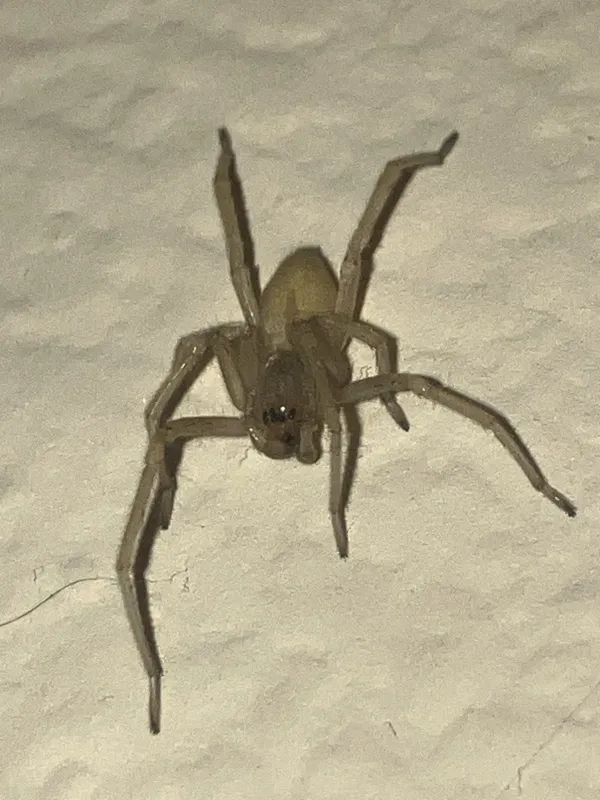
Description
How to identify
Cheiracanthium, commonly known as the yellow sac spider, belongs to the Eutichuridae family. These spiders are typically pale yellow or greenish in color.
They are easily recognized by their relatively long front legs and robust chelicerae, which they use to protect their egg sacs aggressively.
Unlike orb-weavers, these spiders do not build large, complex webs for trapping prey. Instead, they are active hunters that wander at night.
During the day, they remain hidden inside tubular silken retreats, often built by folding or rolling leaves of host plants.
They are widely distributed and can adapt to various agricultural environments, making them a common sight in orchards and vineyards.
What it damages
While Cheiracanthium spiders do not feed on plant tissues, their nesting behavior causes physical damage to various agricultural crops.
By using silk to roll leaves into retreats, they can distort terminal shoots and prevent proper leaf development on fruit trees and vines.
The silken retreats often act as moisture traps, creating micro-environments that facilitate the growth of fungal pathogens on the leaves and fruit.
The presence of these spiders on harvested produce like grape bunches significantly lowers the market quality and aesthetic value of the crop.
Furthermore, their defensive behavior poses a nuisance for workers, as the spiders are known to bite if they feel threatened during canopy maintenance.
When it appears
Cheiracanthium activity typically begins in late spring, coinciding with the rise in temperatures and the onset of plant growth.
The population peaks during mid-summer, when mating occurs and younger generations begin to disperse throughout the vegetation.
As autumn approaches, adult spiders increase their activity levels while searching for suitable sheltered locations to overwinter.
Their life cycle is closely synchronized with the development of host plants, providing them with necessary cover for both hunting and reproduction.
In many regions, they remain active until the first significant frost, which forces them into deeper shelter or hibernation.
Signs of infestation
The most reliable sign of an infestation is the presence of rolled or curled leaves at the tips of shoots, held together by white silk.
Inspecting these curled leaves will usually reveal the spider itself or a small, papery white silk sac hidden inside the fold.
Fine, wispy lines of silk extending along leaf veins, without the formation of a typical geometric web, are indicative of Cheiracanthium presence.
Leaf tissue within the retreat may show signs of chlorosis or necrosis due to the persistent contact with the spider's webbing and enclosure.
- Curled leaf tips tied with white silk.
- Distinctive papery white egg sacs in leaf axils.
- Localized yellowing or browning on leaves used as retreats.
Control measures
Effective management begins with regular monitoring, particularly checking the terminal shoots of trees and grapevines during the growing season.
Mechanical control, such as pruning and removing leaves that harbor silk retreats, is a highly effective way to reduce localized populations.
Maintaining clean orchard floors and removing weeds prevents the buildup of alternative hosts and nesting sites for the spiders.
Biological control, including the encouragement of natural predators like lacewings or predatory wasps, can help keep spider numbers in check.
Chemical intervention should be used cautiously, as these spiders are often protected by their silken nests, making contact sprays less effective.
Taxonomy
- Latin name
- Cheiracanthium
- Family
- Cheiracanthiidae
- EPPO code
- CHIASP
Discussion
No discussions yet — be the first.