
Strawberry aphid
Chaetosiphon thomasi
Description
How to identify
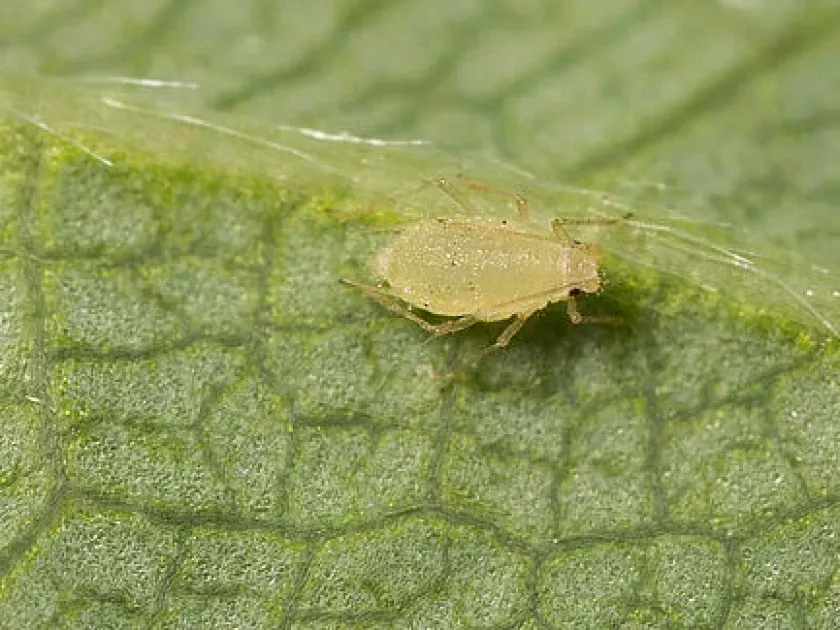
The strawberry aphid (Chaetosiphon thomasi) belongs to the family Aphididae and is a significant pest specifically targeting plants of the genus Fragaria.
These insects are very small, typically measuring between 1.5 and 2 mm in length, and exhibit a pale yellow to light green coloration.
A distinctive physical characteristic is the presence of specialized hairs on their bodies, which end in club-like tips, recognizable under magnification.
They live in colonies, primarily inhabiting the underside of younger leaves and developing crown tissue, where they find the most succulent sap.
The population consists of wingless forms that maintain local infestations and winged forms capable of migrating to colonize new strawberry patches.
What it damages
The primary damage caused by Chaetosiphon thomasi results from the intensive sucking of plant sap, which weakens the strawberry plant significantly.
Direct damage includes the curling, yellowing, and general deformation of leaves, which inhibits the plant's overall development and photosynthesis.
More critically, the strawberry aphid is the most efficient vector for various strawberry-infecting viruses, including crinkle and mild yellow-edge viruses.
Once a plant is infected with these viruses via aphid feeding, the decline in yield and plant vigor becomes irreversible, often necessitating the removal of the entire patch.
Heavy infestations can lead to stunted plant growth, resulting in reduced fruit size and poor overall harvest quality for the commercial grower.
When it appears
The strawberry aphid typically overwinters as eggs, which are deposited in autumn on the crown or the undersides of surviving leaves.
Hatching occurs in early spring as temperatures rise, leading to the development of founder colonies that multiply rapidly through parthenogenesis.
Population density usually peaks during late spring and early summer, coinciding with the flowering and fruit-setting stages of the strawberry crop.
High temperatures and dry conditions can accelerate the reproductive rate of the aphid, leading to rapid expansion across the field.
As daylight duration decreases in autumn, sexual forms emerge to mate and lay the eggs that will persist through the dormant winter period.
Signs of infestation
Visual identification starts with observing curled or twisted leaves in the center of the strawberry crown, often accompanied by chlorotic spots.
The presence of sticky honeydew secreted by the aphids often attracts ants, which serve as an indirect indicator of a thriving aphid colony.
In cases of severe infestation, the leaves may show signs of yellowing or necrotic edges due to the toxic saliva injected during feeding.
Developing fruit may also be affected, showing reduced size and poor ripening due to the physiological stress placed upon the parent plant.
- Curled and deformed young leaves
- Sticky honeydew residue on foliage
- Ant activity associated with colonies
- Visible aphids on the undersides of leaves
- Stunted plant growth and mosaic patterns
Control measures
The first line of defense is the use of certified virus-free runners to ensure the initial planting is free from aphid-borne pathogens.
Regular monitoring of the fields during the spring is crucial for timely intervention, allowing for targeted treatment before the population explodes.
Where necessary, systemic insecticides should be applied according to local regulations, ensuring that harvest intervals are strictly observed.
Promoting a healthy ecosystem by encouraging natural predators, such as lady beetles, lacewings, and parasitic wasps, can keep aphid numbers under threshold.
Cultural practices like removing old foliage after harvest and managing surrounding weeds help reduce the overwintering population of the aphid.
Taxonomy
- Latin name
- Chaetosiphon thomasi
- Order
- Hemiptera (bugs, aphids, leafhoppers)
- Family
- Aphididae
- EPPO code
- CHTSTH
Discussion
No discussions yet — be the first.