
Strawberry aphid
Chaetosiphon potentillae
Description
How to identify
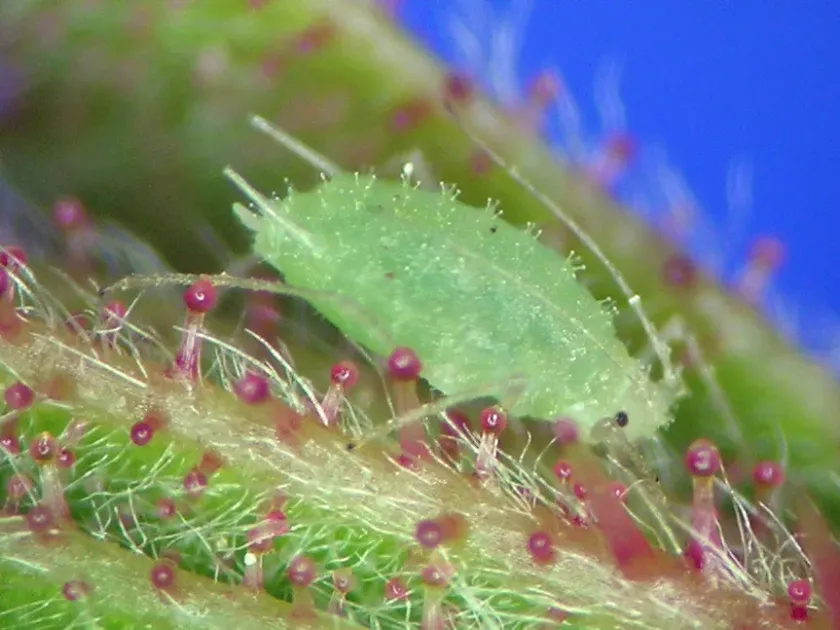
The strawberry aphid (Chaetosiphon potentillae) belongs to the Aphididae family. It is a tiny insect distinguished by its club-shaped siphunculi on the abdomen and fine hairs covering its body.
These aphids exist in both winged and wingless forms, allowing them to disperse rapidly across fields during the warmer months of the growing season.
Their biological cycle is closely tied to the Rosaceae family. They reproduce parthenogenetically, which facilitates an explosive increase in population size under favorable conditions.
They thrive in moderate temperatures and high humidity, which support the rapid growth of succulent host plant tissues necessary for their feeding and maturation.
Overwintering typically occurs in the egg stage, which the females deposit near plant buds or in bark crevices, ensuring the species survives until the following spring.
What it damages
The primary host for this pest is the strawberry plant. The aphids feed by sucking sap from the young leaves, petioles, and flower stalks of the host plant.
Heavy infestations lead to significant loss of nutrients, weakening the plant and making it susceptible to secondary infections and environmental stress.
The strawberry aphid is a known vector for various plant viruses, such as strawberry crinkle and yellow edge diseases, which can ruin entire berry plantations.
Feeding causes leaf curling, yellowing, and stunted growth. Photosynthesis is severely impaired, resulting in poor berry development and reduced overall yield quality.
The aphids excrete honeydew, a sugary substance that encourages the growth of sooty mold, which blocks sunlight and further reduces the plant's health and aesthetic appeal.
Signs of infestation
The most visible indicator of an infestation is the curling and distortion of young, tender leaves at the center of the plant crown.
Examining the underside of leaves will reveal colonies of pale yellow or green insects clustering along the leaf veins and stems.
A high density of ants patrolling the plants is a strong sign of aphid presence, as ants protect the aphids to harvest their sugary honeydew secretions.
Plants may show reduced growth rates and poor fruit development. In severe cases, flower stalks may wither before the fruit can fully form or ripen properly.
The presence of a sticky residue on foliage, often followed by a black, dusty-looking coating of sooty mold, is a clear warning that an aphid colony is established.
Control measures
Effective management requires an integrated approach that combines cultural practices, biological controls, and judicious use of chemical treatments.
Keeping the area free of weeds and maintaining good plant hygiene are crucial first steps in preventing the initial colonization of the strawberry aphid.
In cases of severe infestation, systemic insecticides are often necessary to reach aphids hidden inside curled leaves where contact pesticides fail to penetrate.
- Encouraging natural predators like ladybugs, lacewings, and parasitic wasps.
- Monitoring plant growth during early spring to detect aphids before they colonize.
- Using insecticidal soaps or neem oil for mild outbreaks on smaller patches.
Regular inspection of the plant crowns is essential, as early detection allows for physical removal of affected leaves, potentially stopping the spread without heavy chemicals.
Taxonomy
- Latin name
- Chaetosiphon potentillae
- Order
- Hemiptera (bugs, aphids, leafhoppers)
- Family
- Aphididae
- EPPO code
- CHTSPO
Discussion
No discussions yet — be the first.