
Small strawberry aphid
Chaetosiphon minus
Description
How to identify
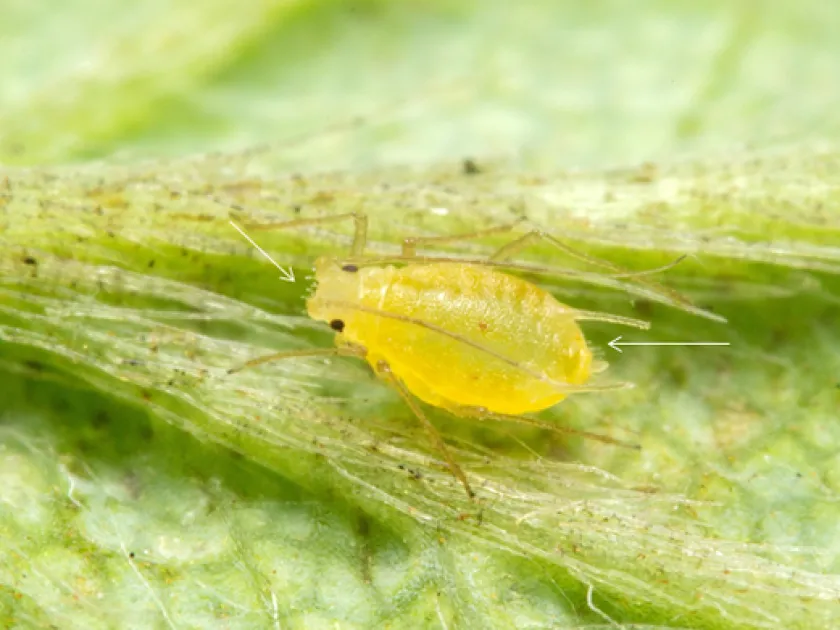
The small strawberry aphid (Chaetosiphon minus) belongs to the family Aphididae. It is a tiny insect characterized by a pale yellow to light green body, which provides excellent camouflage on strawberry leaves.
The key diagnostic feature of this species is the presence of long, club-shaped hairs (setae) on its body. These distinctive hairs are a specific adaptation that helps in the identification of this aphid species under magnification.
This pest is primarily found on the underside of young strawberry leaves and within the folds of leaf stipules. Because of their small size and specific location, they are often overlooked during initial field inspections.
The life cycle includes both wingless individuals and winged morphs. The winged adults are responsible for the rapid spread of the population between different areas of the field or to neighboring plantations.
The species survives the winter mainly as eggs, which are deposited on the crown of the strawberry plant or near the base of the leaf stalks to withstand low temperatures.
What it damages
The primary host plant for this aphid is cultivated strawberry. These insects feed by piercing the plant tissue with their mouthparts and sucking out the cell sap, which leads to plant exhaustion.
Besides the direct damage, the small strawberry aphid is a notorious vector of several plant viruses, including strawberry crinkle virus and strawberry mild yellow edge virus.
Feeding by aphids causes the leaves to curl, twist, and show signs of stunted growth. The loss of nutrients and the introduction of viral pathogens drastically reduce the vigor of the plant.
The aphids secrete honeydew, a sugary substance that coats the leaves. This honeydew serves as a substrate for the growth of sooty mold, which can further hinder photosynthesis in the plant.
Severe infestations lead to a significant decline in fruit production, smaller berries, and an overall lack of productivity, which can make entire strawberry patches commercially non-viable.
When it appears
The pest activity begins in early spring as soon as the plant starts producing new leaves. The population growth is heavily dependent on favorable spring temperatures and humidity levels.
May and June are typically the peak months for aphid activity, corresponding with the active growing season of the strawberries. During this time, constant monitoring is essential.
During the hotter summer months, the rate of reproduction might slow down, yet the aphids persist in shaded areas of the field, maintaining a continuous threat to the crop.
A secondary population surge often occurs in late summer when the plants begin to recover and grow new foliage after the main harvest is finished.
As temperatures drop in the autumn, the aphids produce eggs that are laid on the plants, ensuring that the cycle will restart in the next spring season.
Signs of infestation
Early symptoms include the curling and crinkling of the youngest, innermost leaves. These leaves often appear deformed or stunted compared to healthy foliage.
Using a magnifying glass to check the undersides of the leaves will reveal colonies of small, pale-colored aphids. Their presence is often confirmed by their clustered, sessile lifestyle.
The presence of ants roaming over the strawberry plants is a strong indicator of an aphid infestation, as ants protect aphids in exchange for their sugary honeydew secretions.
Sticky, shiny patches on the leaves or the presence of black sooty mold are classic signs of established colonies and advanced stages of infestation.
If the plants look generally weak, have shortened flower stalks, or exhibit premature leaf yellowing, it is highly likely that an aphid population is causing significant stress.
Control measures
The best defense starts with planting certified virus-free runners sourced from reliable nurseries to prevent the introduction of both the aphids and the viruses they carry.
Cultural practices, such as controlling weeds that could serve as alternative hosts and ensuring proper spacing between plants to improve airflow, significantly reduce the risk of infestation.
Biological control methods, including the release of beneficial predators like lady beetles or lacewings, can be very effective in managing smaller aphid populations.
- Frequent scouting of young leaves in spring.
- Use of insecticidal soaps or neem oil for mild outbreaks.
- Systemic insecticides for severe, uncontrolled infestations.
- Removal and destruction of highly infested plant parts.
If chemical intervention is necessary, it is important to choose insecticides that are safe for pollinators and appropriate for use on berry crops, always following the harvest interval guidelines.
Taxonomy
- Latin name
- Chaetosiphon minus
- Order
- Hemiptera (bugs, aphids, leafhoppers)
- Family
- Aphididae
- EPPO code
- CHTSMI
Discussion
No discussions yet — be the first.