
Strawberry aphid
Chaetosiphon fragaefolii
Description
How to identify
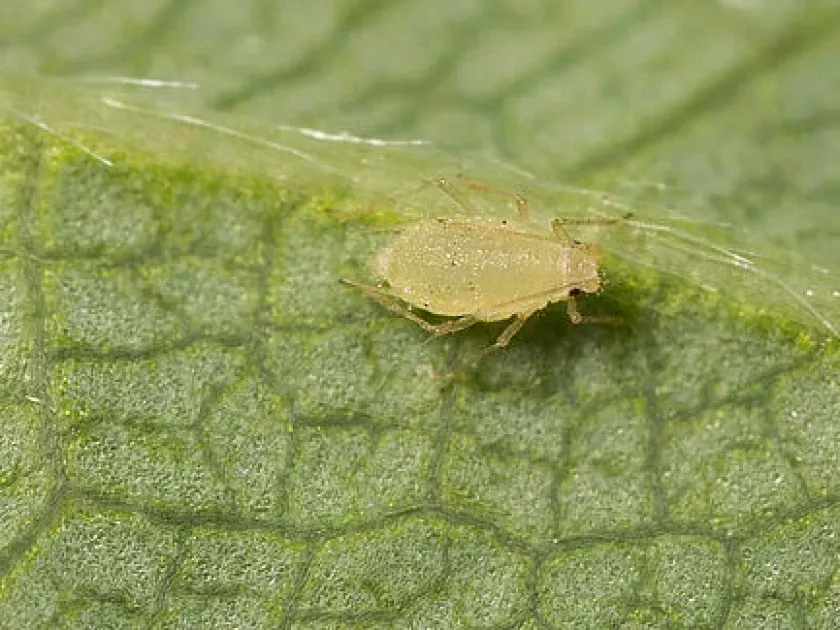
The strawberry aphid (Chaetosiphon fragaefolii) is a small sap-sucking insect belonging to the Aphididae family. It is typically yellowish-white or pale green, characterized by long, knobbed hairs distributed over its body, which distinguishes it from other common aphid species.
The life cycle includes both wingless and winged forms. The winged forms, known as alates, are produced when the colony becomes crowded, allowing the pest to disperse effectively to new host plants during the growing season.
What it damages
This species primarily targets plants within the Rosaceae family, with cultivated strawberries being its main host. The aphids typically cluster on the undersides of leaves and on the succulent stems of the strawberry plant.
By extracting plant sap, the aphids cause leaves to curl, twist, and become stunted. Severe infestations can significantly reduce plant vigor, suppress flower development, and lead to a substantial decrease in berry production.
When it appears
In many regions, the strawberry aphid overwinters as eggs on the strawberry plant's crown or on the underside of old leaves. In spring, as temperatures rise, the eggs hatch into nymphs, which begin to feed and produce successive generations.
The peak population density usually occurs during the spring growth flush and the early fruiting stage. Environmental conditions, such as mild winters and humid spring weather, favor rapid population growth and frequent aphid outbreaks.
Signs of infestation
Visual identification is based on the appearance of distorted, crinkled, or curled leaves in the center of the plant. A sticky substance known as honeydew is often visible on the foliage, which may subsequently develop sooty mold.
The most devastating sign of a strawberry aphid infestation is the presence of plant viruses. As a highly efficient vector, C. fragaefolii transmits several serious viral diseases, such as strawberry crinkle and strawberry mild yellow edge, which cause systemic damage to the entire plant.
Control measures
Integrated Pest Management (IPM) is essential for controlling this pest. Prevention starts with the use of certified, virus-indexed planting material and careful site selection to avoid proximity to wild strawberry reservoirs.
- Use of reflective mulches to deter aphid colonization.
- Encouragement of natural predators such as lady beetles, lacewings, and hoverflies.
- Application of horticultural oils or soaps for mild infestations.
- Strategic use of systemic insecticides before the flowering stage to minimize damage.
Taxonomy
- Latin name
- Chaetosiphon fragaefolii
- Order
- Hemiptera (bugs, aphids, leafhoppers)
- Family
- Aphididae
- EPPO code
- CHTSFR
Discussion
No discussions yet — be the first.