
Viburnum aphid
Ceruraphis
Description
How to identify
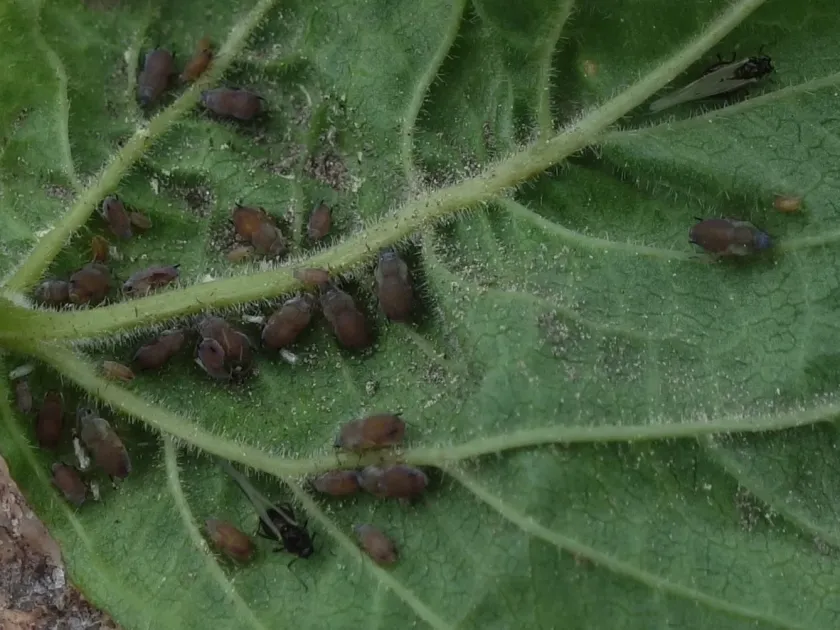
The viburnum aphid (scientific name Ceruraphis eriophori) is a small insect belonging to the family Aphididae. Adult specimens typically reach 2–3 mm in length and exhibit colors ranging from yellowish-green to brownish-pink.
This species has a complex life cycle. It overwinters as eggs, which are deposited by females in the crevices of the viburnum bark or at the base of buds during the autumn months.
In spring, the eggs hatch into nymphs, which immediately begin to feed on the sap of the developing buds and young, tender leaves of the host plant.
The life cycle includes multiple generations throughout the season. Some individuals develop wings to migrate, but the viburnum shrub often remains the primary site for the colony's growth.
Their rapid reproductive rate, occurring through parthenogenesis, allows for significant population explosions in favorable spring weather conditions.
What it damages
The viburnum aphid primarily targets Viburnum opulus and its various cultivars. It is considered a significant aesthetic and physiological pest for ornamental gardening.
As the aphids feed on the undersides of the leaves, they inject toxins that cause the leaves to curl, twist, and deform, forming structures often referred to as galls.
Continuous sap extraction weakens the plant, resulting in reduced vigor, stunted shoot growth, and a loss of the shrub's overall decorative appeal.
Heavily infested viburnum shrubs may experience leaf drop and premature drying of the affected terminal shoots, particularly during dry and hot summer spells.
Furthermore, the aphids act as vectors for various plant viruses, which can lead to long-term health decline for the ornamental shrubs in the landscape.
When it appears
The activity begins in early spring as soon as temperatures rise above 10°C, coinciding with the initial swelling and opening of the viburnum buds.
The peak period of population density and damage is observed during late May and June, when the host plant produces a surge of fresh, soft vegetative growth.
During the peak of summer, some aphid populations may migrate to secondary hosts (often specific sedges), though they frequently maintain a presence on viburnum throughout the season.
Migration back to the primary host occurs in autumn, where the insects mate and lay eggs for the upcoming wintering phase.
Effective monitoring should start at the onset of bud burst and continue consistently throughout the early summer to catch early signs of infestation.
Signs of infestation
The most noticeable sign of a viburnum aphid infestation is the severe curling and distortion of the leaves at the tips of the branches, often accompanied by a red or purple discoloration.
When looking underneath these curled leaves, you will typically find dense colonies of the aphids, often accompanied by their shed white skins.
The presence of sticky honeydew secreted by the aphids often leads to the growth of sooty mold, appearing as a dark or black powdery coating on the foliage.
High ant activity on the stems is another reliable indicator, as ants are attracted to the sweet honeydew and actively protect the aphids from predators.
- Curling and distortion of terminal foliage.
- Reddish or brownish leaf discoloration.
- Visible colonies on the underside of leaves.
- Sticky honeydew and black sooty mold on the surface.
- Presence of protective ant colonies.
Control measures
Early spring treatments with dormant oils (horticultural oils) are highly effective in suffocating the overwintering eggs before they hatch.
For managing active infestations, installing sticky bands around the trunks of the shrubs can prevent ants from reaching the aphids and protect their natural predators.
In cases of severe infestation, the application of systemic insecticides is recommended to ensure the chemical reaches the insects protected inside the curled leaves.
For smaller infestations or organic gardens, manual pruning of the affected shoot tips and the use of insecticidal soaps or neem oil solutions are effective alternatives.
Maintaining plant health through proper fertilization and watering helps the shrub recover faster and increases its natural resistance to future aphid pressure.
Taxonomy
- Latin name
- Ceruraphis
- Order
- Hemiptera (bugs, aphids, leafhoppers)
- Family
- Aphididae
- EPPO code
- CERRSP
Discussion
No discussions yet — be the first.