
Cereal leaf miner fly
Cerodontha denticornis
Description
How to identify
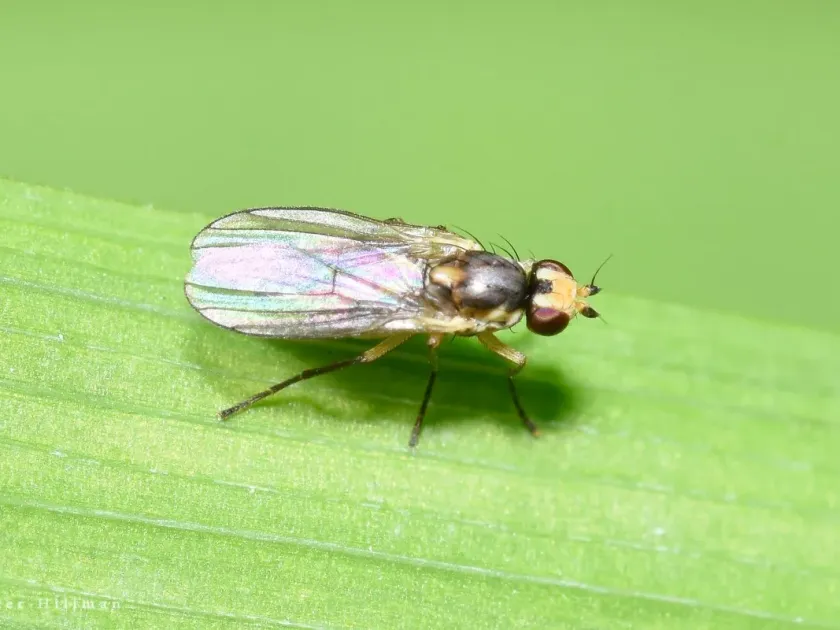
The cereal leaf miner fly, scientifically known as Cerodontha denticornis, belongs to the Diptera order and the Agromyzidae family. These are small flies characterized by their specific morphology and larval development within plant leaves.
Adults are typically 2-3 mm long with a dark, often shiny body and transparent wings. They are agile fliers, especially active during the warmer months of the growing season when they seek hosts for egg-laying.
The larvae are small, legless, and white or yellowish. They spend their entire feeding stage inside the mesophyll of the leaf, which protects them from environmental factors and many surface-level predators.
The lifecycle includes egg, larva, pupa, and adult stages. The female uses a sharp ovipositor to insert eggs into the epidermis of the leaf, which is the starting point of the mining damage seen on crops.
Pupation usually occurs within the mine itself or in the soil. The insect typically overwinters in the pupal stage, hidden within plant debris, crop stubble, or the upper layers of the soil profile.
What it damages
The primary hosts of this pest include various grass species. Agricultural crops such as wheat, barley, oats, and corn are the most susceptible to infestation and subsequent economic damage.
Larval feeding involves consumption of the leaf parenchyma, resulting in characteristic winding tunnels known as mines. This feeding disrupts the photosynthetic capacity of the plant by destroying the green tissue.
Young plants are particularly vulnerable. Heavy mining in the early growth stages can severely restrict nutrient uptake and growth, leading to weak stems and a reduction in the overall stand density of the crop.
In addition to direct tissue damage, the mines create entry points for secondary infections by fungi or bacteria. This combination of mechanical damage and pathogens can further exacerbate yield losses.
The economic impact depends on the crop's growth stage and the intensity of the infestation. Persistent, high populations of the fly can lead to stunted growth and significant reductions in grain filling.
Signs of infestation
The most diagnostic sign is the appearance of white or pale-green, winding serpentine mines on the leaves. These patterns are clearly visible and contrast with the healthy green surface of the plant.
Close inspection of the leaf under light will reveal the larva moving or resting inside the mine. Dark spots inside the tracks are fecal pellets left by the feeding larva, confirming the pest's presence.
Yellowing or chlorotic patches on the leaves are often caused by the adult female's feeding and oviposition punctures. These spots indicate that the adult flies are active and laying eggs on the crop.
Affected leaves tend to wither and roll up at the tips as they lose vitality. In severe cases, the entire leaf blade may turn brown and necrotic, which is a sign of extensive tissue destruction.
Monitoring the field for these specific symptoms is crucial during the tillering stage of cereals. Identifying the pattern of the mines helps distinguish this pest from other leaf-damaging organisms.
Control measures
Cultural control practices are the cornerstone of management. Deep plowing of fields after harvest buries the pupae, significantly reducing the emergence of the next generation of adults.
Crop rotation is an effective way to break the pest's lifecycle. By planting non-host crops in sequential years, farmers can prevent the buildup of Cerodontha denticornis populations in the soil.
Weed management, particularly controlling wild grasses around field edges, is essential. These areas often serve as bridges for the fly to migrate into the primary crop during the growing season.
Chemical control should be applied based on scouting and economic threshold levels. Systemic insecticides are the preferred choice as they move through the plant tissue to target larvae hidden inside the mines.
Biological control agents, such as parasitic wasps that prey on the larvae, play a vital role in natural regulation. Maintaining a balanced ecosystem near fields can help keep pest populations below damaging levels.
Taxonomy
- Latin name
- Cerodontha denticornis
- Order
- Diptera (flies)
- Family
- Agromyzidae
- EPPO code
- CERDDE
Discussion
No discussions yet — be the first.