
Ceratovacuna styraci
Ceratovacuna styraci
Description
How to identify
Ceratovacuna styraci is a specialized aphid species belonging to the Aphididae family. This pest is known for its complex life cycle that involves alternating between different host plants to complete its development.
A distinctive biological feature of this species is the presence of specialized larval stages, often called "soldiers." These larvae are equipped with developed mandibles used to defend the colony from predators.
The adults are small insects, typically measuring a few millimeters. They adapt their morphology to survive within specific leaf structures known as galls, which they induce on their primary host.
The colonies are often covered in waxy secretions, which provide additional protection against environmental factors and some natural enemies.
Taxonomically, they are categorized under the Hormaphidinae subfamily, reflecting their unique evolutionary path and specific association with Styrax trees.
What it damages
The primary hosts of Ceratovacuna styraci are trees of the genus Styrax and various species of bamboo. Styrax trees are used to form galls, while bamboo serves as the main feeding ground.
On bamboo, these aphids feed on plant sap by piercing the leaves and young shoots. This process significantly drains the plant's resources, leading to chlorosis and stunted growth.
The sticky honeydew secreted by the aphids provides an ideal medium for sooty mold to grow. This black fungus covers the leaves and inhibits the plant's ability to perform photosynthesis.
Severe infestations can cause premature leaf drop and the death of young bamboo culms. This poses a major threat to both nursery stocks and established bamboo plantations.
The physical deformation caused by gall formation on Styrax trees can disrupt normal foliage development and reduce the overall aesthetic and structural health of the tree.
When it appears
The life cycle is strictly synchronized with the phenology of the host plants. In the spring, winged aphids migrate from Styrax to bamboo to start new colonies.
During the summer months, the population on bamboo increases rapidly through several generations. This is the period of maximum damage and visible activity.
As autumn approaches, the aphids undergo a return migration. Sexual generations develop and return to Styrax trees to lay overwintering eggs on the bark.
Temperature fluctuations are the main driver for the speed of the life cycle. Warm weather conditions significantly shorten the time between generations, increasing the pest's impact.
Monitoring the migration timing is essential for professional growers to apply protective measures before the infestation becomes widespread.
Signs of infestation
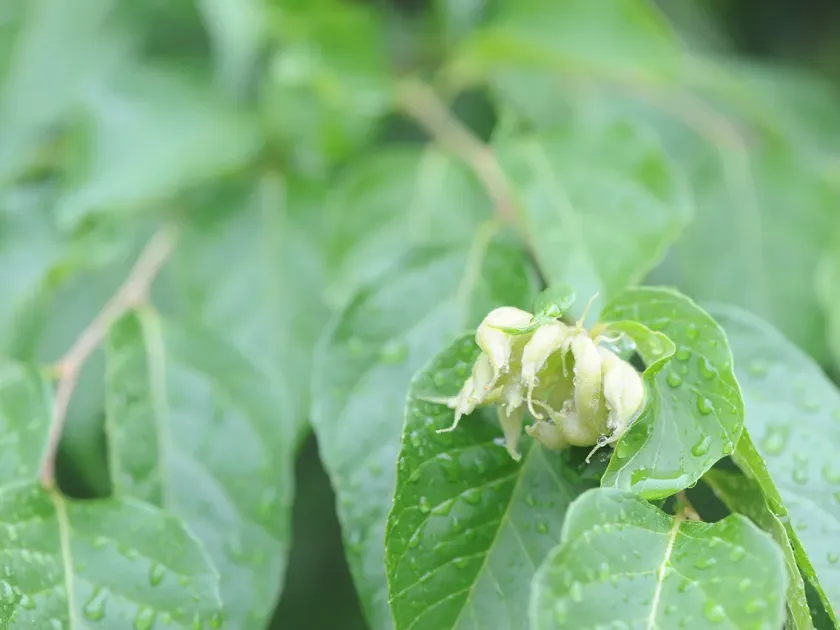
The most prominent sign on Styrax trees is the formation of abnormal, fruit-like or irregular growths known as galls on the leaves.
On bamboo, the presence of whitish, waxy wool-like secretions on the underside of the leaves is a primary indicator of an active aphid colony.
The appearance of sooty mold, which manifests as a dark, dusty coating on the leaves, is a common secondary sign of the presence of honeydew-secreting insects.
Frequent ant activity on bamboo stems often signals the presence of aphids, as ants feed on the honeydew produced by the colony.
Yellowing, curling, or overall wilting of bamboo leaves—particularly in the lower canopy—indicates that the aphids have established a significant feeding site.
Control measures
Effective management of Ceratovacuna styraci requires a combination of early detection, cultural practices, and, when necessary, chemical intervention.
Systemic insecticides are the most effective chemical method, as they are absorbed by the plant and target the aphids through the sap they consume.
- Early-season spraying before leaf curling protects the plant effectively.
- Manual removal and destruction of galls on Styrax trees during the spring.
- Pruning and disposing of heavily infested bamboo leaves to reduce population pressure.
- Enhancing biological control by preserving natural enemies like ladybirds and lacewings.
Where possible, site planning should avoid planting bamboo in close proximity to Styrax trees to interrupt the host alternation cycle.
Consistent monitoring and the use of sticky traps can provide early warnings, allowing for localized treatments that minimize the need for broad-spectrum chemical use.
Taxonomy
- Latin name
- Ceratovacuna styraci
- Order
- Hemiptera (bugs, aphids, leafhoppers)
- Family
- Aphididae
- EPPO code
- ASPXSR
Discussion
No discussions yet — be the first.