
Orchid aphid
Cerataphis orchidearum
Description
How to identify
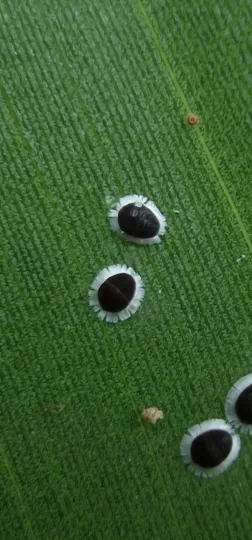
The orchid aphid, Cerataphis orchidearum, is a highly unusual aphid species that mimics a scale insect in appearance. Adult insects are flat, dark brown, and circular, with a distinctive fringe of white waxy filaments along their margins.
Taxonomically, it belongs to the order Hemiptera and the family Aphididae. Due to their sedentary appearance and lack of visible legs, they are frequently misidentified by collectors, leading to inappropriate treatment choices.
What it damages
This pest specifically targets various orchid genera, including Cattleya, Dendrobium, and Vanda. They prefer the underside of leaves and the junction of leaves with the pseudobulb.
Beyond orchids, Cerataphis orchidearum is known to infest palms and other ornamental tropical flora, posing a threat to biodiversity in indoor garden environments and nursery collections.
When it appears
In greenhouses and indoor cultivation, the life cycle of Cerataphis orchidearum is continuous. They do not have a winter diapause in stable warm environments, allowing populations to expand rapidly throughout the year.
The rate of reproduction is temperature-dependent; thus, maintaining constant temperatures between 20°C and 25°C provides ideal conditions for the pest to colonize new plants within a short timeframe.
Signs of infestation
The initial signs of infestation are the presence of dark, crust-like spots on the foliage. Under close inspection, the white waxy fringe becomes visible, distinguishing them from true scale insects.
Infested plants often display signs of general weakness and chlorosis. The secretion of honeydew is common, which promotes the growth of sooty mold, negatively impacting the plant's photosynthetic capacity.
Control measures
Manual control involves wiping infested areas with a cotton swab soaked in isopropyl alcohol or a mild soapy water solution. This physical action removes the waxy shield and the insects themselves.
Systemic insecticides are required for complete eradication, especially for heavy infestations. Products containing neonicotinoids are highly effective as they are absorbed by the plant and ingested by the aphids during feeding.
A rigorous treatment schedule is essential, involving multiple applications with a 7 to 10-day interval. This ensures that newly emerged nymphs are eliminated before they reach reproductive maturity and start a new cycle.
Taxonomy
- Latin name
- Cerataphis orchidearum
- Order
- Hemiptera (bugs, aphids, leafhoppers)
- Family
- Aphididae
- EPPO code
- CEATOR
Discussion
No discussions yet — be the first.