
Cerataphis freycinetiae
Cerataphis freycinetiae
Description
How to identify
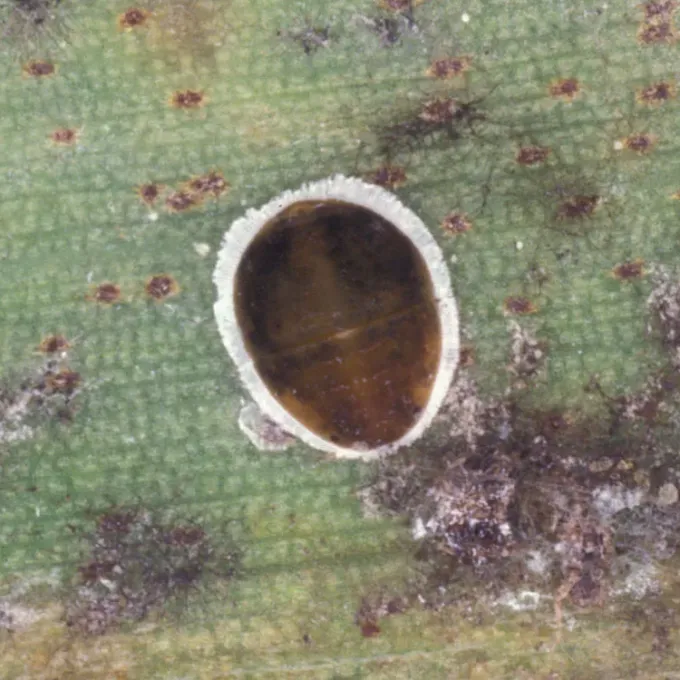
Cerataphis freycinetiae is a species of aphid belonging to the family Aphididae, order Hemiptera. Unlike common aphids, this species exhibits a unique morphology that makes it look remarkably like a scale insect or a small whitefly.
The adult stage has a flattened, oval body shape, often fringed with white waxy filaments, which provides excellent camouflage against the leaf surface of the host plant. They are typically dark brown or black in color.
Adults are largely sessile, meaning they remain stationary for long periods while feeding, which often causes confusion among growers who mistake them for armored scale insects.
The species reproduces parthenogenetically, which allows for rapid colonization of host plants, especially in controlled environments like greenhouses where natural predators are absent.
Both winged and wingless forms exist within a colony. The winged morphs are responsible for dispersal, allowing the pest to spread across different plants within a short period.
What it damages
The primary hosts of Cerataphis freycinetiae are palm species (Arecaceae) and members of the Freycinetia genus. They colonize the undersides of leaves, particularly along the midribs, where the vascular tissue is easily accessible.
As they feed on the phloem sap, the plant suffers from nutrient depletion. This leads to yellowing (chlorosis), stunted growth, and a general decline in the plant's overall health and vigor.
The excretion of large amounts of honeydew is a major consequence of their feeding. This sweet substance promotes the growth of sooty mold, which creates a dark, unsightly film on the leaf surface.
Sooty mold growth inhibits photosynthesis, further weakening the plant and making it more susceptible to secondary infections or environmental stress factors.
If left unmanaged, heavy infestations can cause leaf necrosis, premature leaf drop, and, in severe cases, the death of young or weakened ornamental specimens.
Signs of infestation
The most prominent sign is the presence of flat, dark, scale-like insects on the underside of the leaves. If disturbed, these insects may show slight movement, distinguishing them from true scale insects.
Sticky honeydew deposits on the foliage are a clear indicator of infestation. This residue is often accompanied by the presence of ants, which protect the aphids in exchange for the sugary honeydew.
The development of a black, powdery coating known as sooty mold on the upper side of the leaves indicates that the aphid colony has been established for a significant amount of time.
Curled or deformed young leaves are common indicators, as the aphids prefer to settle on the most tender and nutrient-rich tissues during the plant's growth phase.
The presence of white, cast-off skins (exuviae) surrounding the colonies confirms that the aphids are actively molting and reproducing on the plant.
Control measures
Effective management requires the application of systemic insecticides containing active ingredients like imidacloprid, which are absorbed by the plant and target the sap-feeding pests directly.
Mechanical control is highly effective for localized infestations. Carefully wiping the leaves with a cotton swab dipped in soapy water or isopropyl alcohol can remove the waxy protective layer, killing the pests instantly.
Quarantine new plant arrivals for several weeks before introducing them to an established collection to prevent the accidental introduction of Cerataphis freycinetiae.
Biological control methods, such as introducing predatory mites or parasitic wasps, can be successful in large greenhouse environments but require precise timing and population monitoring.
Maintaining good airflow and moderate humidity levels can help manage the environment to be less favorable for aphid reproduction while ensuring the plant remains healthy enough to resist infestation.
Taxonomy
- Latin name
- Cerataphis freycinetiae
- Order
- Hemiptera (bugs, aphids, leafhoppers)
- Family
- Aphididae
- EPPO code
- CEATFR
Discussion
No discussions yet — be the first.