
Parsnip aphid
Cavariella pastinacae
Description
How to identify
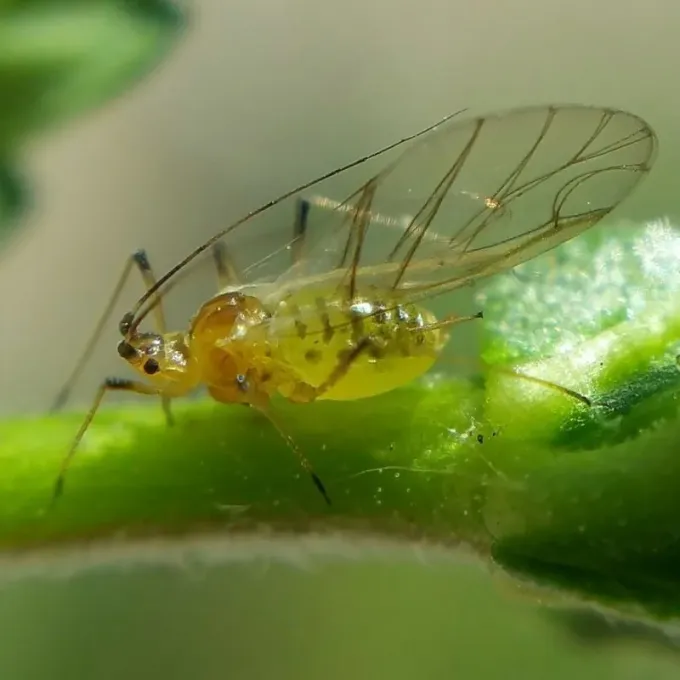
The parsnip aphid (Cavariella pastinacae) is an insect species from the family Aphididae. Adults are small, measuring about 1.5–2.5 mm, with a pale green or yellowish-green body color.
The species is easily identified by the presence of a distinct supracaudal process located above the cauda on the abdomen, which is a unique anatomical feature.
This species is heteroecious, meaning it alternates between two types of host plants. It overwinters as eggs on willow (Salix) trees, then moves to secondary herbaceous hosts in late spring.
The aphids are known for their high reproductive rate, producing multiple generations throughout the growing season if temperatures remain moderate.
Both apterous (wingless) and alate (winged) morphs exist, with the latter being responsible for the infestation of carrot and parsnip fields.
What it damages
The parsnip aphid primarily attacks plants in the Apiaceae family, including carrots, parsnips, celery, parsley, and dill, causing significant agricultural damage.
By feeding on the phloem sap, the aphids extract essential nutrients, leading to stunted plant growth, reduced vigor, and leaf chlorosis.
Beyond direct feeding damage, they act as primary vectors for several plant viruses, including the carrot motley dwarf virus, which causes severe yield losses.
The secretion of honeydew promotes the development of sooty mold, which further interferes with the photosynthetic activity of the leaves.
In seed production fields, the infestation of flower stalks leads to poor seed development and lower germination quality.
Signs of infestation
The most visible signs of infestation are curled, crinkled leaves that often show discoloration or localized yellowing due to the feeding activity.
The presence of honeydew, a sticky substance on the foliage, often accompanied by black sooty mold growth, is a classic indication of an aphid colony.
Plants heavily infested with aphids exhibit reduced height and overall poor health compared to unaffected crops in the same field.
Detailed inspections of the lower leaf surfaces and the base of the petioles usually reveal dense populations of the aphids grouped together.
Early-season infestation on young seedlings can lead to total crop failure if left unchecked, as the plants fail to establish properly.
Control measures
Effective management begins with cultural practices, such as isolating apiaceous crop fields from willow plantations to reduce early infestation pressure.
Sanitation is critical, which involves the removal of alternative host weeds from field margins to limit the population reservoir during the season.
Chemical control involving systemic insecticides is a standard approach when aphid populations exceed economic thresholds to minimize virus transmission.
Encouraging biological control agents, including lady beetles and lacewings, can help suppress aphid populations in integrated pest management programs.
- Field sanitation and weed control
- Crop rotation techniques
- Monitoring population density
- Applying targeted insecticides
Taxonomy
- Latin name
- Cavariella pastinacae
- Order
- Hemiptera (bugs, aphids, leafhoppers)
- Family
- Aphididae
- EPPO code
- CAVAPA
Discussion
No discussions yet — be the first.