
Willow-carrot aphid
Cavariella aquatica
Description
How to identify
The willow-carrot aphid (Cavariella aquatica) is a small insect belonging to the family Aphididae (order Hemiptera). Its body color varies from light green to yellow, often featuring subtle darker markings on the abdomen.
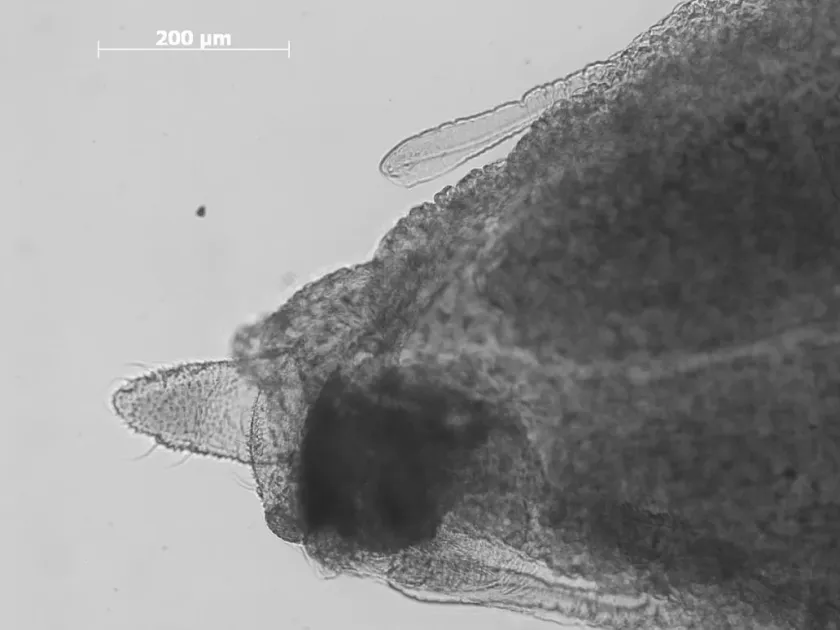
The most distinctive morphological feature is the presence of a "tuberculus" or process on the eighth abdominal tergite, often referred to as a "hood" that overhangs the siphunculi. This trait is diagnostic for the species.
Like many aphids, this species exhibits a complex lifecycle involving both winged (alate) and wingless (apterous) forms. The winged individuals play a crucial role in dispersal and host-switching during the season.
The development from nymph to adult is rapid, allowing the species to build up large colonies in a short time frame when environmental conditions are favorable.
Microscopic examination of the antennal segments and the specific shape of the siphunculi is required to accurately distinguish this aphid from other species found on Apiaceae plants.
What it damages
The primary hosts of this aphid include members of the Apiaceae family, with carrots, dill, parsley, celery, and parsnips being the most significant crops affected by the infestation.
The lifecycle typically involves a primary host, often willow trees (Salix spp.), where eggs overwinter. In the spring, alate aphids migrate to secondary hosts (umbelliferous crops) to establish summer colonies.
The infestation can occur on wild umbelliferous weeds, which serve as reservoirs for the pest throughout the growing season, making total eradication difficult in agricultural landscapes.
Damage is caused by sap-sucking, which deprives the plant of nutrients and moisture. This leads to stunted plant growth, leaf curling, and overall reduced yield quality and quantity.
A critical threat is the aphid's role as a vector for various plant viruses, particularly those that cause mosaic diseases and severe foliage chlorosis in carrot and celery crops.
When it appears
The seasonal cycle begins in early spring when eggs on willow trees hatch. After several generations on the primary host, winged migrants develop to seek out secondary hosts.
During the summer months, the aphids reproduce actively on carrot and related crops. Favorable conditions include mild, warm, and humid weather, which promote rapid population growth.
As autumn approaches, the aphids produce winged individuals that return to the primary willow host to mate and lay eggs, ensuring survival through the winter.
Monitoring is vital during the early establishment phase of the crop, as the timing of the spring migration from willows can vary depending on local temperature and climate patterns.
Late-season infestations can also occur, particularly if weather conditions remain warm, affecting the development and storage quality of harvested root crops.
Signs of infestation
The most visible signs of an infestation include the curling and twisting of young leaves, which may also turn yellow or reddish. This damage is often centered on the newest growth.
Colonies can be found on the undersides of leaves, often accompanied by the presence of honeydew. This sticky substance encourages the growth of sooty mold, which blocks photosynthesis.
- Leaf curling and deformation.
- Stunted plant development.
- Presence of sticky honeydew on foliage.
- Increased ant activity near the plants.
- Development of mosaic symptoms or chlorotic spots.
Detecting the aphids requires careful inspection of the lower leaf surfaces and petioles, as they can hide within the crevices of curled tissue.
Root crops affected early in the season often show significant growth delays, resulting in smaller, misshapen carrots that are unsuitable for commercial sale.
Control measures
Cultural control includes maintaining a spatial buffer between willow trees and carrot fields to disrupt the lifecycle of the aphids during their migration phases.
Encouraging natural predators such as ladybugs, lacewings, and hoverflies can help suppress aphid populations naturally without the need for intensive chemical use.
When economic thresholds are reached, systemic insecticides are generally the most effective method for controlling the population and preventing virus transmission.
Crop rotation and the removal of wild Apiaceae weeds from the field borders are essential components of an Integrated Pest Management (IPM) strategy.
Regular monitoring of field margins and the use of sticky yellow traps can assist in the early detection of migratory flights, allowing for precise and timely intervention.
Taxonomy
- Latin name
- Cavariella aquatica
- Order
- Hemiptera (bugs, aphids, leafhoppers)
- Family
- Aphididae
- EPPO code
- CAVAAQ
Discussion
No discussions yet — be the first.