
Capitophorus
Capitophorus
Description
How to identify
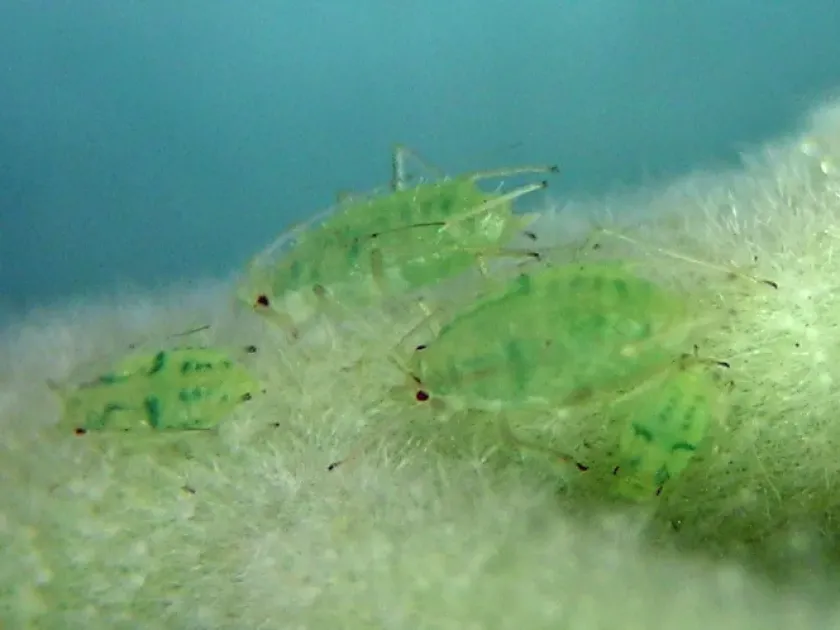
Capitophorus is a genus of small insects from the order Hemiptera, belonging to the family Aphididae (true aphids). Physically, they are minute insects measuring up to 2-3 mm, with a characteristically elongated body shape and colors ranging from pale yellow to light green, which provides excellent camouflage on the undersides of leaves.
A key diagnostic feature of the Capitophorus genus is the presence of specific club-shaped siphunculi (cornicles) on the abdomen. Their heads often bear characteristic processes, and the bodies are covered with fine hairs, the shape of which is used by entomologists for species-level identification under a microscope.
The reproduction of these pests occurs both parthenogenetically (without males) and sexually. Several generations can develop within a single season, leading to a rapid increase in colony density when weather conditions are favorable.
Many species of Capitophorus exhibit host alternation in their life cycle. The overwintering stage (eggs) is usually found on woody plants, while in summer, the pest migrates to herbaceous crops, where it actively reproduces on young shoots and leaves.
Control is challenging due to their high adaptability and the ability of winged individuals, which appear when the population density reaches a critical point, to rapidly disperse across the area.
What it damages
The primary hosts for Capitophorus are plants in the Asteraceae family, including chrysanthemums, wormwood, yarrow, and certain vegetable crops. The pest prefers the most young and succulent parts of the plant, where the concentration of nutrients is at its highest.
During feeding, Capitophorus punctures the epidermis of the leaf or stem and sucks the cell sap. This leads to a disruption of the plant's overall physiological state, stunted growth of tissues, and a significant reduction in photosynthetic activity.
Beyond direct mechanical damage, Capitophorus poses a serious threat as an active vector for dangerous viral diseases. Even a small number of aphids on a plant can lead to the transmission of mosaic or leaf curl viruses.
The damage caused by these insects is exacerbated by the secretion of honeydew—a sugary waste product. Sooty mold fungi actively grow on these secretions, covering leaves in a black layer that blocks sunlight and interferes with the plant's gas exchange.
Massive outbreaks of Capitophorus in greenhouses or nurseries can lead to the total loss of the commercial value of ornamental plants, reduced yields in flower plantations, and a significant decrease in the vigor of affected vegetation.
Signs of infestation
The first visual sign of infestation is the curling and deformation of young leaves, which gradually lose turgor and turn yellow. Upon inspection of the leaf underside, one can find clusters of small insects, often attended by ants that feed on their honeydew.
The presence of a sooty mold layer on the leaf surfaces indicates a prolonged presence of pest colonies on the plant. This layer inhibits normal plant development and requires immediate attention from the agronomist.
The presence of large amounts of shed larval skins (exuviae) on the leaf surface is a reliable indicator that the colony is actively growing and developing. These white flakes are clearly visible against the dark green foliage.
In late stages of infestation, shoot tips stop growing, become twisted, and may wither. Flower buds damaged by Capitophorus often fail to open or produce deformed flowers, which is critical for ornamental production.
The detection of large numbers of winged individuals near planting sites signals the start of the pest's migration period, requiring immediate monitoring of all surrounding areas to prevent the spread of the infestation.
Control measures
Control of Capitophorus must be comprehensive, combining agrotechnical, biological, and chemical methods. First and foremost, it is essential to maintain high agricultural standards, including the timely removal of weeds that serve as intermediate hosts.
Biological control methods include the use of natural aphid predators such as lacewings, lady beetles, and hoverflies. Attracting these entomophages to the field by planting nectar-bearing flowers significantly reduces pest pressure without the need for chemical intervention.
In cases of high infestation levels, the use of systemic insecticides is recommended. These penetrate plant tissues and render the sap toxic to aphids, providing long-term protection for young growth against re-infestation.
- Spatial isolation of infested planting areas.
- Regular monitoring using yellow sticky traps.
- Application of biopesticides based on fungi or bacteria to reduce population numbers.
- Thorough application of insecticides during the peak larval emergence period.
It is vital to rotate insecticides from different chemical groups to prevent the development of resistance in the Capitophorus population, a common occurrence when the same control agents are used repeatedly.
Taxonomy
- Latin name
- Capitophorus
- Order
- Hemiptera (bugs, aphids, leafhoppers)
- Family
- Aphididae
- EPPO code
- CAPISP
Discussion
No discussions yet — be the first.