
Ambrosia leaf miner
Calycomyza ambrosiae
Description
How to identify
The Ambrosia leaf miner Calycomyza ambrosiae is a member of the Agromyzidae family, order Diptera. This tiny insect has a complex life cycle deeply connected to the host plant tissues.
Adult specimens appear as miniature black or dark-brown flies. During their reproductive phase, females lay eggs directly into the leaf parenchyma of the host plant.
The emerging larvae are worm-like and light-colored. This larval stage is the most damaging, as they consume the leaf tissue to feed and grow rapidly.
Pupation typically occurs either at the end of the mine inside the leaf or in the soil, depending on the specific environmental conditions and plant host variety.
The total developmental time from egg to adult is short, allowing for multiple overlapping generations throughout the growing season if conditions are optimal.
What it damages
The primary host plant is common ragweed, but the pest frequently attacks other members of the Asteraceae family, including various weeds and ornamental plants.
In greenhouse settings, this pest can cause economic losses by infesting high-value crops like chrysanthemums, gerberas, and other decorative flowering species.
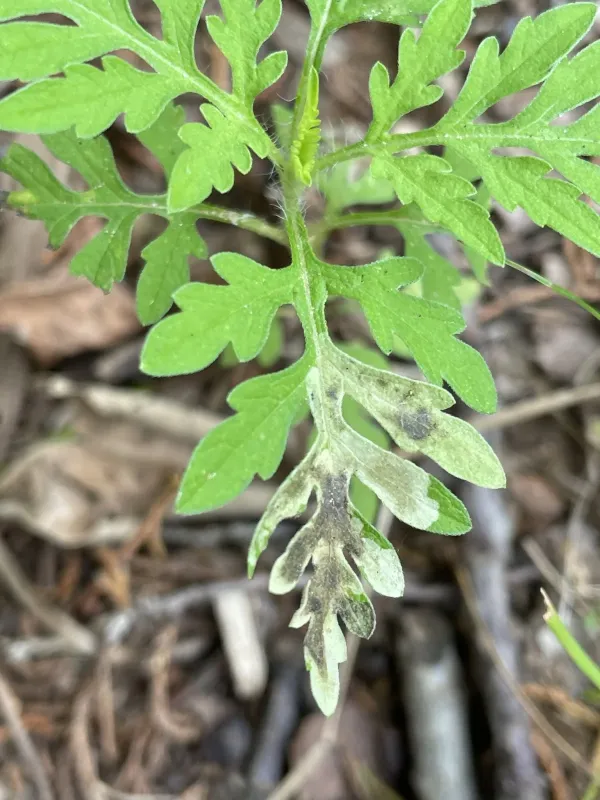
Damage is characterized by larvae mining serpentine tunnels within the leaf blades, which disrupts essential photosynthetic activity and reduces plant vigor.
Severe infestations lead to extensive tunneling across the leaf surface, causing premature wilting, yellowing, and eventual leaf drop or tissue necrosis.
Furthermore, the pest acts as a vector for various plant pathogens, as the entry points and tunnels provide easy access for bacteria and fungal spores.
Signs of infestation
The most recognizable sign is the presence of white, winding, or linear tunnels on the leaf surface that eventually turn brown and necrotic as the tissue dries.
If you inspect the leaves with a backlight, you can often spot the larva within the mine or detect small, dark fecal deposits arranged in a linear pattern.
Infected leaves lose their turgor, exhibit a mottled appearance, and may curl or deform as the internal structure of the leaf is destroyed.
Tiny punctures on the upper side of the leaves indicate adult feeding activity, where flies puncture the epidermis to consume liquid cell contents.
Adult flies can be visually monitored by observing their flight activity around host plants during the early morning or late afternoon hours.
Control measures
Strict sanitation and weed control are essential; removing common ragweed from field margins drastically reduces the local population of the pest.
Yellow sticky traps are highly effective tools for monitoring adult fly populations and providing early warning of infestation in greenhouses.
Chemical control should prioritize systemic insecticides that can permeate leaf tissues, effectively targeting larvae that remain shielded inside the tunnels.
Biological control methods involving parasitic wasps and other natural enemies can significantly suppress population density without relying on heavy chemical use.
Cultural practices, such as crop rotation and the thorough destruction of plant residues after harvest, help disrupt the life cycle by eliminating overwintering sites.
Taxonomy
- Latin name
- Calycomyza ambrosiae
- Order
- Diptera (flies)
- Family
- Agromyzidae
- EPPO code
- CALZAM
Discussion
No discussions yet — be the first.