
Calycomyza
Calycomyza
Description
How to identify
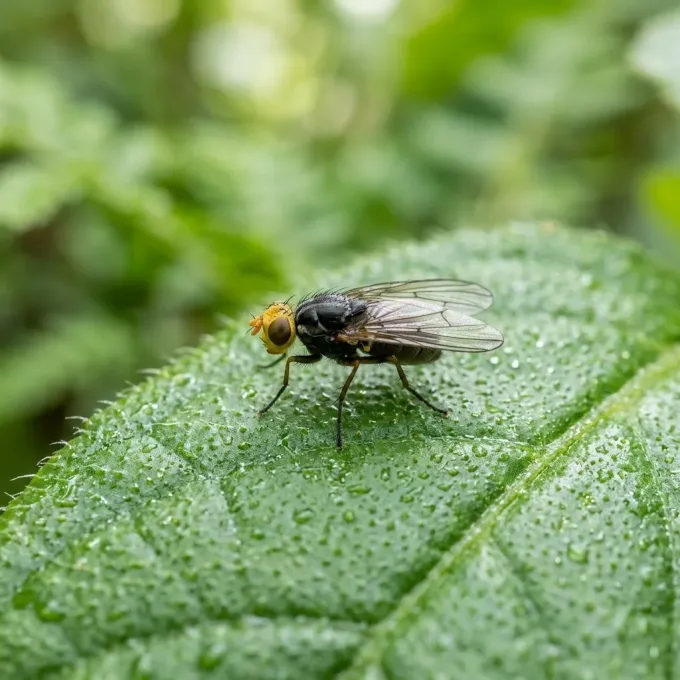
Calycomyza is a genus of flies belonging to the family Agromyzidae, commonly referred to as leafminers. These are small insects that cause significant damage to the leaf tissues of various plants.
The adult fly is typically very small, measuring between 1 to 3 millimeters in length, with a generally dark or yellowish-black appearance, making them difficult to spot in the field.
The life cycle consists of four distinct stages: egg, larva, pupa, and adult. The larval stage is responsible for the majority of the damage as it tunnels through the internal leaf structure.
The larvae are apodous (legless) and whitish, living their entire developmental cycle hidden inside the host plant's leaf tissues, which protects them from many external threats.
Identification of the species often requires professional morphological analysis, as different species within the genus have specific preferences for different host plant families.
What it damages
Calycomyza species are polyphagous, attacking a wide range of ornamental flowers, such as chrysanthemums and dahlias, as well as several essential vegetables.
The primary damage is caused by larvae creating winding, serpentine tunnels or blotch-like mines within the leaf, which disrupt the plant's ability to perform photosynthesis.
Extensive mining results in chlorosis, where the leaves turn yellow, lose their vitality, and eventually dry out, significantly impacting the aesthetic and commercial value of the crop.
Severe infestations can lead to premature leaf drop, stunting the growth of young plants and potentially causing substantial yield losses if not managed promptly.
The damaged areas also serve as entry points for secondary pathogens, including bacteria and fungi, which can lead to further plant decay and rot.
When it appears
The activity of Calycomyza is highly dependent on environmental temperature. In greenhouses, they can thrive and produce overlapping generations throughout the entire year.
In outdoor settings, adults usually emerge in late spring when temperatures stabilize. They remain active through the summer months, which are optimal for their reproductive cycle.
The number of generations depends heavily on the local climate; in warmer regions, there can be multiple successive generations within a single growing season.
High temperatures during the summer peak accelerate the developmental rate, leading to rapid population growth and an increase in the number of affected leaves.
As autumn approaches and temperatures drop, the pests enter a dormant stage (pupation), often overwintering in the soil or protected debris until conditions improve.
Signs of infestation
The first signs of infestation are tiny, light-colored pinpricks on the upper surface of the leaves, created by the female fly when laying eggs or feeding on sap.
As the larvae hatch and start tunneling, distinct, twisting lines appear within the leaf tissue. These mines gradually become more visible as the larvae feed and grow.
One can often observe dark frass (larval waste) deposited inside the mines, which appears as a series of tiny black dots along the tunnel path.
Heavily mined leaves may become distorted, curled, and brittle. The visual degradation is often mistaken for viral infections or nutrient deficiencies in the initial stages.
Observing the specific pattern of the mine is a key diagnostic feature, as it differentiates Calycomyza activity from other types of insect or disease-related damage.
Control measures
Management of Calycomyza requires an integrated pest management (IPM) approach to minimize the need for broad-spectrum chemical interventions.
- Remove and destroy infested leaves immediately.
- Maintain weed-free environments to eliminate secondary hosts.
- Utilize yellow sticky traps to capture adults and monitor population trends.
Biological control, including the use of parasitic wasps that target leafminer larvae, is highly effective in controlled environments like glasshouses.
When chemical control is necessary, systemic insecticides are preferred. These chemicals are absorbed by the plant and target the larvae hidden inside the leaf tissue effectively.
Taxonomy
- Latin name
- Calycomyza
- Order
- Diptera (flies)
- Family
- Agromyzidae
- EPPO code
- CALZSP
Discussion
No discussions yet — be the first.