
Tea leaf roller
Caloptilia theivora
Description
How to identify
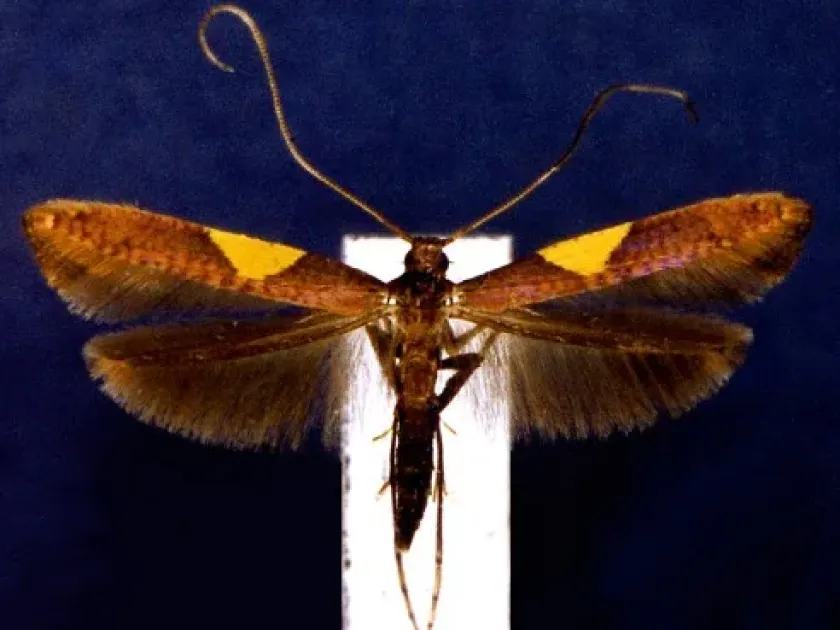
The tea leaf roller (Caloptilia theivora) is a moth species belonging to the order Lepidoptera and the family Gracillariidae. The adult moth is small and slender, possessing a wing pattern that provides excellent camouflage against tea leaves.
Adults are nocturnal and often go unnoticed during the day. Females lay microscopic eggs on the underside of young, tender tea leaves, making early detection a significant challenge for growers.
The larval stage undergoes a developmental transition: young larvae initially feed as leaf miners, creating galleries within the leaf tissue, before shifting to a leaf-rolling habit.
As the larva matures, it binds the edges of the leaf with silk, creating a protective tubular structure where it continues to feed and eventually pupates.
The life cycle duration is highly dependent on ambient temperature and humidity, typically ranging from 3 to 5 weeks in tropical tea-growing regions.
What it damages
The primary host for this pest is the tea plant (Camellia sinensis). The larvae preferentially target the most valuable parts of the plant: young shoots and buds.
Feeding damage reduces the photosynthetic area of the leaves, which directly impacts the growth rate and overall vigor of the tea bushes.
High infestation levels lead to significant leaf deformation, yellowing, and eventual drying of the foliage, which compromises the quality of the harvested leaf.
Since the pest targets the tender flushes harvested for high-quality tea, it causes both direct yield losses and significant economic depreciation of the final product.
Prolonged infestation can lead to stunted bush growth, making the plantation more susceptible to other abiotic and biotic stress factors.
When it appears
Tea leaf roller activity is closely linked to the active growth flushes of the tea plant. The pest thrives in warm and humid conditions prevalent in tea-producing areas.
Multiple overlapping generations can occur throughout the year, especially in tropical climates where the growth of new leaves is continuous.
Population spikes are typically observed following periods of increased rainfall, which promote the rapid development of new, succulent shoots.
During the cooler or drier months, the population density declines, and the insect may persist in protected pupal stages within rolled leaves or plant debris.
The life cycle synchronizes with the agricultural cycles, with the first adult emergence in spring triggering the initial colonization of new growth.
Signs of infestation
The earliest symptom is the presence of delicate, winding tunnels within the leaf tissue, often visible only upon close inspection of the leaf surface.
A more prominent sign is the characteristic rolling of the leaf margins, which creates a distinct tubular or conical shape on the tips of the shoots.
Fine silk webbing is frequently observed around the rolled leaves, holding the structure together as the larva feeds inside.
As the tissue dies, the rolled sections turn brown or necrotic, providing a clear visual cue that the shoot has been compromised by the pest.
Increased presence of natural enemies or bird activity in the plantation can sometimes indicate the presence of active caterpillar populations on the bushes.
Control measures
Effective management begins with regular monitoring and early removal of infested shoots, which helps prevent the spread of the moth to surrounding plants.
Promoting a healthy plantation environment through proper pruning and balanced nutrition helps the bushes recover faster from larval damage.
Biological control, including the use of entomopathogenic fungi or bacteria, is highly recommended as a sustainable alternative to broad-spectrum chemical sprays.
Integrated Pest Management (IPM) strategies, such as using pheromone traps, are essential for tracking population fluctuations and timing interventions.
Chemical control should be used sparingly and only as a last resort, ensuring that selected products are compliant with international food safety standards for tea consumption.
Taxonomy
- Latin name
- Caloptilia theivora
- Order
- Lepidoptera (butterflies)
- Family
- Gracillariidae
- EPPO code
- GRACTH
Discussion
No discussions yet — be the first.