
Lilac leaf miner
Caloptilia syringella
Description
How to identify
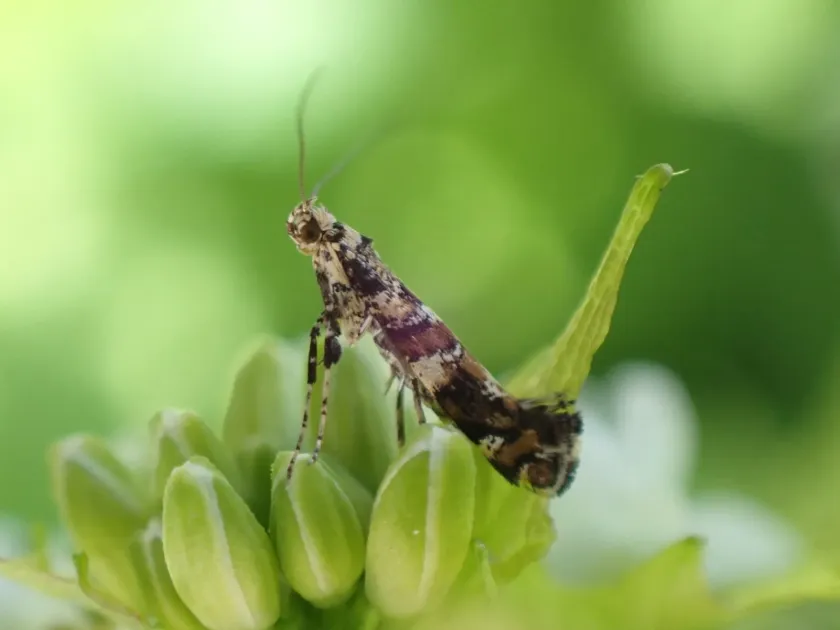
The lilac leaf miner (Caloptilia syringella) is a small moth belonging to the family Gracillariidae. The adult moth has a wingspan of approximately 10–13 mm and exhibits brownish-yellow coloration with metallic reflections.
The life cycle consists of four distinct stages: egg, larva, pupa, and adult. The larvae change from pale to greenish with a dark head as they mature, reaching lengths of up to 10 mm.
There are typically two generations of this pest per year. The first generation emerges in late spring, coinciding with the flowering period of the lilac shrubs.
Pupation occurs in tight cocoons, usually found in leaf litter beneath the host plant or within the soil, where they successfully overwinter.
This species is widely distributed across temperate regions and can thrive wherever its host plants, such as lilacs and ashes, are commonly grown.
What it damages
The primary hosts for this insect are plants from the Oleaceae family, most notably lilac (Syringa) and ash (Fraxinus). Privet (Ligustrum) is also susceptible.
Larvae cause damage by mining into the leaf tissue, which destroys the chlorophyll-containing cells and severely impairs the photosynthesis process of the plant.
When infestation levels are high, the entire canopy of the shrub may appear withered and brown, significantly reducing the aesthetic value of the plant in gardens and parks.
The damage caused by the larvae also leaves the plant more vulnerable to secondary infections and environmental stresses, potentially stunting its growth over several seasons.
Severe and repeated infestations can lead to early leaf drop, which weakens the plant and reduces its ability to set buds for the following year.
Signs of infestation
Initial signs of infestation appear as small, pale blotch-mines on the leaf surface, which gradually turn brown as the larval feeding destroys the internal structure of the leaf.
After the initial mining stage, larvae move to the surface of the leaf, rolling the margins downwards with silk to form characteristic cones or tubes where they continue feeding.
The presence of these leaf rolls is a distinct indicator of the pest, making the plants look distressed and unhealthy during the summer months.
If left unchecked, the accumulation of damaged and rolled leaves gives the shrub a scorched or burned appearance, which is easily recognizable by gardeners.
- Small blotch-mines on leaf surfaces.
- Downward rolled or curled leaf margins.
- Silk webbing inside the rolled leaf portions.
- Brown, withered appearance of foliage.
- Premature leaf abscission and loss.
Control measures
Good sanitation is the first line of defense; raking and destroying fallen leaves in autumn removes the overwintering pupae and prevents early spring re-infestation.
Cultivating the soil beneath the bushes in early spring can disrupt the pupae, reducing the number of moths that successfully emerge to start the new cycle.
If only a few leaves are infested, manual removal of the rolled leaf tips containing the larvae is an effective way to keep the pest population under control.
For more severe cases, systemic insecticides applied shortly after the larvae emerge from their mines provide excellent control and protect the foliage from further damage.
Biological control using Bacillus thuringiensis sprays is a highly recommended and environmentally friendly method for managing these caterpillars without disturbing the ecosystem.
Taxonomy
- Latin name
- Caloptilia syringella
- Order
- Lepidoptera (butterflies)
- Family
- Gracillariidae
- EPPO code
- GRACSY
Discussion
No discussions yet — be the first.