
Maple leaf miner
Caloptilia rufipennella
Description
How to identify
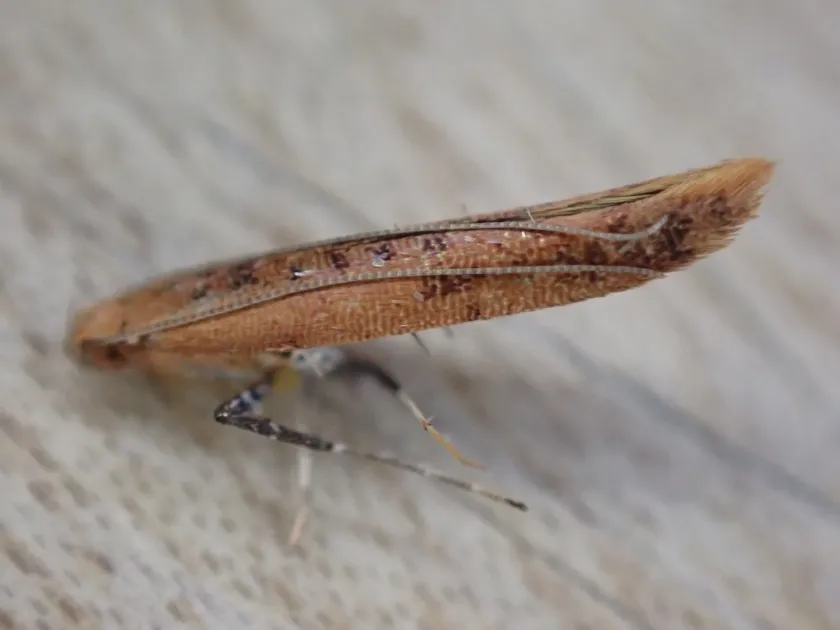
The maple leaf miner (Caloptilia rufipennella) is a small moth belonging to the Gracillariidae family. Adults typically have a wingspan of 10–12 mm and possess narrow, metallic-brown or ochre wings that allow them to blend into tree bark.
The lifecycle of this moth consists of egg, larval, pupal, and adult stages. The larvae are particularly interesting due to their behavior, as they transition from being tissue-miners inside the leaf to living on the surface.
Pupation occurs within a white, silken cocoon often found on the underside of leaves or in crevices of the tree trunk. This stage is crucial for population dynamics, as the pupae are protected from environmental stress.
Depending on the latitude, this species completes one or two generations per year. The adults are known to overwinter in sheltered locations, such as leaf litter or deep cracks in the bark of maple trees.
Monitoring these moths involves identifying leaf mines and searching for rolled leaves. Since they are nocturnal, light traps are often used by researchers to determine the peak flight period.
What it damages
Caloptilia rufipennella primarily targets maple trees (Acer spp.), with the Norway maple being a common host. The damage is caused by larvae that consume leaf tissue in different ways.
Early-stage larvae feed inside the leaf tissue, creating narrow, serpentine mines. This internal feeding disrupts photosynthesis and creates visible trails across the leaf surface.
As the larvae mature, they exit the mines and begin rolling the leaf edges into conical shapes or tubes. By feeding from within these shelters, the larvae can consume significant amounts of green matter.
Severe infestations lead to massive defoliation, which causes the tree to lose energy reserves. This stress makes maples more susceptible to other diseases and environmental pressures.
- Serpentine mines on the leaf surface.
- Leaf rolling and conical deformations.
- Browning and premature leaf drop.
- Reduction in overall tree vigor and growth rate.
Signs of infestation
Early signs of infestation appear as thin, light-colored lines on the leaves, which are the larval mines. These are easily seen if the leaf is held up to the light.
As the season progresses, the presence of rolled or folded leaf margins becomes the most obvious indicator of the moth's presence. These rolls provide shelter for the feeding larvae.
The damaged sections of the leaf eventually turn brown and necrotic. In cases of heavy infestation, the entire canopy may appear sickly and prematurely aged by mid-summer.
Underneath the infested tree, one might find an abundance of fallen, skeletonized leaves, which often contain the white cocoons of the moth's pupae.
Adult moths can occasionally be spotted resting on bark or near foliage during dusk, confirming an active presence in the tree canopy.
Control measures
Good sanitation practices, such as raking and destroying fallen leaves in the autumn, are highly effective in reducing the number of overwintering pupae.
Biological control using formulations containing Bacillus thuringiensis is highly recommended for urban environments, as it targets the larvae specifically without harming beneficial predators.
Chemical intervention should be restricted to periods of peak larval emergence. Applying systemic insecticides can be effective, though this should be balanced with ecological concerns.
Maintaining tree health through adequate irrigation and proper soil fertilization helps maples recover faster from minor leaf miner damage and boosts natural resistance.
Periodic monitoring during the spring and summer is essential for determining the timing of control efforts and ensuring that interventions are both timely and effective.
Taxonomy
- Latin name
- Caloptilia rufipennella
- Order
- Lepidoptera (butterflies)
- Family
- Gracillariidae
- EPPO code
- GRACRU
Discussion
No discussions yet — be the first.