
Ash leaf miner
Caloptilia cuculipennella
Description
How to identify
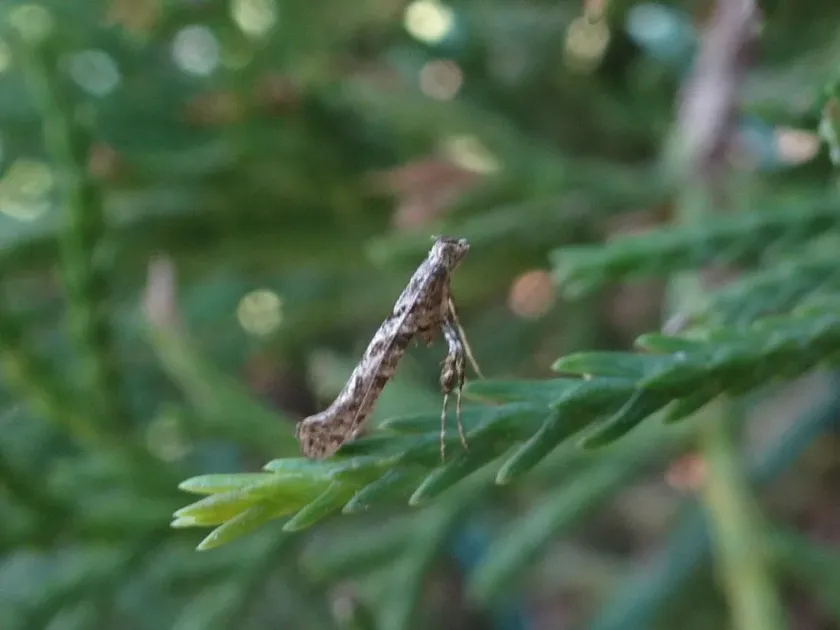
The ash leaf miner (Caloptilia cuculipennella) is a small moth belonging to the family Gracillariidae. The adult moth has a wingspan of 10–12 mm and possesses mottled, brownish-gold wings that provide camouflage against tree bark.
The larvae are active feeders that transition through several instars. They are specialized in mining leaf tissues before eventually rolling the leaves into characteristic structures to pupate.
The life cycle undergoes complete metamorphosis: egg, larva, pupa, and adult. Adults typically overwinter in sheltered locations, such as crevices in the bark or deep within the leaf litter.
Pupation occurs inside a silken cocoon constructed within a rolled-up leaf. This protected environment shields the pupa from many environmental stressors and some predators.
There is generally one generation per year, though warmer climates may allow for a partial second generation, increasing the pressure on host trees during the late summer months.
What it damages
The primary host for this pest is the European ash (Fraxinus excelsior). The moth targets both ornamental trees in urban landscapes and forest plantations where ash is a significant species.
Larvae consume the leaf parenchyma, leading to a significant reduction in the tree's photosynthetic capacity. Heavy infestations often lead to premature leaf drop, which weakens the overall tree health.
Beyond ash trees, the pest has been reported on other species such as lilac (Syringa) and privet (Ligustrum), making it a threat to diverse ornamental garden plantings.
In nursery settings, the damage to terminal shoots can cause severe deformity in young saplings, often leading to stunted growth and loss of marketable quality for the trees.
Repeated annual attacks leave the host tree vulnerable to secondary infections, such as fungi or wood-boring insects, which can eventually lead to the decline of mature trees.
Signs of infestation
The earliest symptom is the presence of serpentine mines on the leaves, where the larvae have fed on the internal tissue. These mines appear as winding, discolored trails.
As the larvae mature, they fold or roll the edges of the leaves into cones or tubes secured with silk. These structures are the most visible sign of an active infestation in the canopy.
Affected leaves eventually turn brown and become brittle. Large-scale infestations can cause the entire tree to appear scorched, which is a major aesthetic issue in parks.
Frass (larval waste) accumulates inside the rolled leaves. Close inspection of these structures will often reveal the presence of the larva or the cast skins from previous molting stages.
Adult moths are nocturnal and may be attracted to outdoor lighting at night, which can serve as a monitoring tool for pest activity during the spring flight period.
Control measures
Sanitation is a primary defense: raking and destroying fallen leaves during autumn is essential to eliminate the pupae that overwinter in the leaf debris.
Biological control using microbial insecticides based on Bacillus thuringiensis is effective against younger larvae and has a minimal impact on beneficial insects and pollinators.
For severe infestations, systemic insecticides can be applied. It is critical to time the application to coincide with the hatching of the larvae, before they protect themselves within the rolled leaves.
Pheromone traps can be utilized for monitoring adult flight patterns and can also help reduce the mating population when deployed in sufficient numbers.
- Pruning and removing heavily infested branches to reduce local populations.
- Encouraging natural predators such as parasitic wasps and insectivorous birds.
- Ensuring proper irrigation and fertilization to help trees withstand stress.
Taxonomy
- Latin name
- Caloptilia cuculipennella
- Order
- Lepidoptera (butterflies)
- Family
- Gracillariidae
- EPPO code
- GRACCU
Discussion
No discussions yet — be the first.