
Azalea leaf miner
Caloptilia azaleella
Description
How to identify
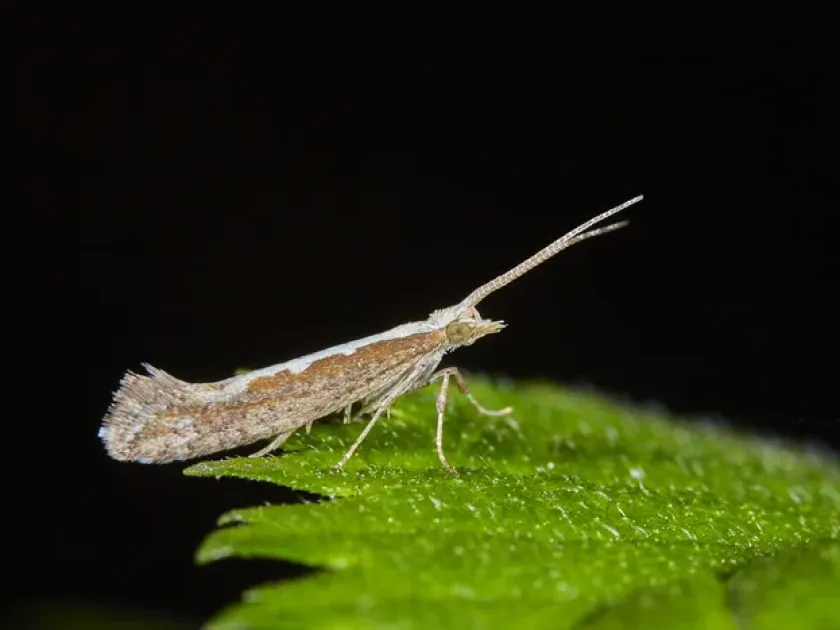
The Azalea leaf miner (Caloptilia azaleella) is a member of the Gracillariidae family within the order Lepidoptera. The adult moth is small, with a wingspan of 10–12 mm, featuring distinctive golden-brown forewings with darker spots and fringed hindwings.
The larvae progress through several instars, transitioning from yellowish to a vibrant green color with a dark head. They are highly active and, when disturbed, will quickly drop from their leaf shelters on a silken thread.
The life cycle consists of egg, larva, pupa, and adult stages. Under greenhouse conditions, the pest can complete its cycle rapidly, often resulting in overlapping generations throughout the year.
Eggs are typically deposited on the underside of the leaves. Upon hatching, the young larvae immediately begin mining the leaf interior, which makes early detection difficult until the leaves begin to show physical damage.
Pupation occurs within a specialized silken cocoon constructed inside a rolled leaf edge. This protective structure shields the pupa from environmental stresses and many external biological or chemical threats.
What it damages
The primary host plants are members of the Rhododendron genus, including various azalea cultivars. The pest is a significant problem in both indoor pot plant production and outdoor landscapes in temperate climates.
Larval feeding causes the most severe damage. Initially, larvae mine the leaf tissue, leaving brown, necrotic pathways. Later, they move to the leaf surface, fold the leaf margins, and consume the internal tissues.
Heavy infestations cause premature leaf drop, which weakens the plant, limits photosynthesis, and ruins the aesthetic value of the ornamental shrub. Young plants may suffer from stunted growth.
Damaged foliage is prone to secondary fungal infections due to the exposure of inner tissues. The characteristic brown, shriveled appearance of the foliage makes the plant look unsightly and neglected.
In commercial nurseries, the presence of the Azalea leaf miner can lead to significant economic losses, as damaged plants are often rejected by consumers and retailers.
When it appears
Adult moth activity typically begins in late spring as temperatures rise. In greenhouse environments, the pest remains active throughout the year, provided there is adequate host plant material available.
Spring and early summer are critical periods for surveillance. This is when the first generations of larvae emerge, and controlling them early can prevent population explosions later in the season.
Higher temperatures facilitate faster larval development, often shortening the generation interval. Consequently, growers must maintain a consistent monitoring schedule during the warmest months.
In outdoor settings, the pest may overwinter as a pupa in debris or bark crevices. In climate-controlled environments, activity is continuous, necessitating year-round vigilance.
The use of pheromone traps is an effective way to detect the presence of adult males, providing a signal for the timing of necessary pesticide applications.
Signs of infestation
The earliest signs of infestation are small, winding mines or translucent patches on the leaf surface. As the larva feeds, these mines expand and become more visible.
The most diagnostic sign is the presence of rolled or folded leaf tips. The larva uses silk to pull the leaf edge over, creating a protective tube-like structure.
Dark granular excrement found on the underside of the leaf or near the site of the rolled leaf is a clear indicator that the larvae are currently active and feeding.
By carefully unrolling a folded leaf, one can usually find the larva itself or the white silken cocoon, which confirms the presence of Caloptilia azaleella.
Widespread leaf drop without any clear symptoms of disease often suggests an established population of leaf miners hiding within the dense canopy of the shrub.
Control measures
Cultural control involves the meticulous removal and destruction of infested foliage. Pruning damaged leaves significantly reduces the local population of the pest.
Systemic insecticides are the most effective chemical intervention, as they are absorbed by the plant and kill the larvae while they are feeding inside the protected leaf structures.
Biological controls, including products containing Bacillus thuringiensis, offer a more environmentally friendly alternative, though they require careful timing during the larval stage.
Quarantine and strict inspection protocols are essential when introducing new plants into a greenhouse to prevent the accidental entry of the pest.
- Monitor plants regularly for early signs of leaf rolling.
- Hand-pick and destroy infested leaves immediately.
- Apply systemic insecticides during peak activity periods.
- Maintain proper plant health to improve recovery.
- Clear all plant debris after the growing season to eliminate pupal sites.
Taxonomy
- Latin name
- Caloptilia azaleella
- Order
- Lepidoptera (butterflies)
- Family
- Gracillariidae
- EPPO code
- GRACAZ
Discussion
No discussions yet — be the first.