
Caloptilia
Caloptilia
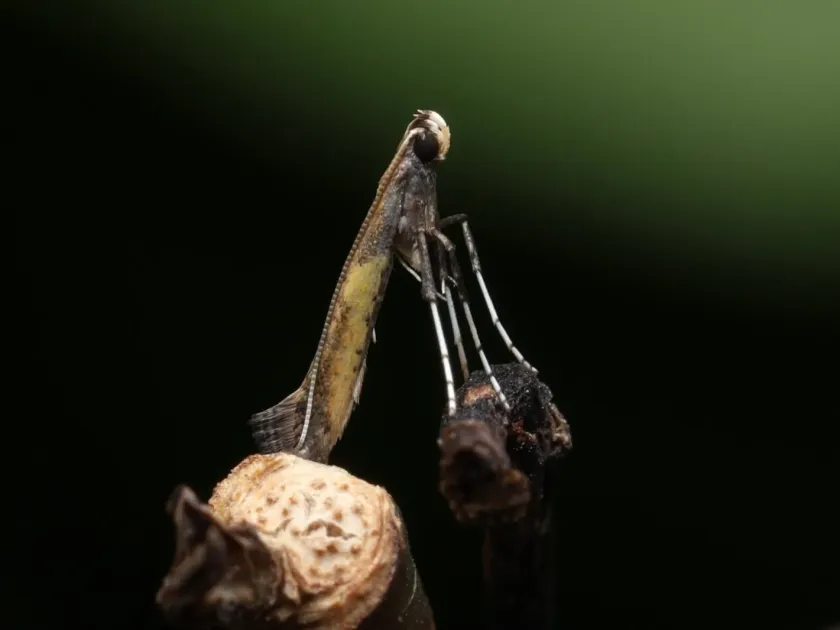
Description
How to identify
Caloptilia is a genus of moths belonging to the Gracillariidae family, known for their specific leaf-mining and leaf-rolling behavior.
Adult moths are characterized by long, slender antennae and narrow wings that they hold close to their bodies when resting.
The larval stage undergoes significant morphological changes as it transitions from a tissue-mining phase to a leaf-rolling phase.
Identification often relies on the distinctive shape of the mines and the specific way the larvae roll the leaves of their host plants.
These insects are highly adapted to their host species, making them successful colonizers of various deciduous tree populations.
What it damages
The larvae primarily target woody plants, including various species of maples, poplars, alders, and occasionally fruit trees.
Early-stage larvae feed on the internal tissues of leaves, causing necrosis and creating characteristic patterns on the leaf surface.
As they grow, the larvae shift their strategy and start spinning silk to roll or fold the leaf into a protective shelter.
Heavy infestation reduces the plant's photosynthetic capacity, causing stunted growth and premature leaf drop across the canopy.
Chronic damage weakens the host plant, making it more susceptible to secondary environmental stresses and opportunistic diseases.
When it appears
Adult moths emerge in early spring, precisely timing their appearance with the flush of young, nutritious foliage.
There are typically one or more overlapping generations per year, with activity peaking during the height of the growing season.
Larvae are most active during the spring and mid-summer months when the leaves are developing rapidly and are easy to manipulate.
As temperatures decline in autumn, the final generation of larvae prepares for pupation within the leaf litter or bark crevices.
The timing of each developmental stage is highly sensitive to local climatic conditions and specific host phenology.
Signs of infestation
Look for light-colored, serpentine mines on the leaf surface which indicate the initial feeding activity of the young larvae.
The most visible sign is the presence of curled or tubular leaf segments held together by fine, visible silk threads.
Inside the rolled leaves, one can observe larval frass, which is a clear diagnostic indicator of an active infestation.
If left unmanaged, the tree canopy will show patchy yellowing and thinning, often appearing tattered before the autumn season.
During surveys, small holes on the leaf blade indicate where the larvae have transitioned from their internal mine to the surface.
Control measures
Sanitation is a primary control method; removing and disposing of infested leaf litter prevents the survival of overwintering pupae.
Pheromone traps are essential for monitoring adult flights, ensuring that insecticide applications are timed for maximum efficacy.
Selective use of systemic insecticides can protect high-value trees from larval damage during the most vulnerable periods of the cycle.
Biological control agents, such as parasitoid wasps that target these moths, can help keep population levels below the economic threshold.
Maintaining tree vigor through proper irrigation and fertilization enhances the plant's natural resistance to recurring pest outbreaks.
Taxonomy
- Latin name
- Caloptilia
- Order
- Lepidoptera (butterflies)
- Family
- Gracillariidae
- EPPO code
- CPTLSP
Discussion
No discussions yet — be the first.