
Mushroom mite
Caloglyphus mycophagus
Description
How to identify
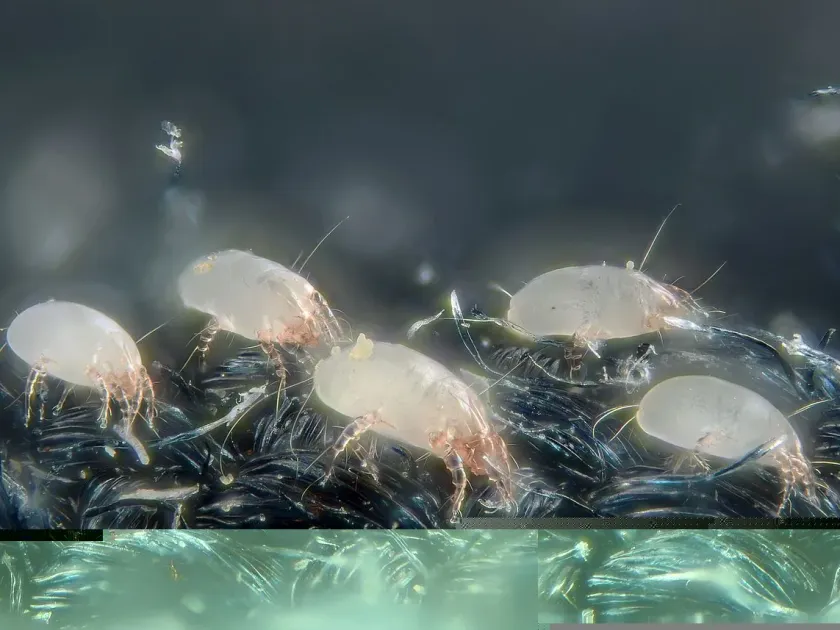
The mushroom mite (Caloglyphus mycophagus) is a microscopic pest belonging to the Acaridae family. Adult mites are roughly 0.5 mm in size, characterized by a translucent, whitish-yellow, oval-shaped body.
These mites have an exceptionally rapid lifecycle. Under optimal conditions of 20–25°C and high humidity, they can complete their development in just 7 to 10 days, leading to exponential population growth.
A key biological feature is the formation of hypopi, a specialized survival stage. These hypopi are highly resistant to standard chemical treatments and environmental stress, allowing the pest to persist between crop cycles.
Mites possess chewing mouthparts designed to feed on mushroom mycelium and fungal spores. They are highly mobile and easily spread throughout the substrate by human activity or flying insects.
Due to their size and coloration, they are difficult to spot with the naked eye. Identification typically requires the use of a magnifying glass or stereomicroscope to detect the movement of their colonies on the substrate.
What it damages
The primary damage is caused to the vegetative mycelium. Mites consume the hyphae, which breaks the delicate network of the fungus and prevents the successful formation of mushroom fruiting bodies.
When the infestation reaches the fruiting stage, mites bore into the stems and caps of the mushrooms. This tunneling activity creates structural weaknesses and internal cavities that mar the appearance of the produce.
Mites act as vectors for various pathogenic bacteria and molds. By carrying these pathogens, they facilitate the spread of secondary infections, which often cause the mushrooms to rot from the inside out.
Infected mushrooms become soft, discolored, and lose their marketability. In severe cases, the entire surface of the bed may become covered in a slimy, putrid layer of decaying fungal tissue.
Commercial mushroom farms can suffer significant economic losses, ranging from partial yield reduction to the total loss of the crop in a growing chamber if the infestation is not intercepted early.
Signs of infestation
A sudden decline in mycelium growth is a major warning sign. Growers may notice that the white mycelium in the substrate is thinning or disappearing, replaced by bare patches.
A distinct, unpleasant odor is often associated with heavy mite infestations. This smell is described as musty, sweetish, or slightly putrid, resulting from the combination of mite waste and fungal decay.
Visual inspection of the substrate may reveal a layer of fine, dust-like particles. Upon closer look with magnification, this "dust" will show active movement, confirming a mite colony.
If mushrooms are already present, they may appear deformed or stunted. Cutting open the stipe (stem) of a mushroom will reveal brown, hollowed-out channels where the mites are actively feeding.
In late stages, the surface of the mushroom bed may become sticky or oily to the touch. This indicates high mite density and the resulting breakdown of the organic matter within the substrate.
Control measures
Rigorous substrate pasteurization is the most effective preventative measure. Ensuring that all parts of the substrate reach at least +60°C for several hours will kill all life stages of the mite.
Maintaining strict hygiene in the growing facility is crucial. This includes daily cleaning, removing debris, and disinfecting tools and surfaces after each harvest cycle to eliminate potential reservoirs.
Exclusion is vital; install fine mesh screens on all ventilation and air intake openings to prevent flying insects, such as sciarid flies, from introducing mites into the facility.
Regular monitoring using traps and spot-checking substrates allows for early detection. If a localized infestation is found, immediate removal and destruction of the infected blocks can prevent a major outbreak.
Chemical control options are generally limited during the active fruiting phase due to safety regulations. Consequently, the focus must remain on preventative cultural practices and maintaining a precise microclimate.
Taxonomy
- Latin name
- Caloglyphus mycophagus
- Order
- Mites
- Family
- Acaridae
- EPPO code
- CALNMY
Discussion
No discussions yet — be the first.