
Bulb mite
Caloglyphus
Description
How to identify
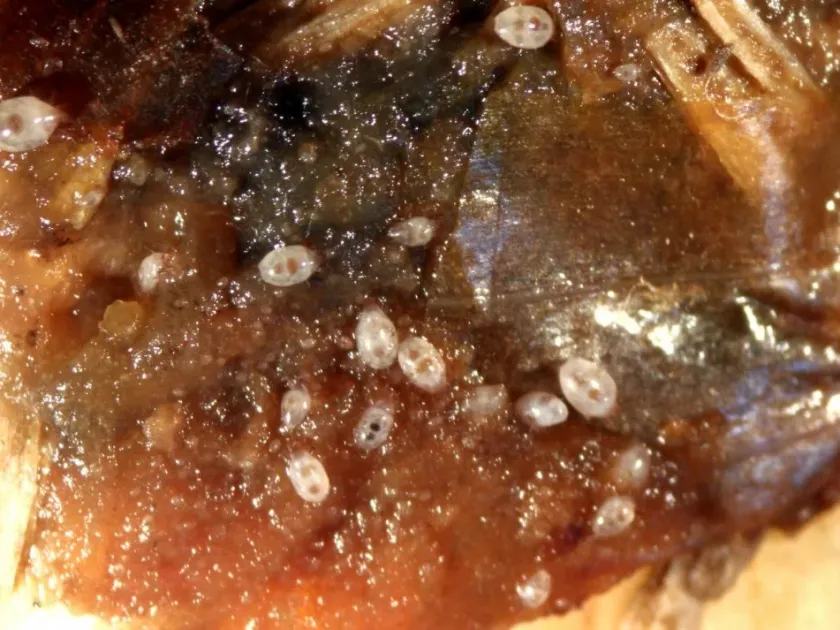
The bulb mite (genus Caloglyphus) belongs to the Acaridae family within the order Sarcoptiformes. These are minute, translucent, yellowish-white arachnids with reddish-brown legs, typically measuring about 0.7 to 1 mm in length.
Their biology is highly dependent on humidity and soil temperature. Under optimal conditions (high humidity and moderate heat), the mite can complete its life cycle in less than two weeks, leading to rapid population explosions.
The life cycle stages include egg, larva, protonymph, deutonymph, and adult. A unique characteristic is the formation of a hypopus, a specialized resistant stage that allows the mite to survive harsh environmental conditions and travel on other insects.
Bulb mites occupy a niche in the rhizosphere and inside bulb tissues. Their ability to remain hidden inside plants or soil makes early detection a significant challenge for growers and agronomists.
Dissemination often occurs through infested planting stock, contaminated soil substrates, or by phoresy, where mites attach themselves to soil insects to be transported to new host plants.
What it damages
These mites attack a wide range of bulbous crops, including onions, garlic, tulips, lilies, and hyacinths. They are considered major pests both in the field and during post-harvest storage.
Mites penetrate the bulb through the basal plate. By feeding on the plant tissue, they not only cause physical destruction but also introduce pathogens, which leads to secondary bacterial and fungal rots.
The destruction of the basal plate prevents the plant from absorbing water and nutrients properly, leading to yellowing of leaves, stunted growth, and the eventual collapse of the entire plant.
During storage, infested bulbs lose their marketability quickly. The mites turn the internal structure of the bulb into a brownish powder, often leaving the outer appearance deceptively healthy until the bulb is squeezed.
- Basal plate penetration and destruction.
- Development of secondary Fusarium and bacterial rots.
- Stunting and chlorosis of leaves.
- Loss of root system integrity.
- Significant economic losses in storage facilities.
Signs of infestation
In the field, the first signs are poor emergence, yellowing leaf tips, and general wilting. Growers often mistake these symptoms for drought stress or fungal diseases like downy mildew.
If an infested plant is pulled, the root system is usually found to be underdeveloped or entirely rotted. The basal plate is soft and often emits a foul, putrid odor due to the decay caused by mites and accompanying bacteria.
The presence of fine, brownish dust around the basal plate is a hallmark of mite activity, representing the accumulation of frass and decaying tissue fragments left by the population.
In storage, infested bulbs show softening at the base. Over time, the internal tissue breaks down into a gray-brown mass, and the bulb may feel lighter than expected due to internal tissue loss.
Close inspection with a magnifying lens often reveals the mites moving within the crevices of the basal plate or under the dry outer scales of the bulbs.
Control measures
Crop rotation is the foundation of management. Avoiding onion or bulb crops on the same field for at least 3–4 years helps break the mite's life cycle and reduces soil-borne population levels.
Using certified, mite-free planting material is essential. Pre-planting treatments, such as hot water immersion or dipping bulbs in specific acaricide solutions, can drastically reduce the initial infestation pressure.
Maintaining proper storage conditions is critical. Keeping temperatures low (0–2°C) and ensuring low humidity effectively inhibits the mite's metabolic activity and slows the development of storage rots.
During the growing season, if thresholds are exceeded, chemical control via authorized acaricides may be necessary. Always follow label directions regarding dosage and pre-harvest intervals to ensure safety.
Sanitation practices, including the removal of crop debris after harvest and the thorough disinfection of storage areas and containers, are vital to preventing the spread of mites to healthy batches of bulbs.
Taxonomy
- Latin name
- Caloglyphus
- Order
- Mites
- Family
- Acaridae
- EPPO code
- CALNSP
Discussion
No discussions yet — be the first.