
Walnut aphid
Callaphis
Description
How to identify
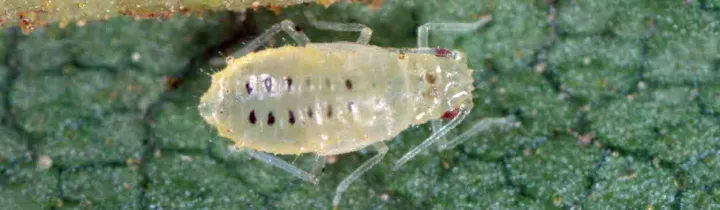
The walnut aphid, scientifically known as Callaphis juglandis, is a member of the Aphididae family. These are small insects, typically measuring 3 to 4 mm in length, characterized by a yellowish-green or brownish coloration.
The population consists of both winged and wingless forms, which facilitates rapid colonization of the walnut tree's canopy. The bodies of these insects are covered with fine, sparse hairs, a key morphological feature that aids in their precise identification.
The life cycle is closely integrated with the walnut host plant. Throughout the growing season, the aphids progress through several developmental stages, where nymphs closely resemble adults but are significantly smaller and sexually immature.
Overwintering occurs primarily in the egg stage. Eggs are deposited by females in bark crevices, near buds, or in the crotches of young twigs. As spring temperatures rise, these eggs hatch into stem mothers.
Reproduction occurs mainly through parthenogenesis, allowing the population to reach damaging levels within a very short timeframe when meteorological conditions are optimal for the species.
What it damages
The primary host for this pest is the walnut tree (Juglans regia). The aphids feed exclusively on the foliage, typically clustering on the undersides of leaves near the main veins where the plant epidermis is thinner and easier to pierce.
Large colonies can severely weaken the tree. By extracting significant amounts of phloem sap, the insects deprive the tree of essential nutrients required for vigorous growth and productive fruit development.
A major secondary impact is the production of honeydew, a sticky sugary secretion. This substance serves as a substrate for sooty mold, which creates a dark, crusty film over the leaf surface, effectively blocking sunlight and inhibiting photosynthesis.
Affected leaves often curl, turn yellow, and drop prematurely. This premature defoliation reduces the tree's overall vigor and lowers its ability to survive harsh winter conditions.
Young nursery trees are particularly vulnerable. Heavy infestation can stunt growth significantly and, in extreme cases, lead to the mortality of young plants due to complete nutrient depletion.
Signs of infestation
The initial sign of infestation is the presence of sticky, shiny spots on the upper surface of leaves located below aphid colonies. This honeydew residue is a telltale sign of active feeding.
Inspecting the underside of the leaves usually reveals clusters of aphids. They are often seen aligned along the midribs and secondary veins of the leaves, appearing as small dots.
The accumulation of a black, powdery substance (sooty mold) on the foliage indicates that the infestation has persisted for some time and that the plant's health is currently at risk.
Leaf curling and deformation are common symptoms of localized damage. Chlorosis, or the yellowing of leaf tissue, suggests that the aphids have compromised the plant's physiological functions.
Increased ant activity on the bark and branches is a strong indicator of an aphid problem. Ants are known to cultivate and protect aphid colonies to harvest the honeydew they excrete.
Control measures
Effective management relies on the application of systemic insecticides that are absorbed by the plant tissue. Products containing imidacloprid or deltamethrin are commonly used when the pest population threshold is exceeded.
Spraying must be thorough, specifically targeting the undersides of the leaves. It is crucial to schedule treatments to avoid the flowering period to protect beneficial pollinators such as honeybees.
Biological control plays a significant role in managing walnut aphids. Promoting habitats for natural predators like ladybugs, lacewings, and hoverflies can help keep aphid populations below damaging levels.
Cultural practices include proper tree pruning to increase airflow within the canopy and careful nutrient management. Excessive nitrogen fertilization should be avoided, as it encourages succulent growth that is highly attractive to aphids.
- Monitor tree canopies regularly from early spring to late autumn.
- Use sticky bands around trunks to prevent ants from protecting aphid colonies.
- Remove suckers and weeds beneath the tree to eliminate alternate refuges.
Taxonomy
- Latin name
- Callaphis
- Order
- Hemiptera (bugs, aphids, leafhoppers)
- Family
- Aphididae
- EPPO code
- CLLASP
Discussion
No discussions yet — be the first.