
Birch aphid
Calaphis betulaecolens
Description
How to identify
The birch aphid (Calaphis betulaecolens) is a small insect belonging to the family Aphididae. It is a specialized pest that specifically targets species of the Betula genus, making it a significant concern for birch tree health.
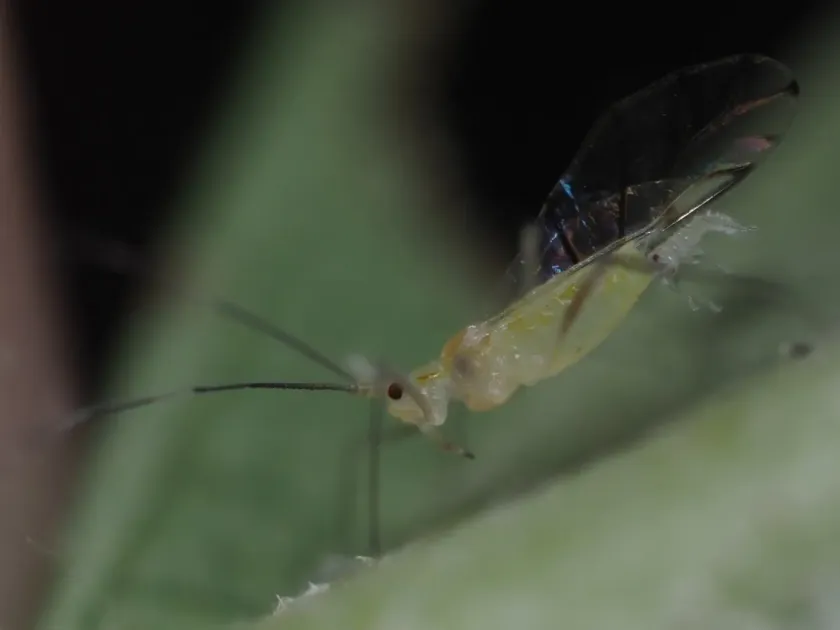
Adult aphids are typically light yellow to pale green, roughly 2–3 mm in length. This coloration provides excellent camouflage against the foliage, making them difficult to spot during the early stages of infestation.
The life cycle involves an egg stage, which serves as the overwintering mechanism in bark crevices, and several nymphal stages that mature rapidly in spring. During the summer, they reproduce via parthenogenesis, creating dense colonies.
Equipped with piercing-sucking mouthparts, they are anatomically designed to extract sap directly from the plant's phloem. Their population density can fluctuate significantly depending on the environmental conditions.
Understanding their rapid reproduction rate is crucial for management, as a small colony can expand to cover a large portion of the tree canopy within a few weeks if not properly monitored.
What it damages
Birch aphids feed primarily on the underside of leaves and on the succulent tips of young branches. By removing vital sap, they rob the tree of carbohydrates necessary for growth and photosynthesis.
The feeding process causes leaves to curl, yellow, and eventually drop prematurely. In young or newly planted birch trees, this stress can lead to stunted growth and increased susceptibility to winter damage.
A major indirect threat is the production of honeydew. This sticky substance covers the leaves, providing an ideal substrate for the growth of sooty mold, which blocks sunlight and hinders the tree’s ability to photosynthesize.
Beyond physical damage, Calaphis betulaecolens acts as a vector for various plant viruses. These viruses can severely impact the systemic health of the tree, potentially leading to long-term decline.
Repeated annual infestations weaken the overall structure of the birch tree, making it more vulnerable to secondary invaders, such as wood-boring beetles or opportunistic fungal infections.
Signs of infestation
The most obvious visual indicator of an infestation is the curling and distortion of birch leaves. If you see leaves folding or changing color unexpectedly, check the undersides for small colonies.
Sticky residue on leaves and branches is a tell-tale sign of honeydew production. This substance will often attract ants, which can be seen trailing up the trunk to tend to the aphid colonies.
The presence of a dark, dusty-looking fungal layer on leaves and bark indicates the development of sooty mold. This is a sign that the aphid population has reached a significant level and requires attention.
Increased activity of beneficial insects like lady beetles (ladybugs) or lacewings is often a strong indicator that an aphid colony is present, as these predators are naturally attracted to their food source.
Sparse canopy development in the spring, combined with stunted tip growth on branches, serves as a retrospective sign that the tree suffered from aphid pressure during the previous growing season.
Control measures
Biological control is the first line of defense. Encouraging natural predators such as ladybugs, lacewings, and parasitic wasps by planting diverse vegetation can naturally regulate aphid populations without chemical intervention.
For more severe cases, systemic insecticides, such as those containing imidacloprid or similar compounds, can be applied. These are absorbed by the tree and provide long-lasting protection against sucking insects.
Maintaining tree vigor is essential. Proper watering, mulching, and soil management help the tree maintain its natural defenses, making it less attractive and less vulnerable to severe aphid damage.
For smaller trees or individual infestations, manual control using horticultural soap or neem oil sprays can be highly effective. These products work by physical contact and are less disruptive to the local environment.
Regular monitoring during the early spring is key. Inspecting trees before the leaves fully expand can help catch the first generation of aphids, allowing for localized control before the infestation becomes widespread.
Taxonomy
- Latin name
- Calaphis betulaecolens
- Order
- Hemiptera (bugs, aphids, leafhoppers)
- Family
- Aphididae
- EPPO code
- CAPHBF
Discussion
No discussions yet — be the first.