
Birch aphid
Calaphis
Description
How to identify
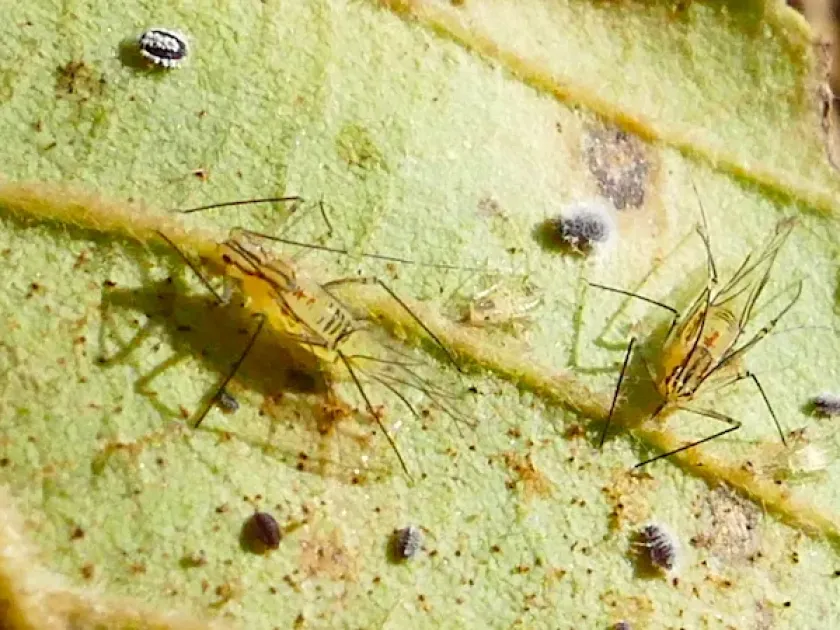
The birch aphid (genus Calaphis) belongs to the family Aphididae, order Hemiptera. These insects are small, typically 2–3 mm long, and possess a yellowish-green or brownish body color.
A key identifying feature of this genus is their exceptionally long antennae, which often exceed the length of the entire body. They exist in both winged and wingless morphs.
Colonies are typically found on the underside of birch leaves, specifically clustered along the veins, providing them with nutrition and protection from harsh environmental conditions.
The life cycle involves overwintering as eggs, which are deposited in bark crevices or near leaf buds during the autumn, ensuring the survival of the species until spring.
Equipped with piercing-sucking mouthparts, they efficiently tap into the plant's phloem, extracting sap and causing significant stress to the host tree.
What it damages
The primary hosts are species of the Betula genus, particularly the silver birch. They frequently infest both young saplings and mature trees in urban landscapes.
Direct damage occurs through the extraction of plant fluids, which leads to stunted growth of new shoots and general weakening of the tree's physiological state.
The aphids secrete honeydew, a sugary substance that coats the leaves and serves as a substrate for sooty mold fungi, which appear as black, powdery patches.
This fungal growth impairs the tree's ability to perform photosynthesis, ultimately causing yellowing, premature leaf drop, and a significant loss in aesthetic value.
Furthermore, Calaphis species are known vectors for various plant viruses, posing a secondary threat to the overall health of the birch trees in an area.
When it appears
Infestations typically begin in late spring as soon as the birch buds break and succulent new foliage becomes available for the first generation of aphids.
Population density peaks during June and early July. During this period, favorable weather conditions allow for rapid reproduction, with multiple generations developing in a single month.
While extreme summer heat can temporarily inhibit their population growth, the insects can survive well in irrigated landscapes where trees remain hydrated and lush.
By late autumn, sexual forms emerge to mate and lay overwintering eggs. These eggs remain dormant on the bark until the following spring cycle begins.
Routine monitoring is essential from spring through mid-summer to detect initial colonization before the population reaches damaging thresholds.
Signs of infestation
The most visible sign of an infestation is leaf curling or distortion, particularly in the apical portions of the branches where new growth is concentrated.
A sticky, shiny residue on the leaf surface, known as honeydew, is a classic indication of an active aphid colony feeding on the tree.
High ant activity on the trunks and branches of birch trees often suggests the presence of aphids, as ants farm them to collect the sugary secretions.
The development of black sooty mold on leaves confirms a long-term infestation that requires immediate attention to prevent further tree decline.
Premature yellowing and shedding of leaves during the peak of summer are critical red flags that the tree is suffering from severe aphid feeding stress.
Control measures
Preventative care includes avoiding excessive nitrogen fertilization, which creates soft, fast-growing tissue that is highly attractive to aphids.
Mechanical removal through a strong spray of water can wash off small colonies, while pruning heavily infested twigs can curb the initial spread of the population.
Promoting natural biological control is vital; encouraging predators like lady beetles, lacewings, and hoverflies will help keep aphid numbers in check naturally.
In cases of severe outbreaks, systemic insecticides are the most effective solution, as they move through the tree's vascular system to provide lasting protection.
- Application of neonicotinoid-based systemic treatments;
- Dormant oil applications in early spring to smother overwintering eggs;
- Monitoring tree health and providing proper irrigation to mitigate stress-related susceptibility.
Taxonomy
- Latin name
- Calaphis
- Order
- Hemiptera (bugs, aphids, leafhoppers)
- Family
- Aphididae
- EPPO code
- CAPHSP
Discussion
No discussions yet — be the first.