
Caenis
Caenis
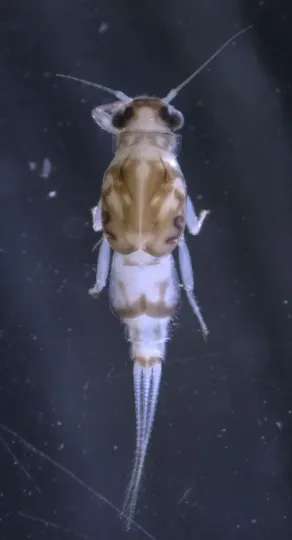
Description
How to identify
Caenis is a genus of insects within the order Ephemeroptera, belonging to the family Caenidae. Adult individuals are characterized by their very small size and a short life cycle, which often lasts only a few hours.
The larvae of Caenis are aquatic, inhabiting the bottom sediments of rivers, lakes, and ponds. They have a flattened body, adapted for life among silt and sand, and possess characteristic gill plates on the abdomen.
Visually, the adults (imagos) are fragile creatures with transparent wings that can form massive swarms over the water surface during a mass emergence event.
The systematics of the genus includes many species, which are morphologically difficult to distinguish without special laboratory equipment, requiring analysis of mouthparts or wing venation.
It is important to understand that Caenis is not a classical agricultural pest, as both larvae and adults feed on detritus or do not feed at all.
What it damages
Caenis does not cause direct damage to agricultural crops. The adult individuals (imagos) have reduced mouthparts and do not feed, so they do not damage plant tissues.
The larvae live exclusively in an aquatic environment and feed on organic debris (detritus), microalgae, and sediments at the bottom of water bodies, without affecting the root systems of terrestrial plants.
The economic significance of this genus is related to their role in the water ecosystem, where they are an important link in the food chain for aquaculture and hydrobiology.
In rare cases, mass emergence of imagos can create aesthetic or sanitary inconveniences in coastal areas, covering surfaces with a layer of dead insects after their life cycle is complete.
Thus, the presence of Caenis on a plot is more of an indicator of good water quality than a threat to the harvest, as these insects are very sensitive to water pollution.
When it appears
The activity of Caenis is strictly tied to the warm season, mainly from late spring to early autumn. Mass emergences of imagos often occur at dusk or early in the morning.
The duration of the life cycle from egg to imago can range from a few weeks to several months, depending on water temperature and species.
Insects overwinter mainly in the larval stage within the bottom silt, where they remain active even at low temperatures, slowing down their growth and development rates.
The periodicity of emergence correlates with the development phases of populations in the water; a synchronous emergence of millions of individuals in one night is often observed, attracting the attention of anglers and entomologists.
Climatic conditions, such as air humidity and the absence of strong wind, are key factors determining the intensity of swarming in a particular season.
Signs of infestation
The main sign of presence is the discovery of exuviae (cast-off skins) on coastal vegetation or stones after the larva has emerged from the water to transform into an imago.
The presence of massive clusters of insects over the water in the evening is the main indicator of the active phase of the mayfly's life in the area.
The surfacing of a large number of dead or dying individuals after the reproductive cycle (mating and egg-laying) is complete also indicates their presence.
Water quality near the site can be indirectly assessed by the Caenis population: their presence suggests an absence of toxic discharge, as members of the genus are extremely susceptible to chemicals.
- Surface silting of the shoreline.
- Presence of cast larval skins on grass near the water's edge.
- A specific "mist" of insects over the water at dusk.
Control measures
Since Caenis is not a pest, special chemical protection or eradication measures are not applied and are not recommended by agronomists.
Any use of pesticides near water bodies to kill such insects causes colossal harm to the aquatic fauna and disturbs the ecological balance of the site.
In case the mass appearance of imagos creates discomfort in a residential area, it is enough to limit evening lighting, which attracts insects at night.
Maintaining the cleanliness of the coastal zone and preventing eutrophication (excessive overgrowth) of water bodies naturally regulates the population size without human intervention.
Consider the presence of Caenis as an indicator of the environmental well-being of the territory, rather than as a threat that requires control with agrochemicals.
Taxonomy
- Latin name
- Caenis
- Family
- Caenidae
- EPPO code
- CENSSP
Discussion
No discussions yet — be the first.