
Brachycercus harrisella
Brachycercus harrisella
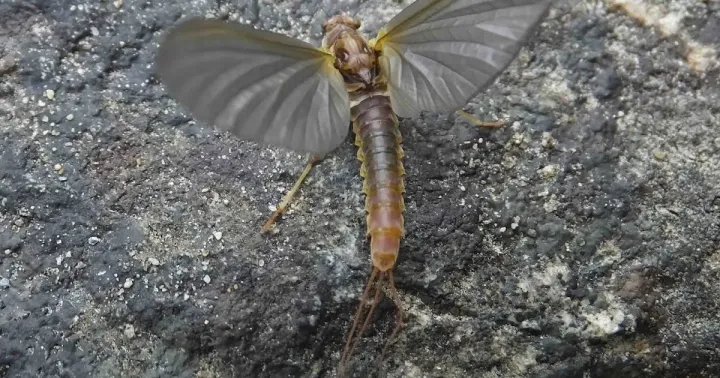
Description
How to identify
Brachycercus harrisella belongs to the order Ephemeroptera and the family Caenidae. It is a small aquatic insect primarily recognized by its larval stage dwelling in sediment.
The adults are characterized by their fleeting existence, as they focus entirely on mating and egg-laying shortly after emerging from the water.
Larvae are specialized to thrive in soft, muddy, or silty bottoms of stagnant or slow-moving water bodies, showing remarkable behavioral adaptations.
The morphology of the larvae, particularly the gill plates, serves as a protective mechanism against the mechanical abrasion of silt particles.
Scientific identification requires detailed examination of the thoracic structure and abdominal segments to distinguish it from other related Caenidae species.
When it appears
The life cycle involves an extensive larval stage that remains submerged throughout the development process within the benthic zone.
The emergence of adults is highly seasonal, usually occurring during summer months when water temperatures are optimal for reproductive success.
Developmental rates are strictly regulated by environmental factors, ensuring that the emergence coincides with the availability of suitable mating conditions.
Adult life span is remarkably short, often limited to mere hours, which is a classic evolutionary strategy for mayflies to maximize survival chances.
Overwintering occurs solely in the larval stage, buried deep within the substrate where the insect remains dormant until spring warming triggers development.
Control measures
This species is not a pest of terrestrial crops; rather, it serves as a critical component of aquatic food webs and an indicator of water health.
In aquaculture, maintaining a balanced population is essential as these insects provide a primary food source for various fish species.
Control measures are only relevant in specific cases where excessive siltation or pond imbalance leads to undesirable demographic spikes.
Sustainable management involves improving water quality and preventing excessive organic pollution, which naturally stabilizes the population.
Chemical intervention is strictly discouraged because it disrupts the delicate food chain and poses a risk to commercial aquatic biodiversity.
Taxonomy
- Latin name
- Brachycercus harrisella
- Family
- Caenidae
- EPPO code
- BCRSHA
Discussion
No discussions yet — be the first.