
Brachycercus
Brachycercus
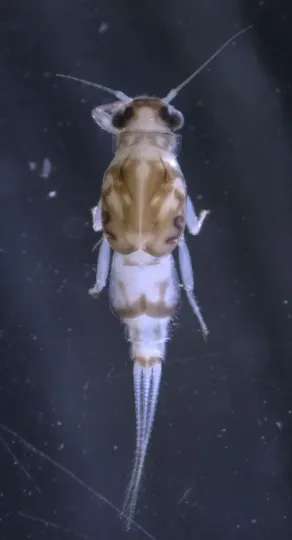
Description
How to identify
Brachycercus is a genus of mayflies (order Ephemeroptera) belonging to the family Caenidae. These insects are primarily known for their aquatic larval stage, which takes place in freshwater sediment.
The larvae are characterized by a flattened body shape, which allows them to thrive in muddy or sandy riverbeds. They possess specialized operculate gills that protect them from environmental debris.
The adult stage is very short-lived, with the primary purpose of reproduction. Once they emerge from the water, they do not feed and perish shortly after laying their eggs.
Identification of the species is complex and relies on detailed examination of the larval head and pronotal structures under a microscope, as morphological features of adults are often uniform across the family.
While not a traditional phytophagous pest, their presence in water bodies used for irrigation makes them a significant factor in technical farm management.
What it damages
Brachycercus does not directly consume agricultural crops. They are not plant-eaters, and their biological activity is confined to the aquatic environments from which they emerge.
The damage is purely mechanical and operational. During mass emergence events, adult mayflies can clog water intakes, filters, and pump systems, causing significant disruptions to field irrigation.
Accumulation of organic matter from dead insects inside drip irrigation lines can lead to the clogging of emitters, which causes uneven water distribution across the crop field.
This technical failure can stress sensitive crops during periods of high water demand, indirectly leading to yield reductions if the irrigation infrastructure is not properly maintained.
Effective water management strategies must therefore account for these periodic mass emergence events to ensure consistent crop development.
When it appears
The flight period for Brachycercus adults typically occurs during the summer months. Warm evening temperatures are the primary trigger for synchronized mass emergence from the water.
The larval phase spans the warmer months of the year, with development rates dictated largely by water temperature and the availability of organic matter in the sediment.
As the season progresses, monitoring water bodies near irrigation pump sites becomes crucial for identifying the peak emergence windows of the species.
The life cycle is brief, but the volume of insects emerging simultaneously can overwhelm filtration systems if they are not adequately prepared for the seasonal peak.
Predicting the emergence window allows farm managers to schedule necessary maintenance and filter cleanings ahead of potential infrastructure issues.
Control measures
The most effective strategy for managing Brachycercus involves the use of fine-mesh screening systems at all water intake points to exclude insects from irrigation pipelines.
Regular maintenance and physical cleaning of sediment from irrigation canals reduce the habitat suitable for larvae, thereby lowering the local population density.
Chemical control is generally discouraged or prohibited in natural water sources to protect the aquatic ecosystem and comply with environmental regulations.
Implementing automated back-flushing filtration systems can mitigate the impact of mass emergence by preventing organic debris from reaching the sensitive components of the irrigation system.
- Installation of fine-mesh filters at intake stations.
- Regular dredging of irrigation canals to remove larval habitats.
- Routine maintenance of drip irrigation emitters to clear potential debris.
Taxonomy
- Latin name
- Brachycercus
- Family
- Caenidae
- EPPO code
- BCRSSP
Discussion
No discussions yet — be the first.