
Elm root aphid
Byrsocrypta radicicola
Description
How to identify
The elm root aphid (Byrsocrypta radicicola) is a member of the Hemiptera order and the Aphididae family. It is a highly specialized insect known for its complex life cycle involving both woody and herbaceous hosts.
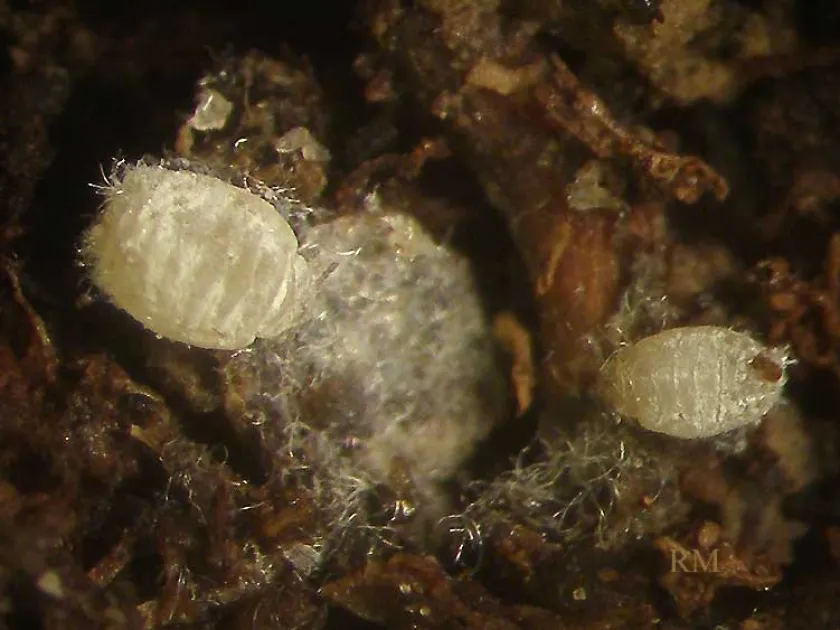
These aphids are generally small and often covered in a protective white waxy substance. Their life cycle includes distinct morphs, such as fundatrices on trees and wingless forms on roots, adapted for different environmental niches.
What it damages
The primary host is the elm tree, where the aphid induces the formation of galls on leaves. This infestation can lead to leaf rolling and structural damage, significantly impacting the aesthetic and physiological health of the tree.
During the summer months, the aphids migrate to the root systems of various herbaceous plants, particularly grasses. Their feeding on root sap inhibits plant growth, causes chlorosis, and weakens the host's overall vitality.
The feeding activity also causes stress to the root system, making it more susceptible to secondary pathogens such as root rot and soil-borne fungi, which can be devastating for high-value lawns or turf.
When it appears
The life cycle initiates in early spring as overwintered eggs hatch on elm bark. Founders move to developing leaves and induce gall formation, serving as a protected nursery for the initial generations.
As temperatures rise in mid-summer, winged migrants leave the elm trees to colonize the root zones of grass species. This migration is a critical stage that allows the aphid to thrive during the warmer part of the year.
Autumn triggers the return migration of sexual forms to the elm bark. They lay eggs that endure the winter in bark crevices, ensuring the survival of the species until the following spring cycle begins.
Signs of infestation
Leaf galls on elm trees are the most visible sign of infestation. These swellings are often deformed and may show discoloration, indicating the presence of aphid colonies inside the leaf tissue.
On herbaceous plants, signs of infestation include stunted growth, yellowing foliage, and a general lack of vigor in the lawn. The presence of white waxy secretions in the root zone is a hallmark of this pest.
Control measures
Pruning and destroying infested elm branches during the spring is an effective way to remove the primary source of the aphid population before migration occurs.
Systemic insecticides applied during the gall-forming stage on elms can significantly reduce population density. Application must be timed correctly to target the aphids before they migrate to the roots.
Maintaining healthy, dense turf helps plants withstand aphid feeding pressure. Removing weeds and non-essential herbaceous plants in the vicinity of elm trees can help reduce the secondary host reservoir.
Taxonomy
- Latin name
- Byrsocrypta radicicola
- Order
- Hemiptera (bugs, aphids, leafhoppers)
- Family
- Aphididae
- EPPO code
- BYRSRA
Discussion
No discussions yet — be the first.