
Elm gall aphid
Byrsocrypta
Description
How to identify
The elm gall aphid (Byrsocrypta ulmi) belongs to the family Eriosomatidae, known for creating specialized structures called galls on plant tissues. This insect is a heteroecious species, meaning it migrates between primary hosts (elm trees) and secondary hosts (grasses).
The aphids are small, soft-bodied insects often covered in a white, waxy secretion that protects them from external threats. Their biological adaptation allows them to manipulate plant growth hormones during the feeding process.
Taxonomically, they are categorized within the order Hemiptera. Their complex life cycle involves different morphs, including fundatrices (the founding females that initiate galls) and winged migrants.
These insects have evolved a sophisticated relationship with their host, ensuring that the gall provides both a nutrient-rich environment and physical protection from predators and environmental stress.
Successful identification requires observing the tree canopy during late spring when the galls are fully formed and diagnostic of the specific aphid species present.
What it damages
The elm gall aphid primarily causes damage to elm trees (Ulmus species) by inducing the formation of leaf galls. These galls interfere with the normal development of the leaf lamina.
As the aphids feed inside the galls, they extract essential plant sap, which leads to localized chlorosis and stunted growth of the affected twigs. This reduces the overall photosynthetic capacity of the tree.
On secondary hosts, such as various grasses, the aphid feeds on the root system. This subterranean feeding often goes unnoticed but can lead to reduced vigor and yield in agricultural crops or turfgrass.
Severe infestations on elms lead to premature leaf drop, causing aesthetic damage in urban landscapes and reducing the tree's resilience against drought or secondary fungal infections.
In nursery settings, young trees are particularly vulnerable, and chronic infestation can lead to stunted architecture and poor structural development of the saplings.
When it appears
The life cycle begins in early spring as eggs overwintered in bark crevices hatch. The emerging nymphs move to newly unfolding elm leaves to begin gall initiation.
Late spring and early summer mark the peak period of aphid activity within the galls, where multiple generations are produced through asexual reproduction.
During mid-summer, winged migrants are produced. These individuals leave the elm trees to migrate to their secondary host plants, typically the roots of grass species, where they continue their life cycle.
In the autumn, winged forms called sexuparae migrate back from the grasses to the elm trees. They produce sexual offspring that mate and lay the overwintering eggs on the bark.
This seasonal migration is essential for the species' survival, making the timing of interventions crucial for effectively managing population levels on the primary host.
Signs of infestation
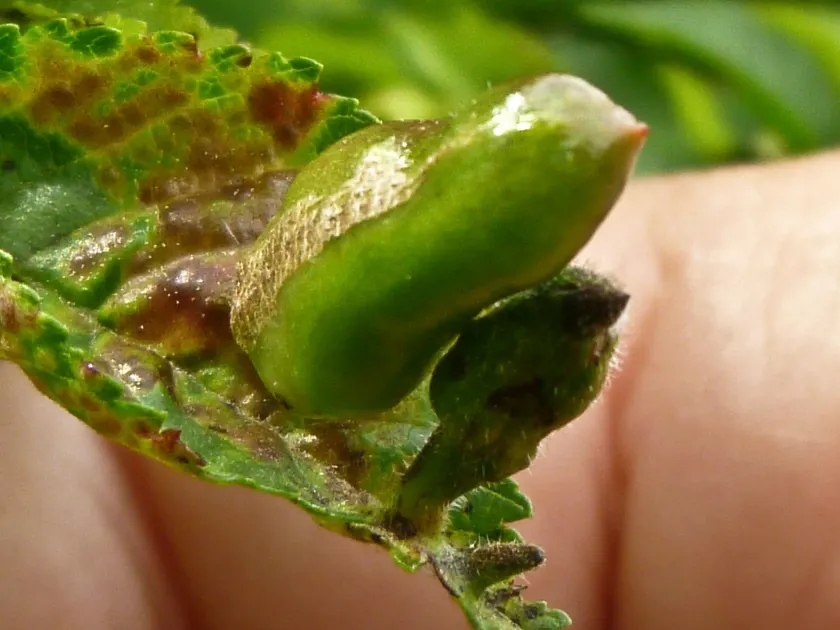
The most prominent sign is the presence of distinctive leaf galls. These structures vary in shape depending on the specific aphid species but often appear as curled, inflated, or cone-like deformations.
Early season symptoms include light green or yellowish discoloration around the feeding sites. As the galls grow, they may turn reddish or brown, contrasting sharply with healthy foliage.
Visible sticky residue, known as honeydew, may be found on the leaves below the galls. This often encourages the growth of sooty mold and attracts various ant species to the tree.
When a gall is carefully opened, the interior is filled with aphids covered in white, woolly wax, alongside cast skins from their molting process.
Dead, dried, and hardened galls remaining on the tree in late summer are definitive signs of past infestation, indicating that the aphid colony has already migrated.
Control measures
Cultural control includes the timely pruning and destruction of infested branches containing galls before the aphids migrate to their secondary hosts in mid-summer.
Chemical control should be applied in early spring as leaves emerge, targeting the fundatrices before they can form protective galls, as systemic insecticides are less effective once the aphid is enclosed.
Maintaining a healthy, stress-free environment for elm trees improves their natural resistance and helps them tolerate minor aphid infestations without long-term damage.
Biological control agents, such as lady beetles, lacewing larvae, and parasitic wasps, play a vital role in suppressing aphid populations naturally if their presence is encouraged.
- Use systemic insecticides early in the spring at bud break.
- Prune infested leaves to prevent the summer migration of winged forms.
- Monitor for ants and honeydew as an early warning system for infestations.
Taxonomy
- Latin name
- Byrsocrypta
- Order
- Hemiptera (bugs, aphids, leafhoppers)
- Family
- Aphididae
- EPPO code
- BYRSSP
Discussion
No discussions yet — be the first.