
Pine wood nematode
Bursaphelenchus mucronatus
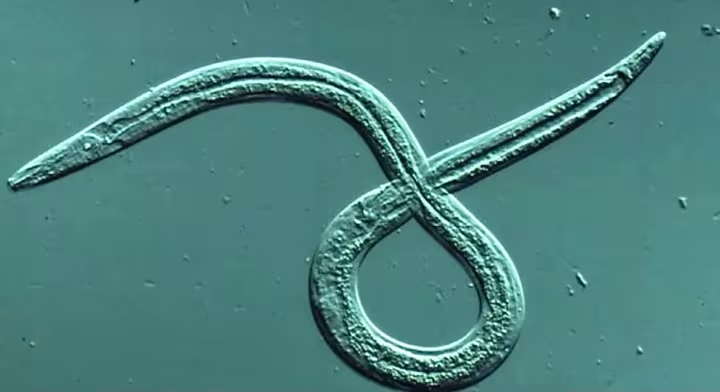
Description
How to identify
The pine wood nematode belongs to the phylum Nematoda, order Aphelenchida, and family Aphelenchoididae. It is a microscopic roundworm that parasitizes the wood tissue of coniferous trees.
Adult worms measure approximately 0.6–1.0 mm in length. Because they are morphologically similar to related species like Bursaphelenchus xylophilus, accurate identification requires professional laboratory analysis.
The life cycle is closely linked to wood-boring beetles of the genus Monochamus. These beetles act as vectors, carrying the nematodes from tree to tree during their feeding process on young twigs.
The parasite exhibits two distinct phases: a mycophagous phase, where it feeds on fungi within the wood, and a phytophagous phase, where it aggressively consumes tree cells, leading to severe pathology.
These nematodes are remarkably resilient and can survive in cut timber, making them a significant quarantine pest for international wood trade and forest health regulations.
What it damages
The nematode primarily attacks pine species, causing extensive damage to forest ecosystems, ornamental landscapes, and commercial plantations. It effectively compromises the health of entire stands.
Damage is characterized by the destruction of the tree's vascular system. The nematodes proliferate in the resin canals, destroying parenchyma and epithelial cells, which halts sap flow and resin production.
Stressed trees are often further attacked by secondary pests like bark beetles, which compound the damage and accelerate the decline of the host tree.
Economic losses are profound, involving the loss of timber value, high costs associated with quarantine efforts, and the expense of removing and disposing of infested wood.
In nurseries, an infestation can be devastating, leading to the total loss of seedlings and planting stock within a single growing season if not detected immediately.
Signs of infestation
A key indicator of infection is the cessation of resin flow, which can be observed by inspecting the trunk for dry patches. Needles rapidly change color from green to yellow, then brown.
Crown wilting occurs quickly, particularly during hot and dry spells, as the tree loses its ability to transport water effectively. The tree takes on a characteristic scorched appearance.
Exit holes on the bark, created by the beetle vector, are often visible and serve as an indication of the potential presence of the nematode within the wood tissue.
Cross-sections of infested trees typically reveal dry wood with little to no resin and potential staining or discoloration as internal rot begins to develop.
Positive identification requires laboratory confirmation through wood sampling and extraction of the nematodes from the wood chips under a microscope.
Control measures
Strict quarantine measures are the primary defense, ensuring that infested timber is not transported between regions or countries. Infected trees must be removed and destroyed immediately.
Silvicultural management, such as the regular removal of dead or dying trees and slash, is essential to minimize breeding sites for the beetle vector.
Chemical control is generally focused on targeting the beetle population during their flight period to prevent the further spread of the nematodes to healthy trees.
- Monitoring beetle populations with pheromone traps.
- Heat treatment or kiln drying of wood products before transport.
- Planting diverse, resistant tree species in high-risk zones.
Biological control research involves the use of fungi and predators that naturally inhabit the forest to suppress both the nematode population and its beetle vector.
Taxonomy
- Latin name
- Bursaphelenchus mucronatus
- Order
- Nematodes
- Family
- Aphelenchoididae
- EPPO code
- BURSMU
Discussion
No discussions yet — be the first.