
Buchneria
Buchneria
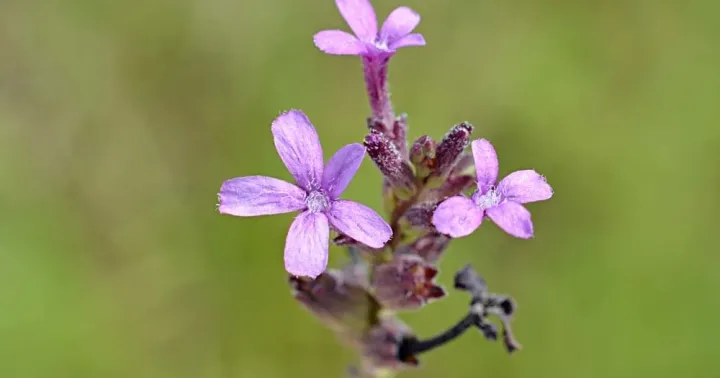
Description
How to identify
Buchneria is a genus of parasitic or semi-parasitic plants within the Orobanchaceae family. These plants are known for their ability to attach themselves to the roots of host plants to extract essential nutrients and water.
Botanically, they typically feature erect stems with opposite, simple leaves. The flowers are generally small, often arranged in terminal spikes or racemes, and exhibit a distinct zygomorphic structure typical of the family.
The defining feature of Buchneria is its specialized root system, which develops haustoria. These organs penetrate the host's vascular tissue, effectively tapping into the water and nutrient transport channels of the host.
The seeds of these plants are microscopic and produced in vast quantities, allowing them to remain dormant in the soil for extended periods until a suitable host root system is detected.
They are primarily distributed in tropical and subtropical regions, where they act as significant agricultural pests by interfering with the development of wild and cultivated grasses.
What it damages
The primary hosts of Buchneria are various cereal crops, including rice, sorghum, and maize. By extracting resources directly from the host's roots, the parasite severely limits the crop's growth potential.
The presence of the parasite forces the host to redirect its energy from grain production to compensating for the stolen resources, leading to significantly stunted development.
Infected crops often show reduced biomass, yellowing of foliage (chlorosis), and an overall lack of vigor that cannot be remedied by simple fertilization.
Under heavy infestation, the entire crop yield can be compromised, as the host fails to produce fully formed grains or experiences premature wilting during critical growth phases.
The indirect damage is also significant, as the weakened plants become more susceptible to diseases and environmental stresses that they would otherwise be able to withstand.
When it appears
The life cycle of Buchneria is highly dependent on the germination signals provided by the root exudates of its host plants, ensuring growth occurs only when a host is available.
Activity is highest during periods of sufficient soil moisture, which typically align with the primary growing seasons for the cereal crops they parasitize.
Flowering and seed maturation usually coincide with the late vegetative or reproductive stages of the host, facilitating a synchronized reproductive cycle.
Seeds can persist for several years in the soil bank, maintaining viability through dry seasons and emerging only when favorable temperature and moisture conditions are met.
Farmers must monitor fields closely throughout the growing season, as a single infestation can lead to rapid proliferation if left unchecked for multiple years.
Signs of infestation
Signs of infestation often manifest as localized patches of poor crop growth where plants are visibly shorter or sparser than the surrounding healthy field.
A closer inspection of the root zone will reveal the haustorial attachments, which look like small, knot-like swellings or attachments on the host's primary or secondary roots.
Visual identification becomes much easier during the flowering stage, when the distinct, thin spikes of the Buchneria emerge above the ground level among the crop rows.
Host plants often display symptoms of extreme nutrient deficiency despite fertile soil conditions, including leaf wilting and early senescence.
Reduced grain filling and deformed panicles or ears at harvest time are clear indicators that the plant has been under severe parasitic stress during the development phase.
Control measures
Effective management begins with robust crop rotation, substituting affected cereals with non-host species like legumes or certain broadleaf crops to starve the parasite.
Deep tillage is often recommended to bury seeds deeply enough that they cannot emerge and reach a host root system, thereby reducing the parasite load.
The use of trap crops, which trigger the germination of Buchneria seeds without providing a suitable long-term host, helps to exhaust the soil seed bank over time.
Chemical control remains difficult due to the parasitic nature of the plant, but selective herbicides can sometimes be used during the early stages of weed development.
- Regular hand weeding before seed set
- Use of certified, parasite-free seeds
- Sanitation of equipment to prevent seed dispersal
- Balanced fertilization to improve host resilience
Taxonomy
- Latin name
- Buchneria
- Order
- Hemiptera (bugs, aphids, leafhoppers)
- Family
- Aphididae
- EPPO code
- BUCHSP
Discussion
No discussions yet — be the first.