
Cabbage aphid
Brevicoryne
Description
How to identify
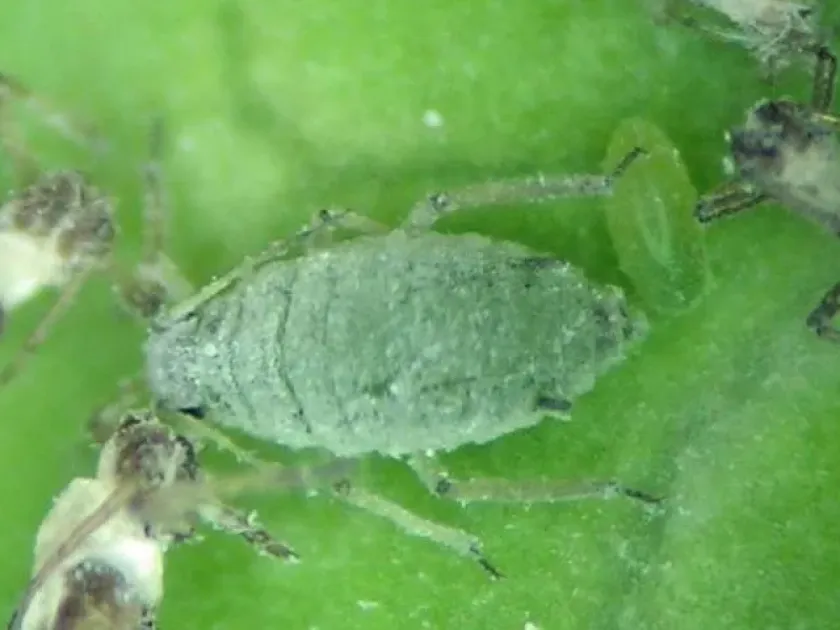
The cabbage aphid (Brevicoryne brassicae) is a small, soft-bodied insect belonging to the family Aphididae. Adults are approximately 2 mm long and possess a grayish-green body covered with a powdery waxy layer.
This waxy coating gives the colonies a distinctive glaucous or dusty appearance, which makes them easy to distinguish from other aphid species feeding on different types of crops.
The life cycle is highly complex, involving both winged and wingless forms. Winged aphids facilitate the rapid migration to new host plants, often triggered by overcrowding or poor plant conditions.
The species reproduces by parthenogenesis during the growing season, allowing for an exponential increase in population size in warm and favorable climatic conditions.
Winter is typically survived in the egg stage, which remains on the debris of harvested crops, particularly on the stalks and remnants of brassica species left in the fields.
What it damages
Cabbage aphids are specialized pests that primarily target the Brassicaceae family, including cabbage, broccoli, cauliflower, Brussels sprouts, kale, and oilseed rape.
By piercing and sucking plant sap, these insects remove essential nutrients from the leaves, causing them to curl, turn yellow, and eventually die if the infestation remains unchecked.
Severe infestations often result in stunted growth and the deformation of cabbage heads, making them unmarketable and susceptible to rotting before they reach full maturity.
Apart from direct damage, the aphid is a significant vector for various viral diseases, such as the cauliflower mosaic virus, which can devastate crop yields even after the aphids are eradicated.
The secretion of honeydew promotes the growth of sooty mold, which impairs photosynthesis and reduces the overall quality and vitality of the affected plants.
Signs of infestation
The most reliable sign of an infestation is the presence of clusters of gray, wax-covered aphids on the undersides of leaves and in the developing hearts of cabbage plants.
Leaves affected by aphids appear crinkled, curled, or distorted. The presence of yellow patches indicates areas where the insects have been feeding extensively on plant sap.
Sticky residue, known as honeydew, on the surface of leaves or nearby soil is a clear indicator that a colony is active and feeding on the upper canopy of the plant.
The presence of ants roaming over the plants is often associated with aphid colonies, as ants "farm" the aphids to consume the nutrient-rich honeydew they excrete.
Reduced vigor and a lack of heart development in cabbage or cauliflower are strong indicators that the plant is under stress from aphid activity and requires immediate intervention.
Control measures
Cultural control is essential; this involves removing and burning crop residues after harvest and keeping fields free of cruciferous weeds that can serve as alternative hosts.
Biological control methods focus on encouraging natural predators such as lady beetles, lacewings, and syrphid fly larvae, which can effectively keep aphid populations below damaging levels.
Chemical control should be employed only when necessary, using systemic or contact insecticides registered for use on brassica crops, while paying close attention to pre-harvest intervals.
Regular monitoring of fields is crucial, especially during dry and warm weather periods when aphid reproduction rates peak and infestations spread rapidly across the crop.
Applying insecticidal soaps or horticultural oils can be an effective non-toxic alternative for managing small, localized infestations in home gardens or small-scale farming operations.
Taxonomy
- Latin name
- Brevicoryne
- Order
- Hemiptera (bugs, aphids, leafhoppers)
- Family
- Aphididae
- EPPO code
- BRVCSP
Discussion
No discussions yet — be the first.