
Branchiura sowerbyi
Branchiura sowerbyi
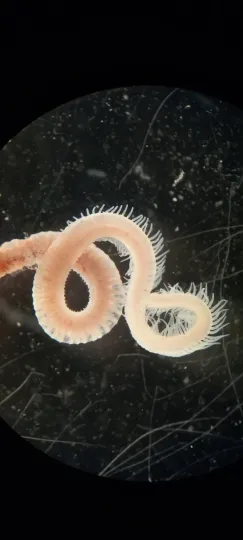
Description
How to identify
Branchiura sowerbyi is a species of oligochaete worm belonging to the family Naididae, widely distributed in freshwater ecosystems and wetlands.
The worm is characterized by a long, segmented body that can reach significant lengths, with the tail region often displaying distinctive waving movements.
They are generally pinkish-red in color due to high hemoglobin concentrations, which is an evolutionary adaptation to low-oxygen environments in sediments.
These organisms are known for their ability to thrive in polluted or nutrient-rich organic soils, making them successful colonizers of various habitats.
Correct identification requires examining the chaetae structure and the posterior body segment morphology under magnification for precision.
What it damages
In agricultural settings, particularly in rice cultivation, these worms cause damage by physically destabilizing the soil structure of the fields.
By constantly burrowing and aerating the sediment, they contribute to soil erosion and the detachment of young plant roots from their growing medium.
Their excessive burrowing activity results in nutrient leaching and disruption of the rhizosphere, negatively impacting the development of crops.
Large populations of these worms compete for organic resources, significantly altering the biological balance within the water-saturated soil layers.
While they do not graze on leaves, the mechanical stress they impose on root systems causes stunted growth and reduced crop yields.
When it appears
The biological activity of Branchiura sowerbyi is heavily influenced by temperature, typically accelerating in warmer conditions above 15 degrees Celsius.
Summer months provide the optimal conditions for reproduction, leading to population explosions if environmental factors remain favorable.
During colder periods, the worms reduce their metabolic activity and seek shelter deeper within the mud to survive unfavorable temperatures.
In regions with constant water temperatures, such as heated aquaculture facilities, these worms can remain active throughout the entire year.
Monitoring for the pest is most critical during the initial growth stages of agricultural crops, where root support is essential for survival.
Signs of infestation
A primary indicator of infestation is the loosening of the substrate, which becomes unstable and creates excessive turbidity in the surrounding water.
One may notice small heaps of reworked silt on the surface of the sediment, which are diagnostic of the presence of significant worm colonies.
Visual signs also include the uneven development of crops, which struggle to establish root systems in the constantly shifting mud environment.
Increased transparency or cloudiness in irrigation water, depending on the irrigation regime, can often be linked to the activity of these benthic worms.
Physical inspection of the soil often reveals the worms themselves, which react to vibrations by rapidly retreating into their deep burrows.
Control measures
The most effective management strategy involves periodic drying of the fields, as desiccation is fatal to the worms within the top soil layers.
Maintaining high water quality and minimizing excessive organic fertilizer runoff can help reduce the nutrient availability that sustains large worm populations.
Introducing biological control agents that naturally prey on oligochaetes can help regulate population densities in large-scale aquaculture or rice systems.
Proper soil management and tillage techniques after the harvest help destroy the habitat for the upcoming reproductive cycle.
- Deep tilling of soil to expose worms to predators.
- Implementation of effective irrigation drainage systems.
- Monitoring nutrient levels to limit excessive organic buildup.
Taxonomy
- Latin name
- Branchiura sowerbyi
- Family
- Naididae
- EPPO code
- BRANSO
Discussion
No discussions yet — be the first.