
Asparagus aphid
Brachycorynella asparagi
Description
How to identify
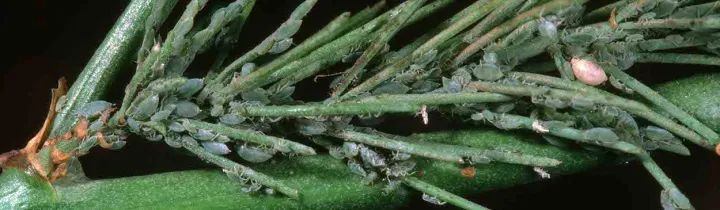
The asparagus aphid, scientifically known as Brachycorynella asparagi, belongs to the order Hemiptera and the family Aphididae. It is a tiny insect, typically measuring about 1.5 to 2 mm in length.
The adult aphids exhibit a gray-green or bluish coloration, which allows them to blend in perfectly with the foliage of the host plant, making them hard to detect.
Their bodies are often covered with a fine waxy secretion, providing a level of protection against environmental stressors and chemicals during their feeding cycles.
They possess a complex life cycle involving both asexual (parthenogenetic) and sexual reproduction, which allows for extremely rapid population growth in favorable conditions.
Overwintering occurs primarily in the egg stage, which the aphids deposit on the dry debris and stems of the asparagus plants left behind after harvest.
What it damages
The asparagus aphid is a host-specific pest, primarily attacking Asparagus officinalis. It causes significant damage by feeding on the sap of young shoots and tender branches.
As the aphids feed, they extract vital nutrients from the plant tissues, leading to reduced vigor and stunted development of the asparagus spears.
Beyond simple sap depletion, the insects inject toxic saliva into the plant during feeding, causing systemic damage that disrupts normal cell growth and physiological processes.
The resulting damage is often severe enough to lead to total crop loss or permanent yield reduction, which poses a serious economic threat to commercial growers.
Plants weakened by heavy aphid pressure are more susceptible to secondary infections and have decreased winter survival rates, affecting long-term plantation health.
When it appears
The emergence of aphids typically begins in early spring, coinciding with the first appearance of young asparagus shoots emerging from the soil.
Population density often peaks during the mid-summer period, when warmer temperatures accelerate the reproduction cycles, leading to explosive growth in aphid numbers.
Multiple generations are produced within a single season, with winged morphs appearing to facilitate rapid colonization of neighboring plants and new areas.
As daylight hours decrease and temperatures drop in the fall, sexual forms appear to lay overwintering eggs, ensuring the species survives until the following spring.
Consistent monitoring throughout the entire growing season is essential, as the aphids can establish large colonies within a very short timeframe if left unchecked.
Signs of infestation
The hallmark symptom of an infestation is the curling and distortion of the fern-like branches, often described as a "witches' broom" appearance due to inhibited growth.
Affected stems often show signs of chlorosis, turning a pale, sickly blue-gray color as the plant's photosynthetic capacity is severely impaired by the aphids.
Heavy infestations are frequently accompanied by the presence of honeydew, a sticky substance excreted by the aphids that creates a substrate for sooty mold growth.
The black, crusty layer of sooty mold further degrades the plant's health and ruins the aesthetic and commercial quality of the harvested asparagus spears.
Severe infestations cause premature yellowing and dropping of the cladodes, which can lead to the complete collapse of the canopy in heavily infected plantations.
Control measures
Good sanitation practices, such as removing and destroying crop debris at the end of the season, are crucial to eliminating the overwintering egg sites of the aphid.
Deep cultivation of the soil between rows can help disrupt the aphid life cycle and reduce the local population pressure before the start of the next season.
Encouraging biological control agents, such as lady beetles, lacewings, and parasitic wasps, is a highly effective way to manage aphid populations naturally.
If economic thresholds are reached, the application of systemic or contact insecticides may be necessary to protect the crop, strictly following label directions.
- Regular inspection of the field to detect localized "hot spots" early.
- Use of yellow sticky traps for monitoring the arrival and movement of winged aphids.
- Maintaining healthy plant vigor through balanced fertilization to help plants withstand pressure.
Taxonomy
- Latin name
- Brachycorynella asparagi
- Order
- Hemiptera (bugs, aphids, leafhoppers)
- Family
- Aphididae
- EPPO code
- BRAYAS
Discussion
No discussions yet — be the first.