
Peach leaf aphid
Brachycaudus schwartzi
Description
How to identify
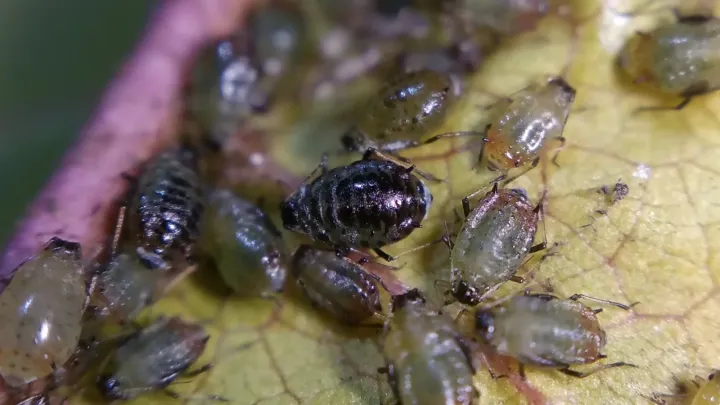
The peach leaf aphid (Brachycaudus schwartzi) is a member of the Aphididae family. Adult aphids are small, measuring approximately 1.5 to 2 mm in length, and typically exhibit a dark brown coloration.
This species is monoecious, meaning it completes its entire lifecycle on a single host plant species, specifically trees of the Prunus genus, most commonly the peach tree.
The winter is passed in the egg stage. These eggs are laid by females in the autumn, typically hidden within bark crevices or near the buds of the host plant.
As spring temperatures rise, the eggs hatch into fundatrices (stem mothers), which initiate the colony growth and feeding process on newly emerged foliage.
Throughout the growing season, multiple generations are produced, including both wingless and winged forms, the latter allowing the species to colonize new parts of the tree or adjacent trees.
What it damages
The primary host for this pest is the peach tree, though it may also infest nectarines, almonds, and other related stone fruit species in the Rosaceae family.
The damage is caused by the aphid's feeding, where they pierce the plant tissue and extract sap, leading to nutritional deficiencies and metabolic stress for the tree.
Heavy infestations result in stunted growth, the curling and twisting of young shoots, and a significant reduction in the vigor of young saplings.
The leaves affected by aphid feeding often curl tightly, yellow, and eventually abscise prematurely, which compromises the photosynthetic capacity of the entire canopy.
Furthermore, this aphid species serves as a vector for various plant viruses, posing a long-term threat to the health and commercial productivity of the orchard.
Signs of infestation
The most diagnostic sign of an infestation is the pronounced curling and deformation of leaves at the shoot tips, which often form protective balls for the aphid colonies.
Upon inspecting the underside of the leaves, one can observe dense clusters of small, dark aphids alongside their cast-off exoskeletons from molting.
The presence of honeydew, a sticky substance secreted by the aphids, often leads to the growth of sooty mold, giving the leaves a blackened, unsightly appearance.
Ant activity on the branches is a classic indicator, as ants forage for the honeydew and will actively defend the aphid colonies from beneficial predatory insects.
Premature shriveling and shedding of young fruitlets and flower buds during late spring are often clear indicators that an aphid colony is actively feeding on the pedicels.
Control measures
Cultural control methods include the pruning of suckers and water sprouts, which serve as early-season reservoir sites for aphid populations in the orchard.
Proper nitrogen management is essential; excessive fertilization can stimulate overly succulent vegetative growth that is highly susceptible to aphid colonization.
Chemical control should be targeted during key phenological stages, such as the green bud stage or immediately after petal fall, using systemic insecticides.
Integrated pest management should promote the conservation of natural predators such as lady beetles, lacewings, and hoverflies to keep aphid numbers below economic thresholds.
Monitoring the orchard with yellow sticky traps provides early detection of wingless migration, allowing for precise and timely intervention with protective measures.
Taxonomy
- Latin name
- Brachycaudus schwartzi
- Order
- Hemiptera (bugs, aphids, leafhoppers)
- Family
- Aphididae
- EPPO code
- APPESW
Discussion
No discussions yet — be the first.