
Aconite aphid
Brachycaudina napelli
Description
How to identify
The Aconite aphid (Brachycaudina napelli) is a small sap-sucking insect belonging to the order Hemiptera and the family Aphididae, specialized in feeding on Aconitum species.
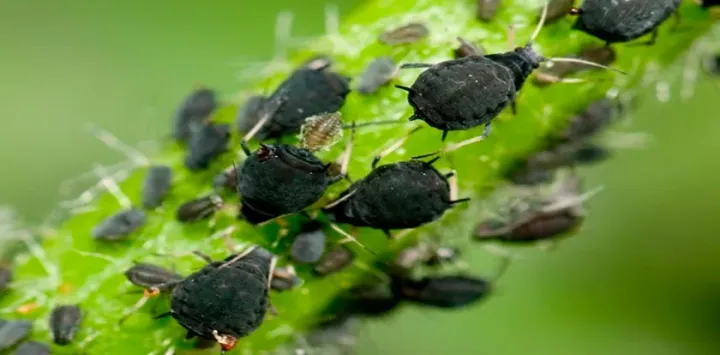
Adult aphids typically exhibit a pear-shaped body and a coloration ranging from light green to dark olive or brown, providing effective camouflage on host plant stems.
Both apterous (wingless) and alate (winged) forms are present in the colony, allowing for both localized rapid reproduction and the colonization of new plants.
Reproduction is primarily parthenogenetic, which allows the population to multiply rapidly under favorable environmental conditions during the growing season.
The species overwinters in the egg stage, which are typically laid on the lower parts of the stem or plant debris near the base, ensuring survival until the following spring.
What it damages
The primary host for this pest is the Aconitum (monkshood) genus, which is commonly cultivated in gardens for its ornamental value.
By piercing and sucking phloem sap from developing tissues, these insects cause significant stress to the host plant, resulting in reduced vigor.
Feeding often targets flower spikes and young foliage, leading to visible deformation, stunted growth, and the failure of buds to open properly.
The cumulative effect of a heavy infestation is a significant decline in the ornamental value of the plants and potential stunting of the entire bloom.
Furthermore, this aphid species serves as a vector for various plant viruses, which can lead to systemic infections and premature death of the affected specimens.
Signs of infestation
One of the earliest signs of infestation is the curling and distortion of young leaves, which often become sticky due to the excretion of honeydew.
Sooty mold frequently grows on the honeydew deposits, creating a characteristic black coating on the leaves that impedes light absorption and photosynthesis.
Colonies of aphids are easily visible upon inspection of the undersides of leaves and around the base of developing flower buds.
The presence of ants, which attend the aphid colonies to harvest the honeydew, is a strong indicator of an active infestation that requires attention.
Affected plants often show overall malaise, with inhibited shoot development and flower buds that dry out or fall off before reaching maturity.
Control measures
Management starts with regular monitoring of Aconitum plants during the spring and early summer to detect and manage colonies before they reach outbreak levels.
For minor infestations, mechanical removal or washing the plants with a gentle stream of water combined with horticultural soap can be highly effective.
- Encouraging natural predators such as lady beetles, lacewings, and hoverflies by providing a diverse garden environment.
- Use of systemic insecticides if infestations become severe and mechanical measures are insufficient to preserve the plant.
- Sanitation practices, including the removal of weeds from the Ranunculaceae family that may serve as alternative hosts.
- Proper fertilization to ensure plant vigor, while avoiding excessive nitrogen that can attract more aphid colonies.
Always time chemical applications carefully to avoid affecting beneficial pollinators that may visit the Aconitum flowers during the day.
Taxonomy
- Latin name
- Brachycaudina napelli
- Order
- Hemiptera (bugs, aphids, leafhoppers)
- Family
- Aphididae
- EPPO code
- BRADNA
Discussion
No discussions yet — be the first.