
Western boxelder bug
Boisea rubrolineata
Description
How to identify
The Western boxelder bug is a member of the Rhopalidae family within the order Hemiptera. Adult insects measure approximately 10 to 14 millimeters in length.
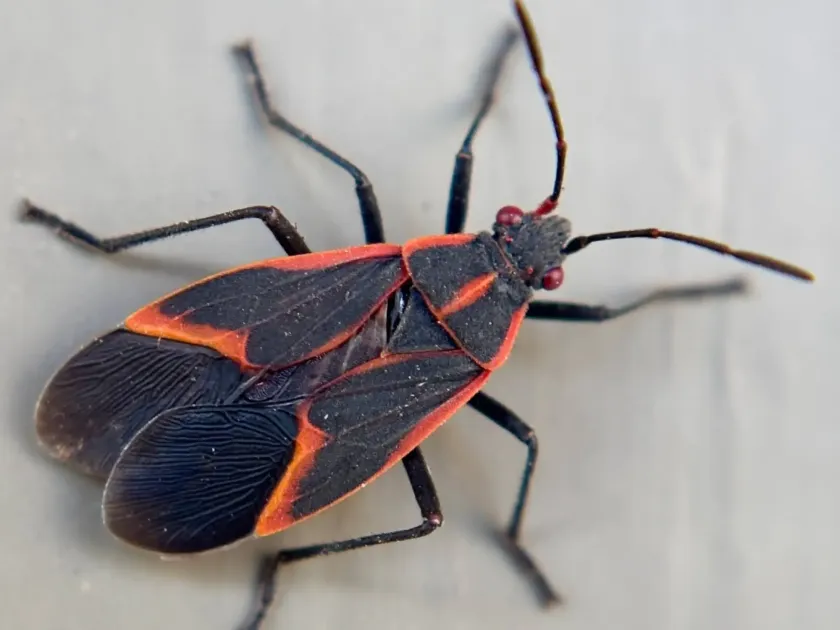
Their bodies are elongated and distinctively marked with bright red lines on the pronotum and wing margins against a black background, making them easily recognizable.
Nymphs are smaller and predominantly bright red, gradually developing darker wing pads as they undergo incomplete metamorphosis through several instars.
These bugs are social insects during certain life stages, often congregating in large groups on sunny surfaces, rocks, and the trunks of host trees.
They overwinter as adults, seeking shelter in protected cracks, crevices, and often migrating into homes and structures when temperatures begin to drop.
What it damages
The primary food source for this pest is the developing seeds of maple trees, particularly the boxelder (Acer negundo), from which they extract sap using their piercing-sucking mouthparts.
While they primarily target seeds, they can also feed on the sap of leaves and young shoots, which may cause minor chlorosis or leaf curling in cases of severe infestation.
Generally, they are not considered a serious threat to the survival of mature trees, but they can negatively impact the health of saplings and ornamental varieties.
In nursery settings, damage to seeds is economically significant as it reduces the viability and quality of the seed crop for future planting.
The primary complaint regarding this species is the nuisance factor when they invade residential buildings, staining surfaces and becoming an unwelcome domestic presence.
When it appears
Activity begins in early spring as temperatures rise, signaling the bugs to emerge from their overwintering sites in search of food and mates.
The peak feeding and reproductive period occurs during the late spring and summer months, coinciding with the development of seeds on host trees.
Multiple generations can occur throughout the growing season, especially in regions with longer, warmer summers, allowing populations to build rapidly.
As autumn approaches and temperatures decrease, the bugs start their migration toward hibernation sites, showing a strong attraction to man-made structures.
Late autumn is characterized by high visibility as large numbers of bugs congregate on warm, south-facing walls before entering their dormancy period.
Signs of infestation
The most obvious sign of infestation is the presence of large clusters of red nymphs or adults on tree trunks, branches, or near the base of maple trees.
Visually damaged seeds that appear shriveled or exhibit discoloration indicate that the bugs have been actively feeding on the developing fruit.
The accumulation of fecal spots on windows, siding, or garden furniture is a common secondary indicator of high bug density in the immediate vicinity.
Persistent presence of insects on home facades during warm autumn days serves as a definitive sign that a large colony is established nearby.
- Mass congregation on sunny walls and rock surfaces.
- Presence of molted insect skins (exuviae) near nesting or feeding sites.
- Yellowing or slight distortion of leaves on highly infested young saplings.
Control measures
The most effective long-term management strategy is to remove female boxelder trees from the landscape, as these are the primary source of the seeds they depend on.
Sanitation practices, such as raking up and disposing of fallen seeds in late summer and autumn, significantly reduce the available food supply for developing nymphs.
Exclusion is critical for home protection: seal all cracks around windows, doors, and utility entry points with caulk and ensure screens are well-maintained.
If direct control is necessary, insecticidal soaps or residual pyrethroid sprays can be applied to large congregations on trunks or surfaces during peak activity.
Vigorous watering and fertilization of trees can help them withstand the stress of feeding, making them less susceptible to further complications from other pests.
Taxonomy
- Latin name
- Boisea rubrolineata
- Order
- Hemiptera (bugs, aphids, leafhoppers)
- Family
- Aphididae
- EPPO code
- LEPCRU
Discussion
No discussions yet — be the first.