
Blastobasis phycidella
Blastobasis phycidella
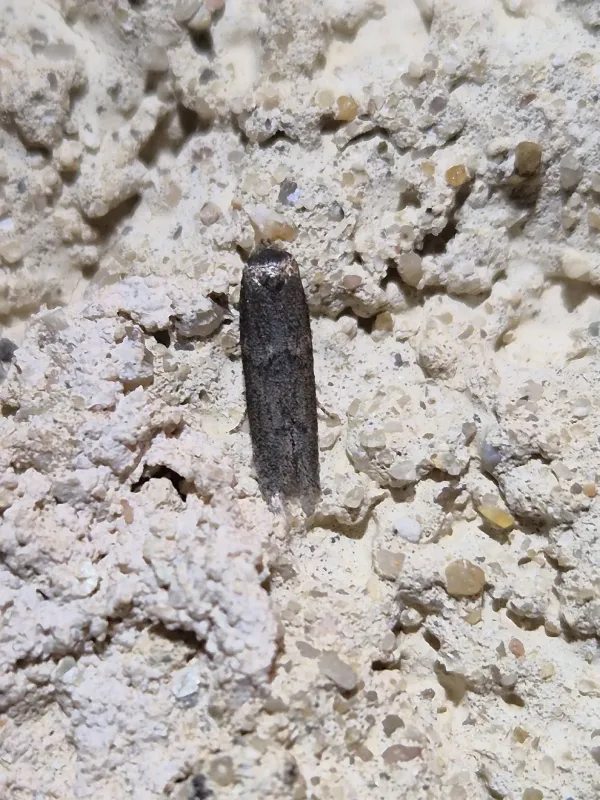
Description
How to identify
Blastobasis phycidella is a species of moth belonging to the Blastobasidae family. It is a small insect that primarily interacts with decaying or damaged fruit in garden environments.
Adult moths are characterized by a wingspan ranging between 12 and 16 mm. Their forewings feature a mottled brown and grey pattern, providing excellent camouflage against tree bark.
The larvae, or caterpillars, are small (up to 12 mm) with pale bodies and dark heads. They often remain hidden, making them difficult to detect without careful inspection of the fruit.
As members of the order Lepidoptera, these insects follow a complete metamorphosis lifecycle. They are not considered major primary pests, but they can be problematic in specific conditions.
They overwinter as mature larvae, typically finding shelter within crevices of bark or inside shriveled, mummified fruits left on the trees after the harvest season.
What it damages
The primary damage is caused by the larvae, which are polyphagous and known to feed on various fruits, particularly pome and stone fruits.
The pest often exploits entry points created by other insects, such as the codling moth, to penetrate the fruit flesh and consume its tissues.
Feeding larvae create winding tunnels inside the fruit, which significantly accelerates the rotting process and causes the fruit to decay rapidly.
Infested fruit is usually unsuitable for human consumption, processing, or long-term storage, leading to direct economic losses for the grower.
Furthermore, the presence of the larvae promotes the growth of secondary fungal infections, such as brown rot, further exacerbating the damage to the crop.
When it appears
The life cycle begins in spring when adults emerge from their overwintering sites, coinciding with the flowering of orchard trees.
Depending on the climatic zone, the moth can produce one or more generations per growing season, with peak adult activity occurring in summer.
Larval activity is highest during the ripening phase of the fruit, when the sugar content and moisture levels are most attractive for feeding.
As autumn temperatures drop, the larvae seek out protected microhabitats to initiate diapause, ensuring their survival through the winter.
Environmental factors such as temperature and humidity significantly influence the development speed of each generation throughout the year.
Signs of infestation
Visible frass (excrement) around entry points on the fruit surface is a primary indicator of larval infestation.
Softened, discolored patches on the skin of the fruit, especially near the stem, suggest internal feeding and associated decay.
Light silken webbing present on the surface of the fruit or near the calyx often indicates the presence of Blastobasis phycidella larvae.
Premature fruit drop, where the fallen fruits display clear entry holes and signs of decay, is a common symptom of a severe infestation.
Winter surveys of the orchard may reveal cocoons hidden under loose bark scales or inside mummified fruits, signaling an overwintering population.
Control measures
Management of this pest requires an integrated approach that emphasizes cultural practices to reduce the environmental suitability for the moth.
- Regular orchard sanitation, including the removal and destruction of all mummified fruits from trees.
- Prompt collection and disposal of fallen fruit to prevent larval maturation and movement into wintering sites.
- Scraping and cleaning rough tree bark to eliminate potential hiding places for overwintering larvae.
- Monitoring adult moth populations using pheromone traps to time the application of plant protection products.
- Targeted insecticide applications, if necessary, applied during periods of peak egg-laying or early larval emergence.
Taxonomy
- Latin name
- Blastobasis phycidella
- Order
- Lepidoptera (butterflies)
- Family
- Blastobasidae
- EPPO code
- BLAAPH
Discussion
No discussions yet — be the first.