
Blapstinus beetle
Blapstinus
Description
How to identify
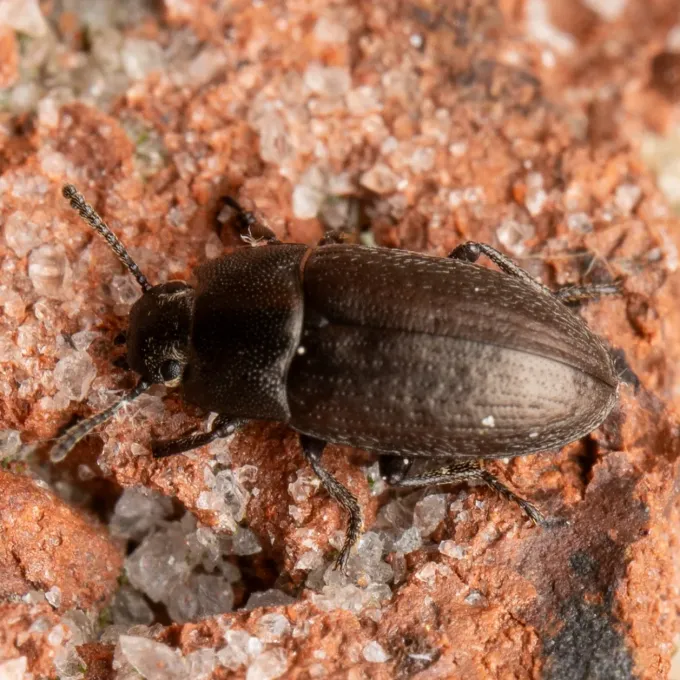
Beetles of the genus Blapstinus belong to the family Tenebrionidae, commonly known as darkling beetles. These insects are small, typically ranging from oval to elongated in shape.
They possess a heavily sclerotized, dark-colored exoskeleton which serves as protection in various soil conditions and environments.
The larvae, often referred to as false wireworms, are characterized by their cylindrical bodies and rigid, yellowish-brown appearance, making them highly adapted for soil dwelling.
Adult beetles are nocturnal, spending the daylight hours concealed under plant debris, soil crevices, or clods, which makes them difficult to spot during routine field visits.
Identification at the species level requires specific taxonomic keys, as several species within the Blapstinus genus share very similar morphological traits.
What it damages
These insects primarily pose a threat to emerging crops, targeting seeds and tender seedlings during the early stages of vegetation development.
Major crops prone to infestation include corn, wheat, sunflowers, and various vegetable crops, where the pests feed on both seeds and developing root systems.
Larval feeding on germinating seeds often results in total destruction of the embryo, preventing the plant from emerging entirely.
Adult beetles may also cause injury by chewing on the stems and cotyledons of young plants, leading to reduced vigor and occasionally plant death in severe infestations.
Damage is typically more pronounced in fields with significant plant residue, where the pests find optimal shelter and humidity to thrive.
Signs of infestation
The most evident sign of a Blapstinus infestation is the presence of uneven plant stands with patches of stunted or missing seedlings throughout the field.
Affected plants often show wilting despite adequate moisture, as the root system has been compromised by larval feeding activities.
Close inspection of the soil near the base of damaged plants usually reveals the presence of false wireworms, which can be identified by their firm, segmented bodies.
Visible feeding marks on the remaining root portions or stem tissue near the soil surface are key indicators of pest activity.
Farmers can observe the adults by setting pitfall traps in the field or conducting evening inspections when the insects become active on the soil surface.
Control measures
The most effective strategy for managing these pests is the use of seed treatments containing systemic insecticides to protect the plant during its critical early growth stages.
Cultural practices, such as maintaining a proper crop rotation and ensuring rapid seed germination through optimal planting conditions, are essential for mitigation.
Effective weed management is necessary, as dense weed cover provides alternative food sources and protective cover for both adults and larvae.
Deep tillage can disturb the soil environment, exposing larvae and pupae to predators and adverse climatic conditions, thereby reducing population density.
- Utilize soil insecticides during planting if pre-seeding monitoring shows high larvae counts.
- Ensure adequate soil preparation to prevent accumulation of organic debris.
- Monitor field edges and low-lying areas where the pests are most likely to aggregate.
Taxonomy
- Latin name
- Blapstinus
- Order
- Coleoptera (beetles)
- Family
- Tenebrionidae
- EPPO code
- BLAPSP
Discussion
No discussions yet — be the first.