
Churchyard beetle
Blaps mucronata
Description
How to identify
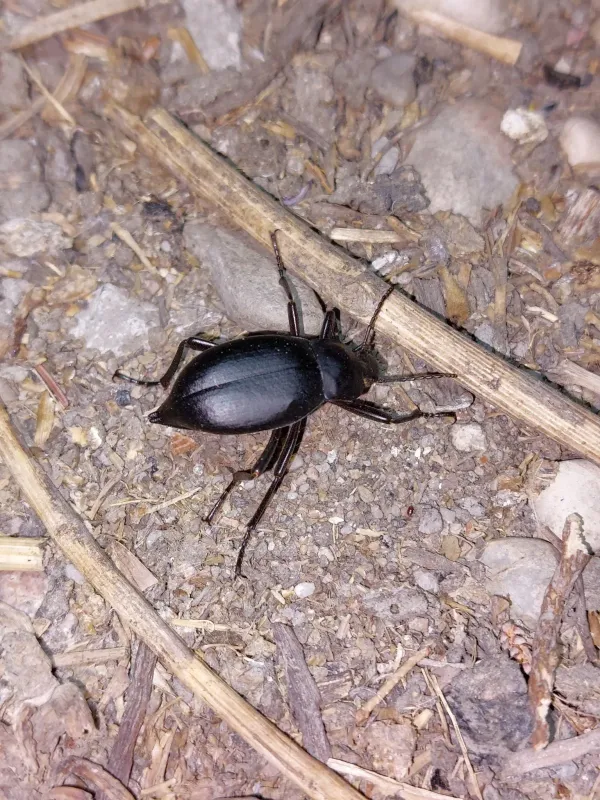
The churchyard beetle (Blaps mucronata) belongs to the Tenebrionidae family, known as darkling beetles. Adults are typically 20–30 mm long, featuring a dull black, sturdy body with a distinct pointed tip on the elytra.
Larvae are elongated, cylindrical, and resemble wireworms, often reaching up to 50 mm. They have a yellowish-brown, well-sclerotized body, which allows them to move easily through compact soil.
This beetle undergoes complete metamorphosis, including egg, larva, pupa, and adult stages. Depending on environmental conditions, the life cycle may span one or two years.
These insects are nocturnal and prefer dark, humid environments. During the day, they hide under soil clumps, debris, or inside cracks in the ground, making them difficult to detect during standard field checks.
A key defense mechanism is the ability to secrete a foul-smelling, caustic fluid when threatened, which discourages predators and is a hallmark of this specific beetle family.
What it damages
The churchyard beetle is a polyphagous pest that poses a significant threat to various cereal crops, including wheat, barley, and rye, especially during the early growth stages.
The primary damage is caused by larvae that feed on buried seeds, completely hollowing them out. This activity is a major cause of poor germination and reduced crop stand.
Additionally, larvae attack the underground sections of stems and roots of young seedlings, leading to wilting, stunted growth, or complete death of the affected plants.
Beyond field crops, they can be serious pests in grain storage facilities, where they consume grain products and contaminate them with excrement, reducing the overall quality of the harvest.
While adults mainly consume decaying organic matter, they may cause secondary damage to vegetables and tubers if their population density reaches a high threshold.
Signs of infestation
The most evident sign of a churchyard beetle infestation in fields is the sudden appearance of sparse patches where crops failed to emerge shortly after sowing.
Excavating the soil around wilted plants often reveals the presence of larvae. Checking for damaged seeds with visible feeding tunnels confirms the infestation source.
Monitoring the presence of adults can be done using night-time inspections or simple bait traps placed in fields, which attract the beetles during their active hours.
In storehouses, a noticeable indicator of an infestation is a characteristic, unpleasant, and strong-smelling odor emitted by large concentrations of the beetles.
Root crops left in the soil or in storage may show deep pits or irregular wounds, which often become sites for secondary bacterial or fungal rot infections.
Control measures
Strategic crop rotation is the most effective cultural practice to disrupt the life cycle of the churchyard beetle, as it forces the pest to migrate to less favorable environments.
Deep autumn plowing of the soil is highly recommended as it exposes larvae to harsh winter conditions and avian predators, effectively reducing their population density.
Managing field hygiene by removing plant debris and controlling weed populations minimizes the available shelters and food sources necessary for the beetles to thrive.
Seed treatment using systemic insecticides prior to planting provides a robust chemical defense, protecting the seed and young roots during the most vulnerable germination period.
In storage areas, maintaining optimal humidity levels and conducting periodic fumigation or sanitation of facilities are essential to prevent the spread and establishment of the beetle.
Taxonomy
- Latin name
- Blaps mucronata
- Order
- Coleoptera (beetles)
- Family
- Tenebrionidae
- EPPO code
- BAPSMU
Discussion
No discussions yet — be the first.